About Myotis yumanensis (H.Allen, 1864)
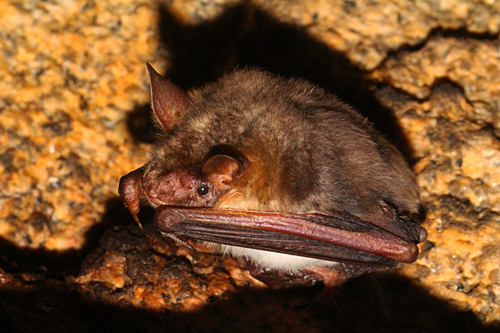
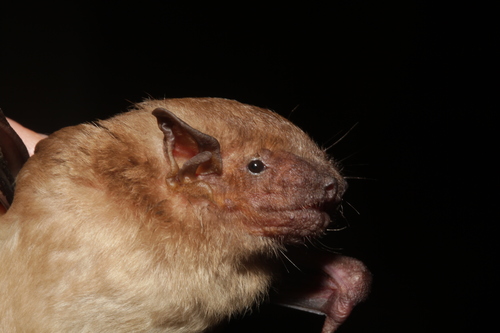
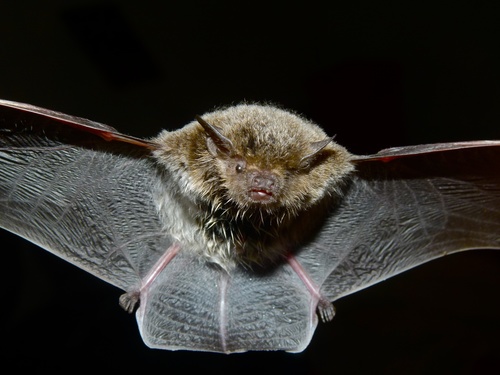
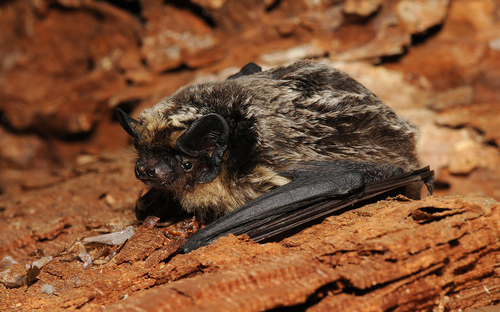
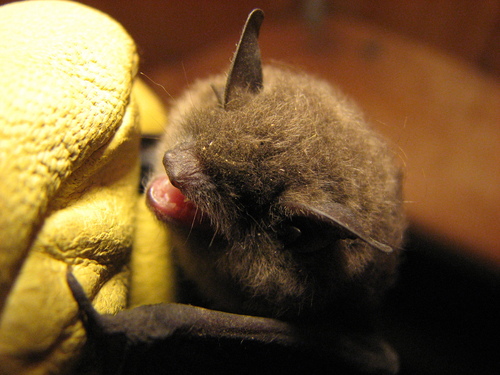
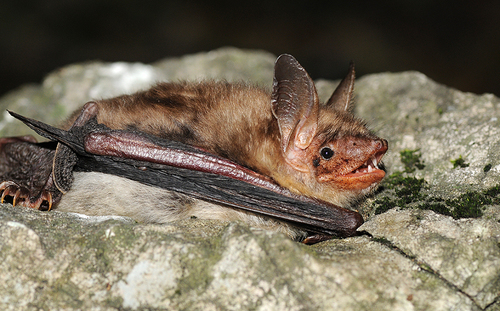
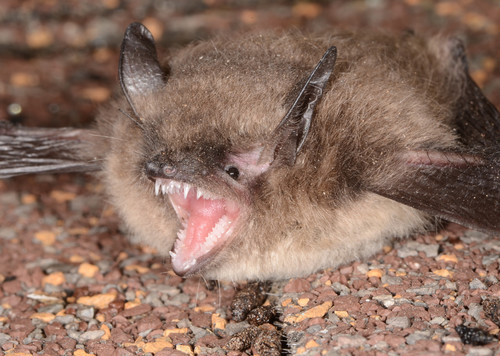
Yuma myotis (Myotis yumanensis, first described by H. Allen in 1864) is a relatively small species of myotis bat. It measures 3.9 to 4.8 cm (1.5 to 1.9 in) in head-body length, has an average wingspan of 24 cm (9.4 in), and weighs approximately 6 g (0.21 oz). Like all other species in the genus Myotis, it has a dental formula of 2.1.3.3 / 3.1.3.3, giving it a total of 38 teeth. Individual Yuma myotis vary in fur color across their range, ranging from dark brown to pale tan, and may even be greyish. Their fur is short and dull, and is significantly paler on the underside, sometimes even whitish. The tail measures 2.7 to 4.0 cm (1.1 to 1.6 in) in length, with only the very tip extending beyond the edge of the uropatagium. The calcar is long, reaching about 60% of the distance from the ankle to the tail. Unlike the calcar of many other North American Myotis species, it does not have a keel. Yuma myotis have large, broad feet, moderately long ears, and a slim, straight tragus. Their head has a short, broad snout and a rounded cranium. While Yuma myotis are similar to Myotis occultus, they most closely resemble the little brown bat, and can only be distinguished from that species by examining multiple different features together. Yuma myotis was first described from specimens collected near Fort Yuma, and is found across most of western North America. It inhabits a range of western lowland habitats, from arid thorn scrub to coniferous forest, but is always found close to standing water such as lakes and ponds. When not located near a body of water, thousands of Yuma myotis may roost together in caves, attics, buildings, mines, underneath bridges, and other similar structures. There is little available information about migration in this species, but individuals have been recorded in Texas during the winter. Six subspecies of Yuma myotis are currently recognized: M. y. iambi, which is found only in central Baja California Sur; M. y. lutosus, which ranges from Sinaloa to the State of Mexico; M. y. oxalis, which is limited to central California; M. y. saturatus, which lives in British Columbia, western Washington and Oregon, and most of California; M. y. sociabilis, which is found in eastern Washington and Oregon, Idaho, western Montana, and north-eastern California; and M. y. yumanensis, which ranges from south-eastern California, southern Nevada, Utah and Colorado across to western Texas and north-western Mexico.