About Myotis septentrionalis (Trouessart, 1897)
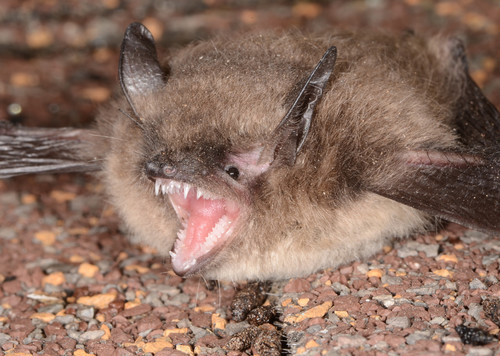
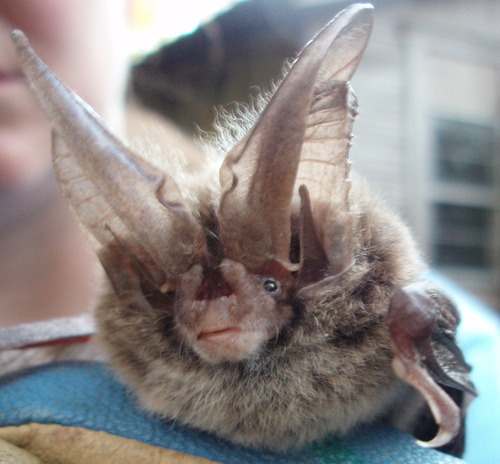
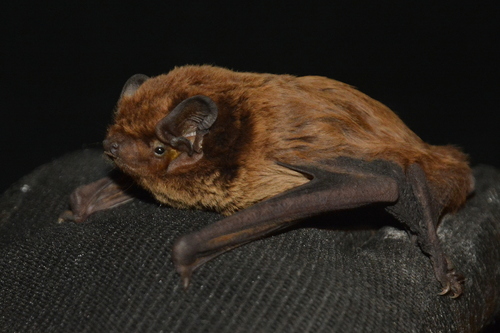
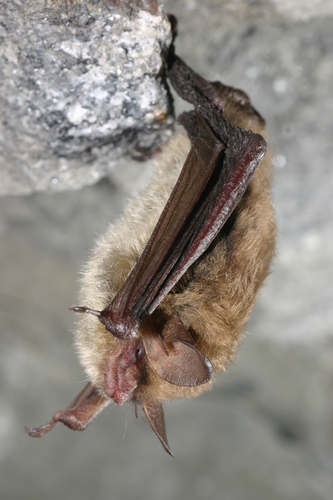
The northern long-eared bat, Myotis septentrionalis, is a small bat with an average total length of 8.6 cm (3.4 in), including a tail around 4 cm (1.6 in) long. Adult individuals weigh between 5 and 8 g (0.18 and 0.28 oz). Both their fur and wing membranes are light brown in color. This species lacks the dark shoulder spots seen in the closely related, otherwise similar Keen's myotis (Myotis keenii). Compared to other Myotis species, northern long-eared bats have long ears with a relatively long, pointed tragus; when folded forward, the ears extend well past the nose. They also have a longer tail and larger wing area than most similarly sized Myotis bats, which gives them increased maneuverability during slow flight. Northern long-eared bats range across most of the eastern half of the United States and Canada. Their distribution extends north to Manitoba and Newfoundland, and south to North Carolina and Alabama. They also occur rarely in western parts of Canada, sometimes reaching as far west as the western borders of British Columbia and Yukon. They live primarily in forested habitats, especially boreal forests, as they typically roost in hardwood trees during the summer.