About Myotis myotis (Borkhausen, 1797)
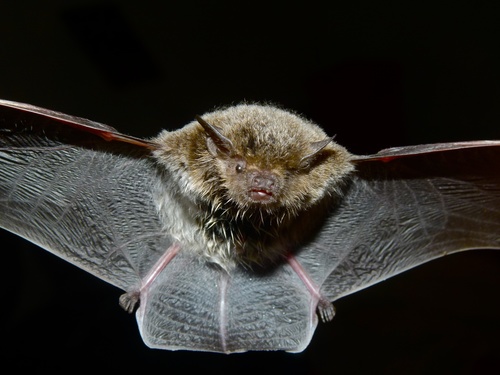
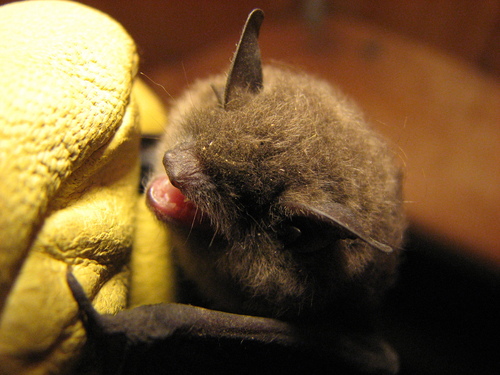
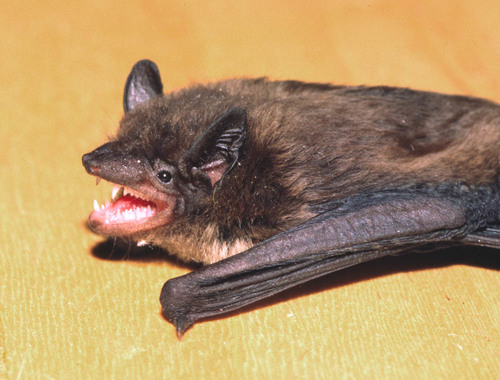
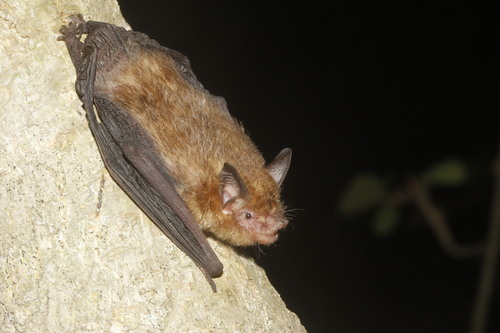
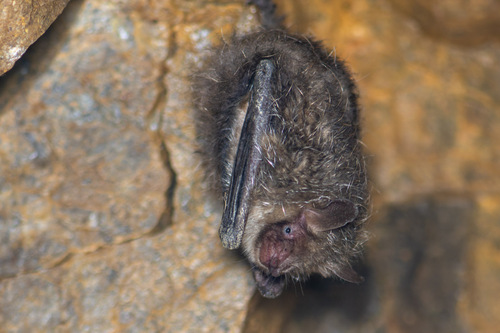
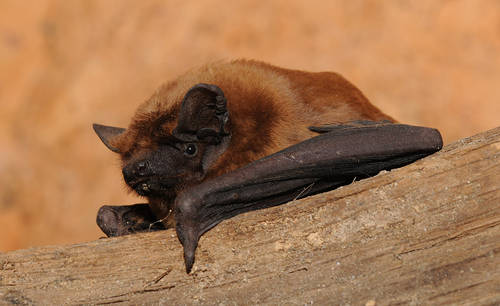
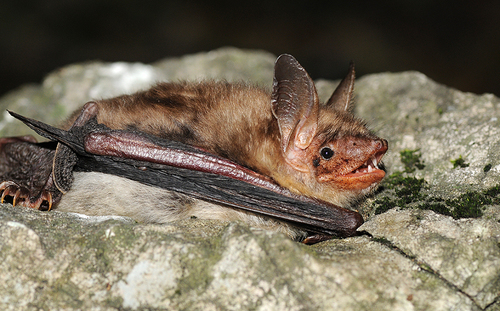
Myotis myotis, commonly called the greater mouse-eared bat, is a large bat belonging to the genus Myotis. It has a long, broad muzzle and big, long ears. Its dorsal body is brown to reddish-brown, while its ventral body is dirty white or beige. The tragus reaches half the length of the ear, and most individuals have a small black tip on the tragus. Its wing membranes are brownish in colour. As one of the largest Myotis species and one of the largest bat species in Europe, it can weigh up to 45 grams (1.6 oz), and measures 8 to 9 cm from head to tail, which is slightly larger than a house mouse (Mus musculus). It has a wingspan of 40 cm, a forearm length of 6 cm, and a tail that is 4 to 5 cm long. Exceptionally long-lived for its size, this species can have a lifespan of more than 35 years. This bat is distributed across most of Europe, absent from Ireland, Denmark, Latvia, Estonia, Finland, and the Scandinavian Peninsula. It also occurs on many Mediterranean islands, including Sicily, Malta, the Gymnesian Islands, and the Balearic islands of Mallorca and Menorca. On Mallorca, it is the most abundant bat species, with several caves hosting large colonies of 200, 400, and 500 individuals. It is also very common in the Iberian Peninsula and France. In the Middle East, it has been recorded in Turkey, Israel, Syria, Jordan, and Lebanon. Its presence in the United Kingdom is not confirmed. During the 20th century, the species was very rare in Great Britain, only found in southern England. The population at the only known hibernation roost declined until only a few males remained, and after these individuals disappeared, the species was considered locally extinct. Occasional individuals have been found in recent years, however, suggesting either that a small colony survives or that new individuals have colonized Great Britain from mainland Europe. In 2012, a LIFE-Nature project was started to protect the several thousand greater mouse-eared bats living in Gola della Rossa and Frasassi Nature Park in the Marches.