About Myotis emarginatus (E.Geoffroy, 1806)
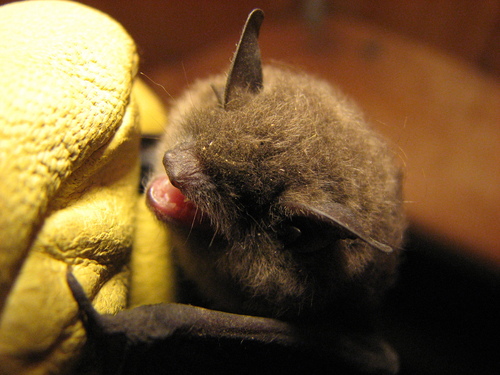
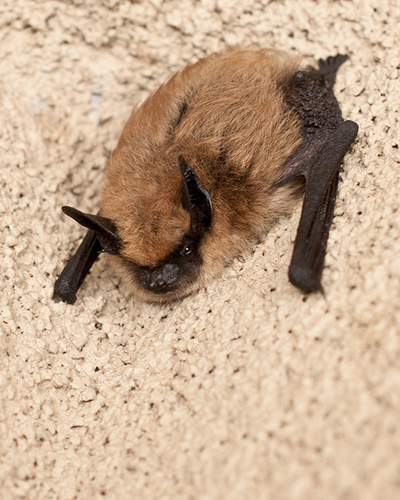
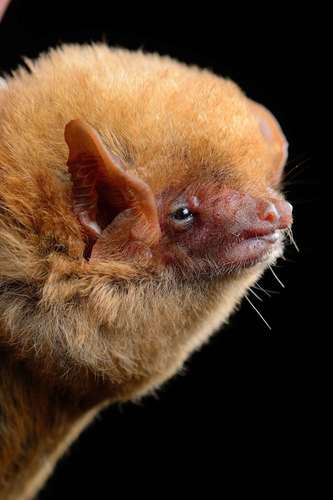
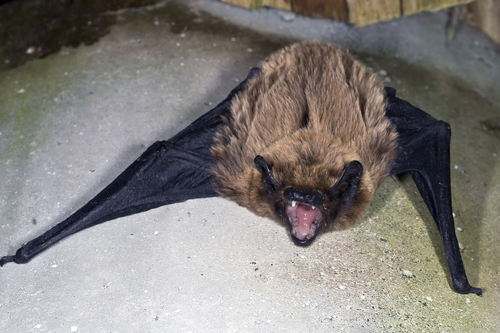
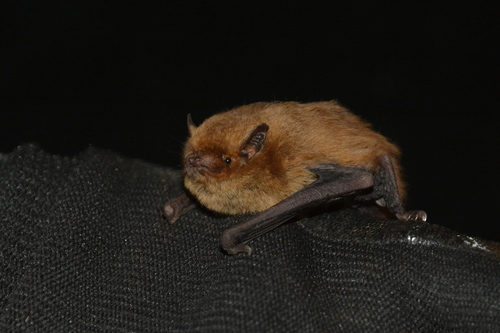
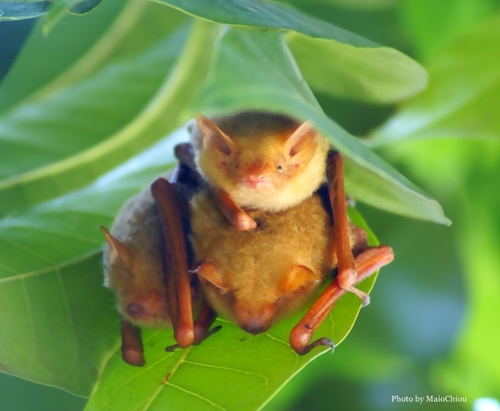
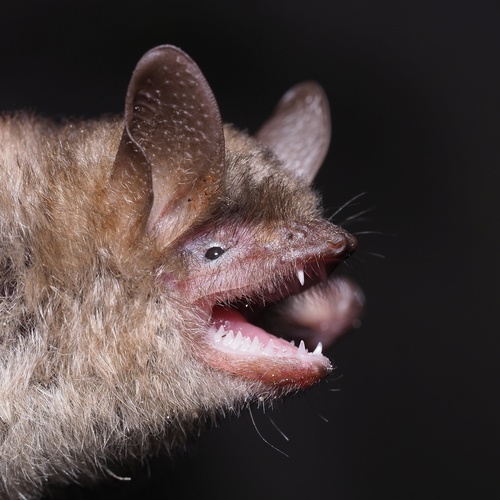
Myotis emarginatus, commonly known as Geoffroy's bat, is a medium-sized bat with long, woolly fur. The dorsal side of its torso ranges from rust-brown to fox-red, while the ventral side is a pale yellowish-brown with poorly defined boundaries. Juvenile bats are almost entirely grey, and their faces are light brown. Their ears are brown, with an almost right-angled notch on the outer edge and many scattered wart-like growths on the auricle; the tip of the tragus does not reach the ear edge's notch. Geoffroy's bat has broad, brown wings, and the edge of its tail membrane is supported by a straight calcar, with part of the membrane covered in short, straight, soft hairs. Geoffroy's bat is distributed across Afghanistan, Albania, Algeria, Andorra, Armenia, Austria, Azerbaijan, Belgium, Bosnia and Herzegovina, Bulgaria, Croatia, Cyprus, the Czech Republic, France, Georgia, Germany, Greece, Hungary, Iran, Israel, Italy, Jordan, Kazakhstan, Kyrgyzstan, Lebanon, Luxembourg, Montenegro, Morocco, the Netherlands, North Macedonia, Oman, Poland, Portugal, Romania, the Russian Federation, San Marino, Saudi Arabia, Serbia, Slovakia, Slovenia, Spain, Switzerland, Tajikistan, Tunisia, Turkey, Turkmenistan, Ukraine, and Uzbekistan. A single specimen was recorded in southern England in 2012. Geoffroy's bat feeds primarily on spiders and flies. In southern Belgium, Geoffroy's bats feed mainly on blood-feeding muscid flies, specifically stable flies and face flies, which make up as much as 72% of their diet in some areas. The other main component of their diet is web-building spiders, which make up an increased proportion of their prey where suitable flies are not available. Most spiders eaten by Geoffroy's bat belong to the family Araneidae, with Theridiidae species making up a secondary portion. Other insect species account for a smaller share of their total prey intake. In the Southern Basque Country, Geoffroy's bat colonies eat a diverse range of arthropods at the start of the breeding season, with flies forming the largest prey group. As the season progresses, populations of both spiders and flying insects reach their peak, and the bats shift to a more specialized diet focused heavily on spiders. By August, the orb-web spider Araneus diadematus makes up 80% of their recorded diet, with stable flies and houseflies ranking as the second and third most important prey items in this region. The species' preferred prey are either flightless (such as spiders) or do not fly at night (such as muscid flies), so Geoffroy's bat feeds primarily by gleaning prey from hard surfaces and leaves. Spider webs have been found in the bats' spoor, indicating that the bats capture spiders directly from their webs. Iberian populations of Geoffroy's bat forage mainly in broad-leaved and mixed forests, and less often in coniferous plantations. Their preference for dense habitats is tied to their favoured prey, web-building spiders, which require complex vertical habitats to build their webs. In the northwestern parts of the species' range, it lives in riparian forests and grasslands, and also regularly visits cattle sheds that host large populations of parasitic flies. In the Mediterranean portion of its range, it is commonly found in olive plantations. Geoffroy's bat typically roosts underground and in human-built structures, often sharing roosts with Rhinolophus bat species.