About Myotis californicus (Audubon & Bachman, 1842)
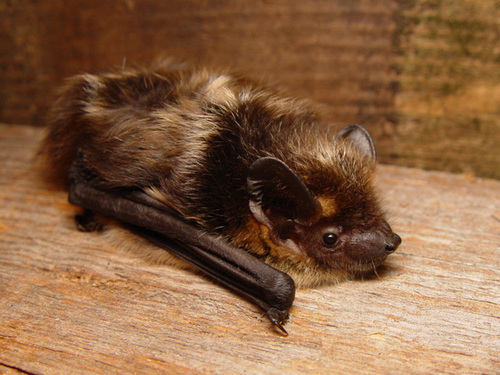
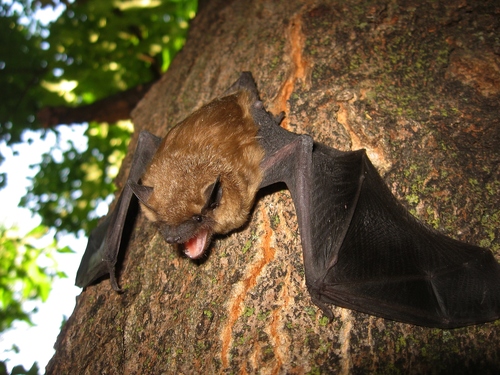
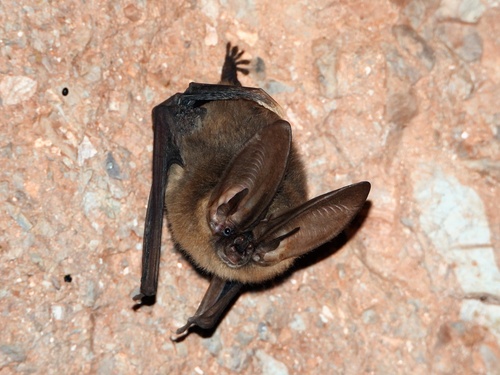
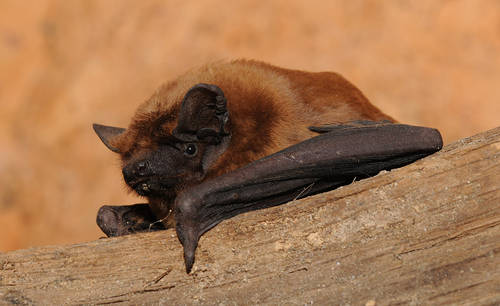
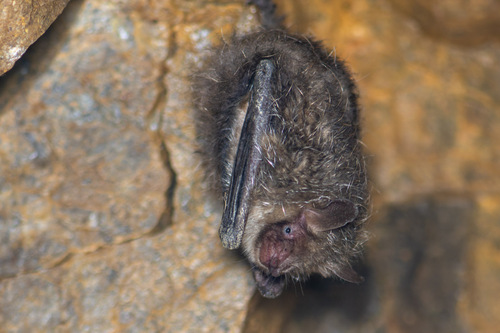
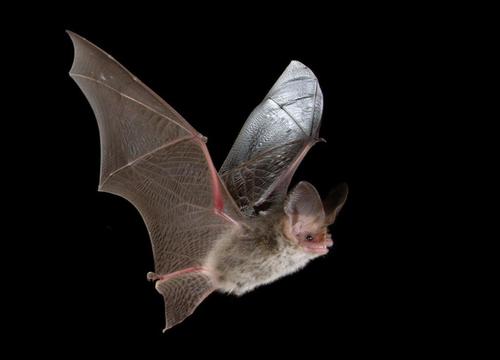
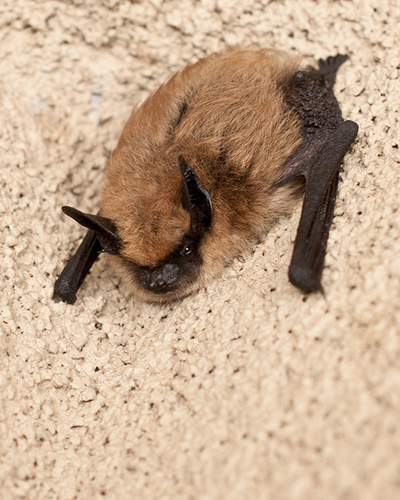
Myotis californicus (Audubon & Bachman, 1842), commonly called the California myotis, is a small bat species. Adults measure 70–94 mm (2.8–3.7 in) in length and weigh 3.3–5.4 g (0.12–0.19 oz), with an average wingspan of 220 mm (8.7 in). They have pale, dull fur, medium-sized ears 12–15 mm (0.47–0.59 in) long with a narrow, pointed tragus, an obviously keeled calcar, and very small feet measuring 5–7 mm (0.20–0.28 in). Their feet are even smaller than those of the western small-footed myotis, a species that the California myotis is easily confused with. Additional distinguishing features include a slightly lighter facial mask and an apparent shorter tail. While the actual tail length of the two species is the same, the western small-footed myotis’s tail extends 2–3 mm (0.079–0.118 in) past the uropatagial connecting membrane, creating the appearance of a longer tail. This species is largely free of the ectoparasites common to other bat species, including fleas, ticks, flies, lice, and bed bugs; mites have only occasionally been found on the dorsal side of their wings. The dental formula for M. californicus is 2.1.3.3 3.1.3.3 × 2 = 38 total teeth. Within California, the California myotis lives in a wide range of habitats from coastal environments to deserts. In desert areas, they are frequently seen near water sources, which are often located close to rocky canyons or sandy flats. In coastal regions, this species prefers riparian groves containing sycamore, willow, and cottonwood trees, and it can also be found in open forests and oak groves. California myotis mate in the fall, and give birth in late spring between May and early June. For most of the year, adult males and females prefer to stay separate, only occasionally roosting together in September, October, February, and March. Females produce one pup per year, and can live approximately 15 years in the wild. During the birthing season, females form small maternity colonies of around 20 individuals, usually roosting under loose tree bark or in rock crevices. Males and non-reproductive females roost alone or in small groups. In winter, California myotis may either hibernate in mines or rock caves, or remain active throughout the entire season.