About Myotis bechsteinii (Kuhl, 1817)
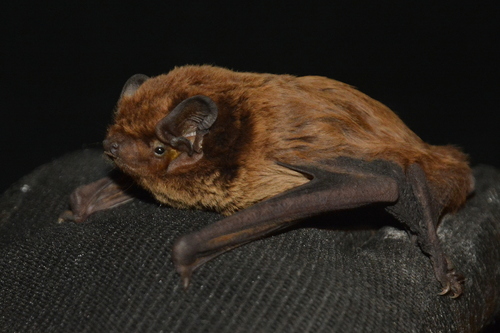
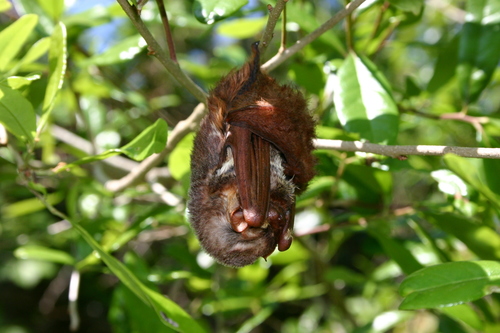
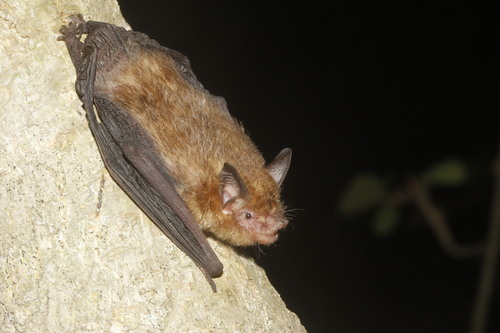
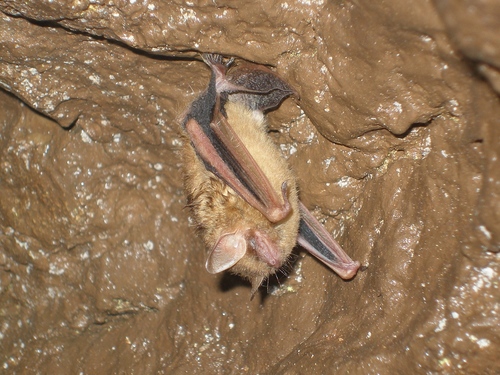
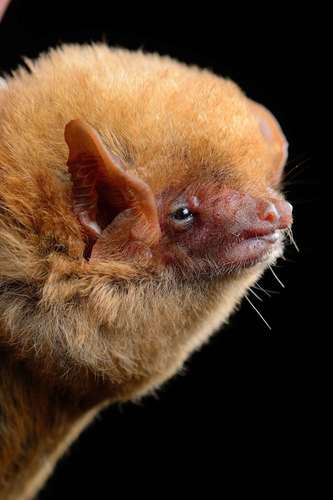
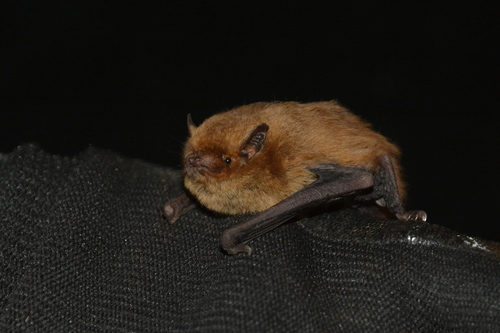
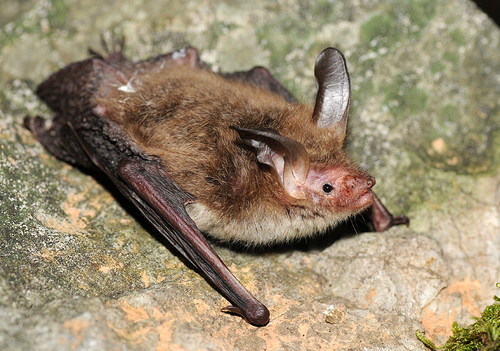
Bechstein's bat, scientifically named Myotis bechsteinii (Kuhl, 1817), is a medium-sized bat with relatively long ears. Adult individuals have long, fluffy fur: reddish-brown on the upper body and gray-white on the underbody. They have a pinkish face, and their ears are both long and broad. Their wings are dark brown and fairly broad, with the wing membrane attached to the base of the feet. This species reaches a maximum wingspan of 30 cm (11.8 in), and has a head-to-body length of 5 cm (1.9 in).
Bechstein's bat is found across 38 countries: Austria, Armenia, Azerbaijan, Belarus, Belgium, Bosnia and Herzegovina, Bulgaria, Croatia, Czech Republic, Denmark, France, Georgia, Germany, Greece, Hungary, Iran, Italy, Liechtenstein, Moldova, Montenegro, Netherlands, North Macedonia, Poland, Portugal, Romania, Russian Federation, Serbia, Slovakia, Slovenia, Spain, Sweden, Switzerland, Turkey, Ukraine, and the United Kingdom. In the United Kingdom, this species occurs mainly in southeastern Great Britain, which is often cited as the northernmost extent of its range, though the species also lives in southern Sweden. Within the UK, it is present in the Forest of Dean and Herefordshire. In 2009, The Bat Conservation Trust conducted a detailed study across 10 counties to map the species' range. In 2010, a lactating female Bechstein's bat was found in Grafton Wood, an Ancient Wood originally part of the Forest of Feckenham that is jointly owned by the Worcestershire Wildlife Trust and Butterfly Conservation. This find indicated a breeding colony was present in or near the wood. The following year, Bechstein's bats were recorded again at Grafton Wood, and also at Trench Wood, another site in Worcestershire. The People's Trust for Endangered Species funds further research work at Grafton Wood. A single male bat has been caught and recorded near Colby in Southern Pembrokeshire. By 2016, the species was also known to roost in Sheephouse Wood, near Aylesbury in Buckinghamshire.
This bat is a specialist that lives almost exclusively in forested areas, and is rarely encountered outside forests. It has been recorded in mixed forests in southwestern Asia, while European populations favor deciduous forests with a high proportion of old trees. Beech and oak woodlands make up a large share of its total habitat. Occasionally, Bechstein's bats can also be found in orchards, gardens, and other cultivated areas.