About Myosotis secunda Al.Murray
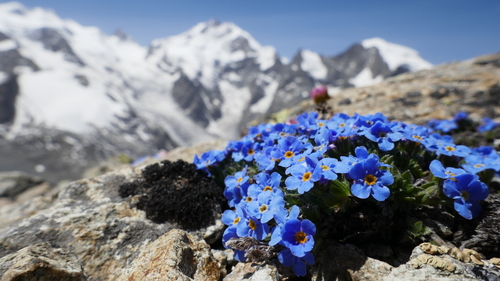
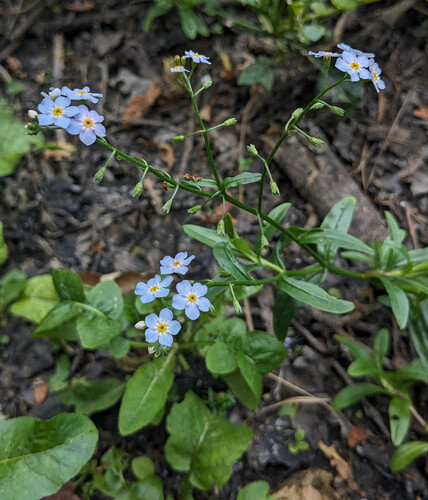
Myosotis secunda Al.Murray is a perennial herb. Creeping stems grow from the plant's base and produce roots at their nodes, and stems can reach up to 38 centimeters in height. The flowers of this species are most commonly blue, though white flowers occasionally occur. Its flower spikes hold multiple flowers that measure 4 to 9 millimeters in diameter. This species is endemic to Europe. It grows in the United Kingdom, Ireland, Spain, Portugal, and France, as well as on the Isle of Man, Guernsey, Jersey, and the Faroe Islands. In Portugal, it can be found on the mainland, and also on the islands of Madeira and the Azores. Myosotis secunda grows near wetland habitats, including the margins of streams, rivers, lakes, ponds, creeks, and waterfalls. It also grows in wet grasslands, bogs, fens, marshes, swamps, and peatlands, and often occurs in acidic soils. Both Myosotis secunda and Myosotis scorpioides grow in wetland habitats. Myosotis scorpioides grows in nutrient-rich soils, while Myosotis secunda outcompetes and replaces it in nutrient-poor soils. Myosotis secunda is a host plant for the beetle Phaedon armoraciae. It can sometimes be found growing alongside other wetland plant species, specifically bog pimpernel (Lysimachia tenella, synonym Anagallis tenella) and marsh-bedstraw (Galium palustre).