About Myodes rutilus (Pallas, 1779)
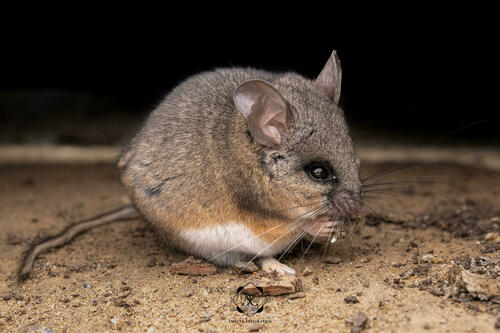
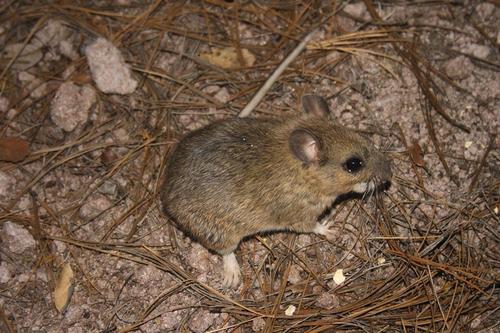
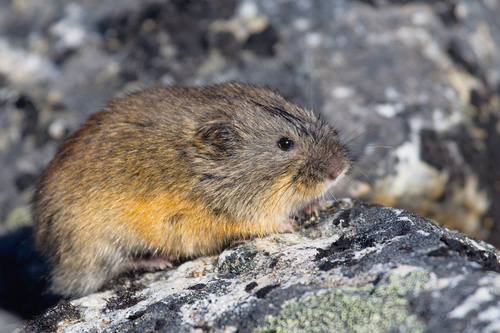
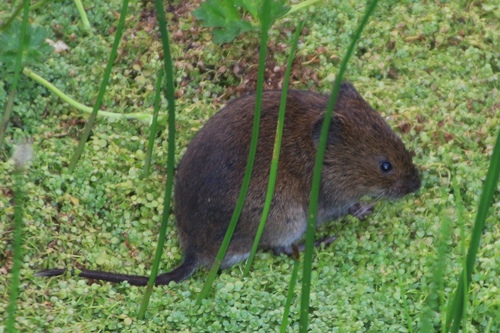
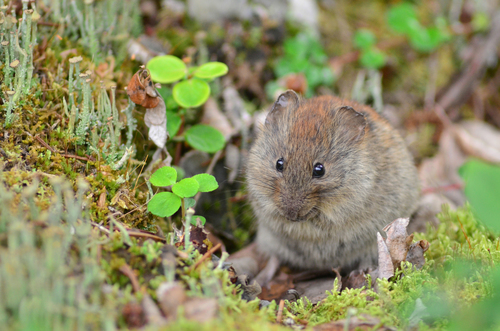
Myodes rutilus, commonly called the northern red-backed vole, has short, slender bodies with a rust-colored back, light brown sides and underparts, and a short thick tail. Their short ears are visible through their fur. Adults are 14 cm long overall, with a 3.5 cm tail, and weigh approximately 30 to 40 g. Their dental formula is 1/1, 0/0, 0/0, 3/3. Northern red-backed voles are active year-round, most commonly at night, and they can cause damage to fruit trees and stored grains. They are most commonly found in northern shrub vegetation, open taiga forests, or tundra. They are abundant in both early successional sites and mature forests, and occasionally occupy rock fields and talus slopes. Northern red-backed voles use surface runways through vegetation as travel corridors. They build nests in short burrows or under protective objects like rocks or roots. They remain active all winter, building long tunnels under the snow, and their winter nests are typically placed on the ground in thick moss. They frequently invade human houses during the winter. Northern red-backed voles feed on leaves, buds, twigs and berries from many shrubs, as well as forbs, fungi, mosses, lichens, and occasionally insects. Berries are generally the major component of their diet, and they eat berries whenever they are available. In central Alaska, researcher West found that northern red-backed voles rely heavily on fruits from multiple berry-producing plants across all seasons: these include bog blueberry (Vaccinium uliginosum), mountain cranberry, black crowberry (Empetrum nigrum), comandra (Comandra livida), and bunchberry. In this region, northern red-backed voles eat primarily berries during fall and winter. Lichens are only consumed during winter and spring. When berries are not available in early summer, they eat mosses. Mosses also make up a large portion of their mid- to late summer diet, though berries still remain the primary food. On the Kenai National Wildlife Refuge, northern red-backed voles feed in summer on berries from species including mountain cranberry and bunchberry, alongside fungi, succulent green plants, and insects. As fungi become abundant late in summer, they make up a large percentage of the voles' diet. Consumption of mountain cranberry declines as summer progresses, even as berry abundance increases, indicating that northern red-backed voles prefer fungi over mountain cranberries. The proportion of truffle in their diet stays consistent throughout the summer.