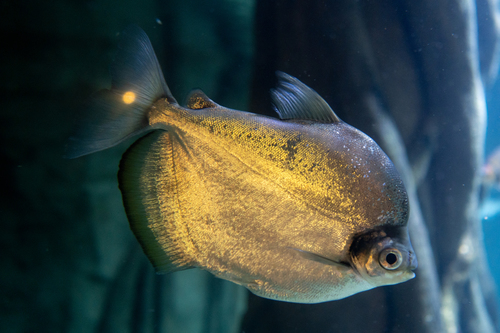
About Mylossoma duriventre (Cuvier, 1818)
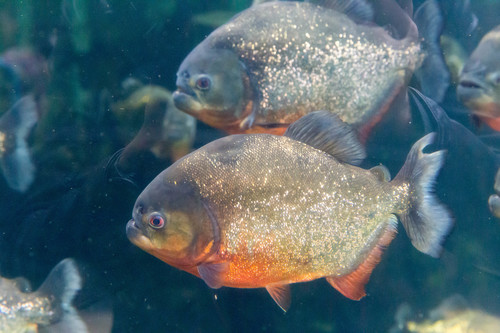
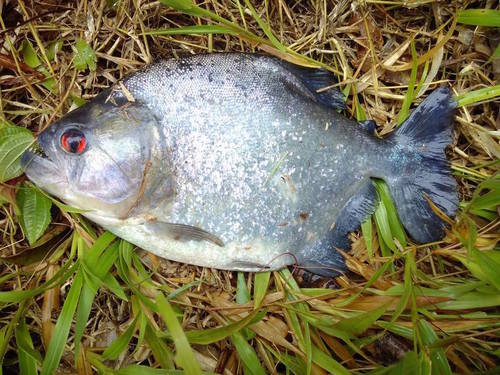
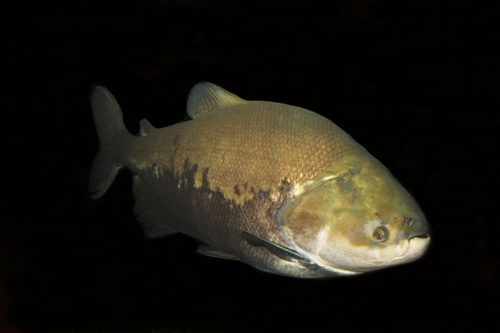
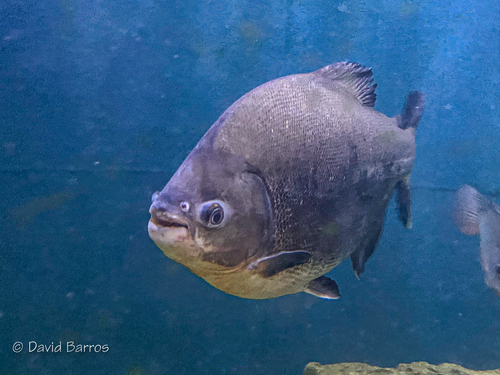
Mylossoma duriventre, commonly known as the silver mylossoma, is a species of freshwater serrasalmid fish that is endemic to tropical and subtropical South America. This species reaches a maximum total length of approximately 25 cm (10 in) and a maximum weight of 1 kg (2.2 lb). It is targeted by local fisheries; in Brazil it is called 'pacu', and in Venezuela it is called 'palometa' — names that it shares with several of its close relatives.
Historically, Mylossoma duriventre was considered native to the Amazon, Orinoco, and Río de la Plata basins, as well as the Tocantins River and its western tributary, the Araguaia River. It prefers nutrient-rich waters, but can also be found in the lower sections of nutrient-poor rivers. In 2018, a review that used DNA analysis and morphometrics restricted the confirmed range of Mylossoma duriventre to only the Río de la Plata Basin, which includes the Paraguay River, lower Paraná River, and Uruguay River. Two species that were previously treated as synonyms of M. duriventre have now been revalidated: M. albiscopum from the Amazon and Orinoco basins, and M. unimaculatum from the Tocantins–Araguaia basin.
Mylossoma duriventre is potamodromous, meaning all of its migrations take place entirely within freshwater habitats. Its full migration pattern is not yet completely understood, but during the flood season in the Amazon (which runs from December to March), these fish migrate from floodplain lakes and pools into larger rivers. There, they travel upstream in large groups to spawning areas, though the exact location of their spawning sites remains unclear. After spawning, adult fish move out of the rivers into the flooded forest floor. Larvae are carried downstream, and when the forest floods, they spread out into floodplain nursery areas where their planktonic food is more abundant. When water levels drop, both adult and juvenile fish return to the rivers and move upstream back into the floodplain lakes. In seasonally-flooded várzea forest, this fish is often found living in close association with Potamorhina altamazonica. Juvenile M. duriventre eat insects, while adult fish feed on fruits and seeds.