About Myiarchus apicalis P.L.Sclater & Salvin, 1881
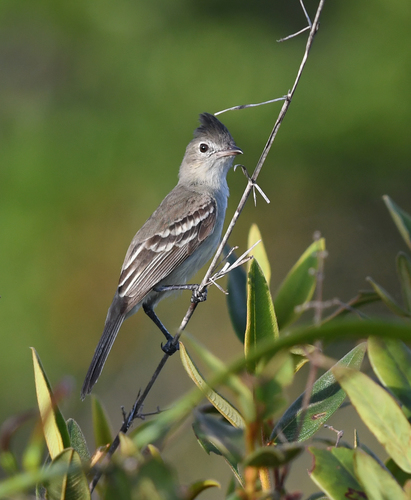
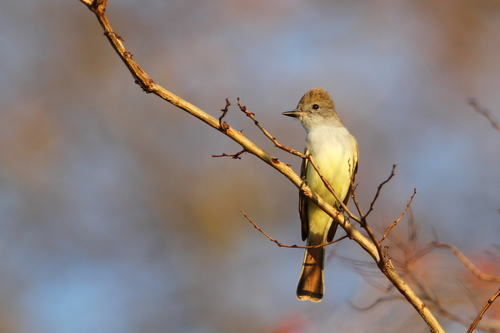
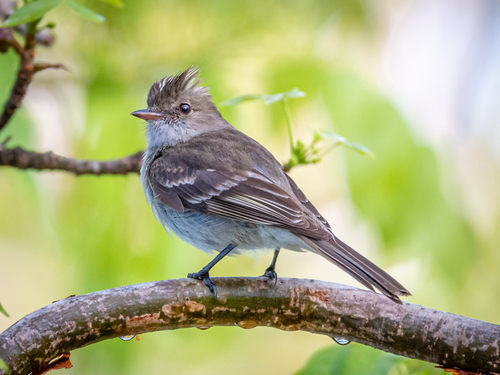
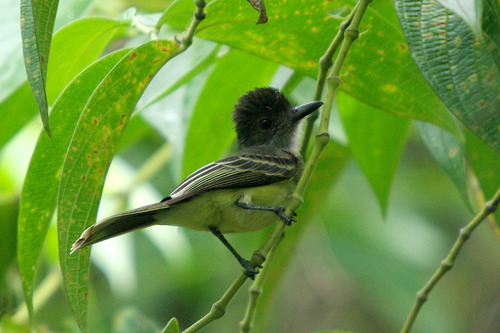
Myiarchus apicalis P.L.Sclater & Salvin, 1881, commonly called the apical flycatcher, is a typical representative of Myiarchus flycatchers. It is a slim, medium-sized bird with very few truly distinctive features. It measures 17 to 18 cm (6.7 to 7.1 in) in length and weighs 26 to 33.5 g (0.92 to 1.2 oz). Males and females have identical plumage. Adult apical flycatchers have a brownish olive crown with a slight crest; darker center feathers on the crown create a streaked appearance. The rest of their face is gray. Their upperparts are darkish olive. Their wings are mostly brownish, with pale whitish to yellow outer edges on the secondaries and tertials, and faint yellowish outer edges on the innermost primaries. The greater and median wing coverts have whitish to yellowish outer edges and tips; the median covert tips form two distinct wing bars. Their tail is brownish, with pale creamy tips on all feathers except the central pair. Their throat and breast are gray, with a whiter color on the throat, and the sides of the breast carry an olive wash. Their belly and undertail coverts are yellowish. They have a dark iris, a dark bill, and dark legs and feet. Juveniles have rufous edges along their wing coverts and tail feathers. The apical flycatcher has a disjunct distribution across the watersheds of four west-central Colombian rivers. These include the Cauca River valley from Antioquia Department south to Cauca Department, the upper Dagua River valley in Valle del Cauca Department, the upper Patía River valley in Nariño Department, and the Magdalena River valley from Santander and Boyacá departments south to Huila Department. This species primarily lives in dry to arid valleys with scrubby vegetation. It can also be found at forest and woodland edges, in riparian areas with trees and brush, and in agricultural areas. Its elevation range is at least 400 to 2,300 m (1,300 to 7,500 ft), and may extend as high as 2,500 m (8,200 ft). It reaches its highest population densities below 1,700 m (5,600 ft).