About Myiagra cyanoleuca (Vieillot, 1818)
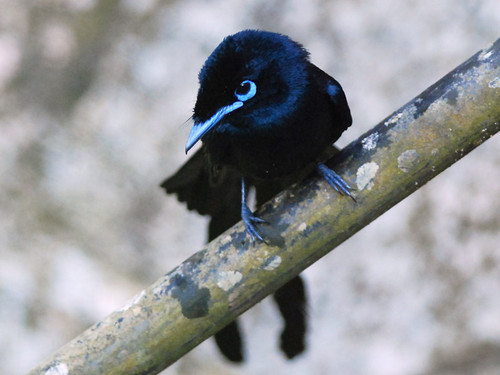
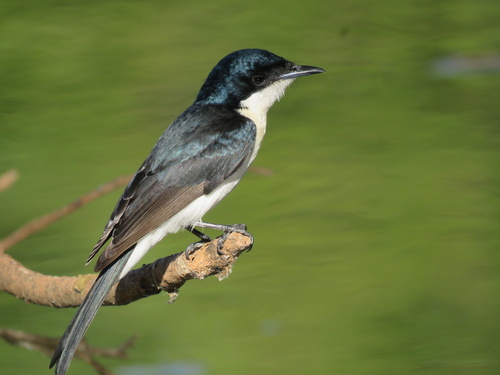
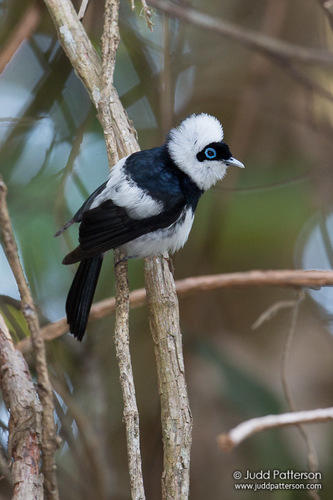
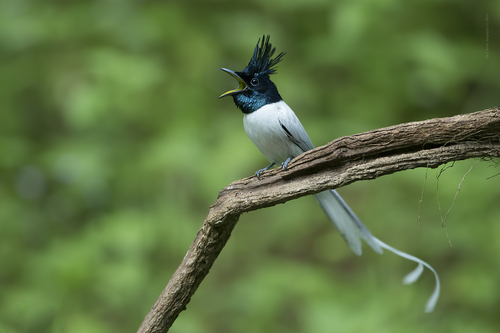
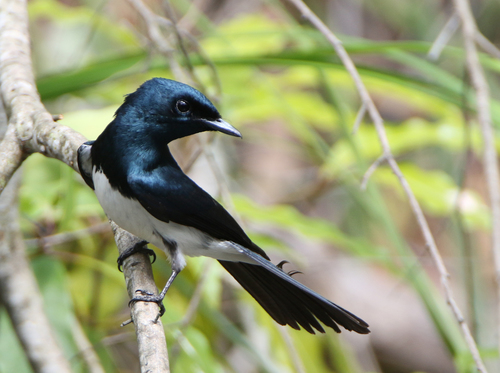
The satin flycatcher (scientific name Myiagra cyanoleuca (Vieillot, 1818)) is a small bird, measuring approximately 17 cm in height and weighing around 17 grams. It has a small, sharp, pointed beak that it uses to catch small invertebrate prey, including insects. This species shows distinct sexual dimorphism: breeding males have a glossy black-blue plumage, a white belly, and a small crest on the head, while females have dusty brown-grey plumage, a bright orange chest and throat, and a white belly. Satin flycatchers hold their bodies upright, and spread their tail feathers out to form a distinct fan shape. The satin flycatcher is most common in southeastern Australia, where it breeds during the warmer months. Populations live year-round along Australia's east coast in New South Wales and Queensland, and the species' range also extends to Papua New Guinea. Its distribution stretches along Australia's southern coast into South Australia. It is a vagrant species in New Zealand.