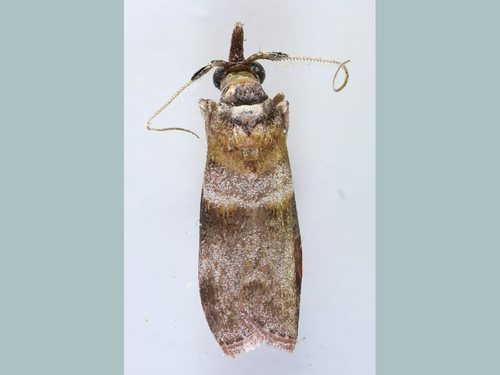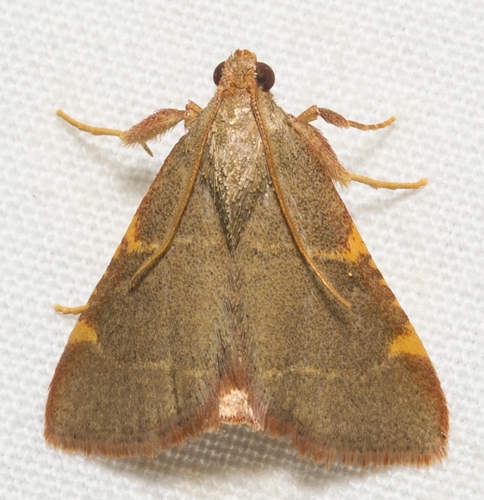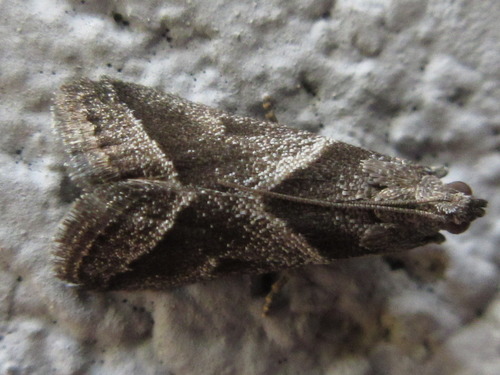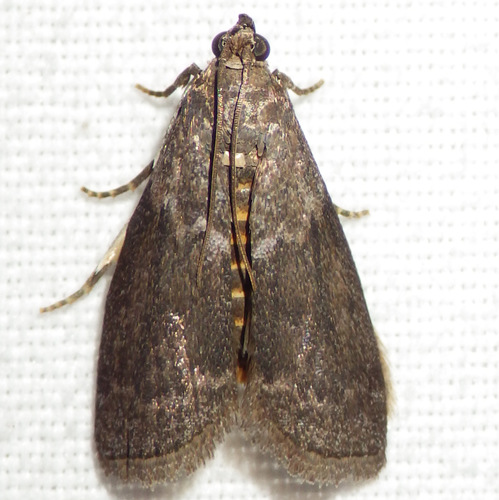
About Myelois circumvoluta Fourcroy, 1785
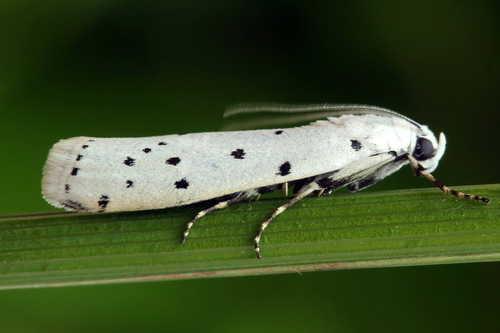
Myelois circumvoluta, commonly known as the thistle ermine, is a small moth species belonging to the family Pyralidae. This species is found in Europe. Its whitish forewings are marked with a pattern of black dots, a pattern that resembles the appearance of many ermine moths, which are members of the family Yponomeutidae. Despite this similar appearance, pyralids (like Myelois circumvoluta) and ermine moths are not closely related within the order Lepidoptera: ermine moths are classified as basal Ditrysia, while pyralids belong to the far more advanced Obtectomera. This moth has a wingspan that ranges from 27 to 33 millimetres, or 1.1 to 1.3 inches. It produces one generation per year, with adults flying from late spring to early summer; for example, flying occurs from the end of May to June in Belgium and the Netherlands. The caterpillars of Myelois circumvoluta feed on Cardueae (also called Cynareae) thistles, specifically greater burdock (Arctium lappa), cotton thistle (Onopordum acanthium), and species within the genera Carduus and Cirsium.