About Mycena roseoflava G.Stev.
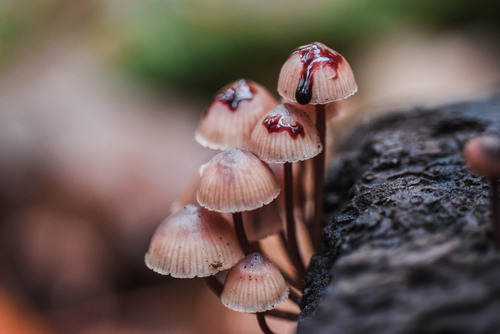
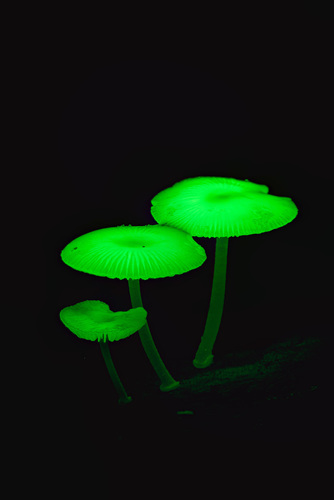
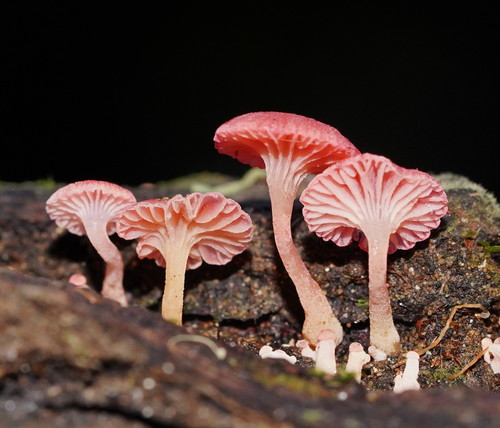
Mycena roseoflava is an agaric mushroom species belonging to the Mycenaceae family. It was first described in 1964 by New Zealand mycologist Greta Stevenson. This wood-inhabiting mushroom is native to New Zealand. It is a small saprotrophic fungus, meaning it gains nutrients by breaking down decaying organic matter. It grows on stressed or dying plants, and is most often found on rotting wood and twigs. As organic matter decomposes in the substrate this fungus occupies, M. roseoflava breaks this decaying matter down into its simpler components. M. roseoflava produces white spores, and has small white caps; the fungus typically reaches 5–10 millimeters in height, with a cap of the same width. It has a relatively short stem, which often attaches to the side of wood, and usually has a slightly swollen base. It is most active during the autumn season, and is not considered edible. It is rare in Victoria, Australia, where it has only been found in wetter forests and rainforests, but it is somewhat common in Tasmania, Australia. In her original description of the mushroom, Stevenson noted that caps were "pink fading yellowish, hemispherical with a shallow central umbilicus." Cap texture ranges from smooth to minutely floccose. Gills are described as adnate to slightly decurrent. Spores are observed to be globose, amyloid, and thin-walled. In 2021, the species was discovered to be bioluminescent, a trait that had never been recorded for this species previously. This discovery was made during a dedicated fungal study event held on Stewart Island, New Zealand. According to New Zealand Fungarium curator Dr. Maj Padamsee, "It could have been found before but it just hadn’t been recorded – people who had been out in the forest might have seen something because it’s not very bright… it’s a very pale light colour." As with fireflies and some marine organisms, the glow of this mushroom comes from enzymes that interact with the compound luciferin.