About Myadestes obscurus (Gmelin, 1789)
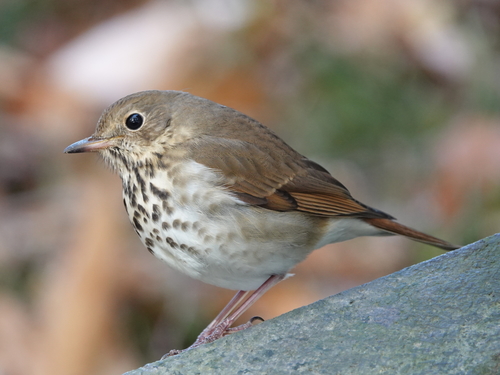
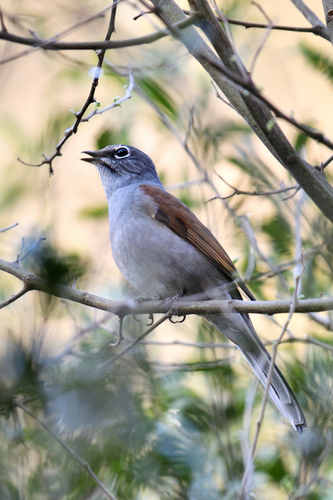
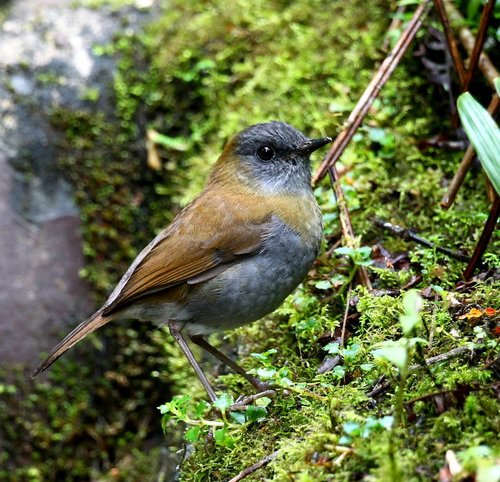
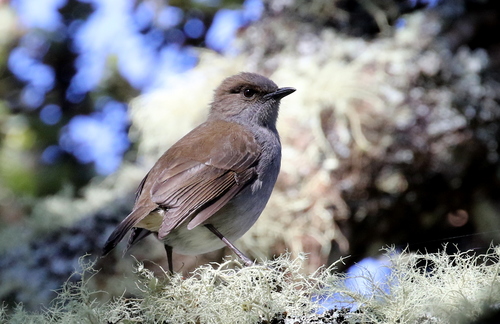
This species, commonly known as the 'ōma'o or Hawaiian thrush, has adult birds where males and females look similar. Adults are mostly plain in appearance: the head is grayish-brown, which transitions to pale gray on the underparts. The back and primary flight feathers are dull olive brown, and the vent and undertail coverts are whitish. Juveniles are similarly dull-colored, but have pale whitish-buff spotting on their wing coverts. Historically, the 'ōma'o lived across most of the island of Hawaii. Today, it is only found on the island's southern and eastern slopes, mostly at elevations over 1,000 meters above sea level. This range makes up just 25 to 30 percent of the species' original ancestral habitat. Its preferred habitat is rainforest, but it can also be found in high shrublands on Mauna Loa. It favors ohia and koa trees, and avoids areas invaded by banana poka, an invasive vine. At lower elevations, the species appears to be developing natural resistance to avian malaria. Major threats to the 'ōma'o include habitat destruction from residential development and agriculture, predation by introduced feral animals (mainly rats, cats, and mongoose), encroachment by invasive plants, and disturbance from feral livestock such as pigs. Multiple conservation actions have been carried out to help the species; one key action was the removal of pigs from several areas including Hakalau Forest National Wildlife Refuge in the 1990s.