About Musgraveia sulciventris (Stål, 1863)
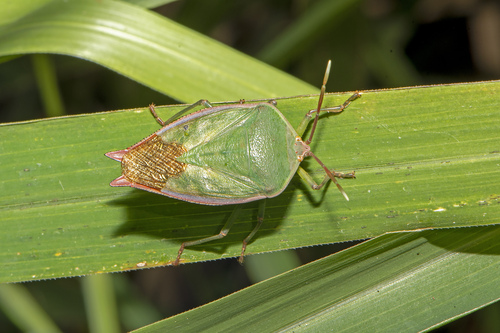
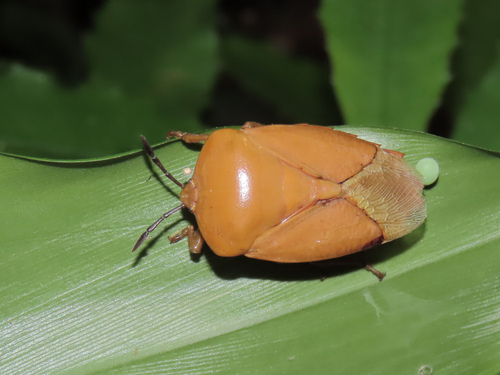
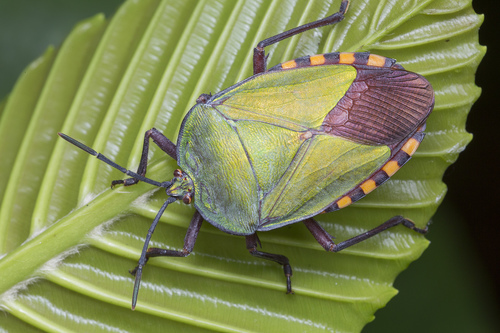
Musgraveia sulciventris, commonly called the bronze orange bug, also known as a type of stinkbug, has the following description and life cycle. Adult bronze orange bugs first appear on host trees in late winter. Mating occurs from late November through early March. Each mating pair produces 10 to 14 eggs over 3 to 5 days. A female can lay up to four separate clutches of eggs, which she deposits on the undersides of leaves. The eggs are bright green, spherical, and roughly 2.5 mm (0.1 inch) in diameter. Incubation length changes depending on current weather conditions; at 25 °C and 6 percent humidity, hatching takes an average of 7.4 days. Newly hatched nymphs are pale light green, making them hard to spot and often leading to them being misidentified as a different species. This species goes through five developmental stages called instars. First instars stay clustered close to their egg mass, and are transparent pale green with orange eyes. Second instars are more buff or pale yellow in color. Fully developed adults reach approximately 25 mm (nearly 1 inch) in length. They change color from orange to their characteristic bronze shade as they mature. Musgraveia sulciventris is distributed in Queensland and New South Wales in eastern Australia, with its range extending as far south as Canberra. Its overall distribution has expanded considerably since European colonization of Australia. In ecological terms, this insect's native host plants are desert lime (Citrus glauca), Australian finger lime (Citrus australasica), and Correas. It has since become a major pest of commercially cultivated citrus crops. It feeds by sucking fluid from new plant growth and young fruit, which causes affected growth and fruit to turn yellow and drop off, and entire cultivated citrus crops can be completely devastated. Its common stinkbug name comes from the foul-smelling liquid it sprays when threatened. This liquid is produced by glands in the insect's thorax, and contains alkanes, cimicine, and aldehydes. These defensive compounds are primarily used to protect the bug from other arthropods, and they are lethal to arthropods. The defensive chemicals of M. sulciventris are also known to be among the most harmful to vertebrates, which likely represents a specialized defense against birds. The spray can cause damage to human skin, and can even lead to temporary blindness if it gets into a person's eyes. Bronze orange bugs can spray this defensive liquid at a target from up to 0.6 m (2 feet) away. Known predators and parasitoids of the bronze orange bug include the common assassin bug (Pristhesancus plagipennis), the predatory asopine bug Amyotea hamatus, and the parasitoid wasps Eupelmus poggioni and Telenomus spp.