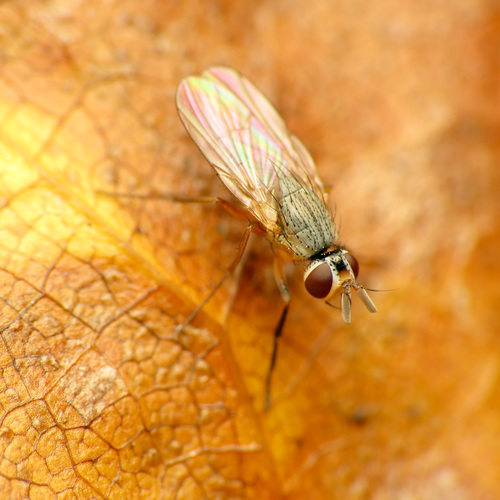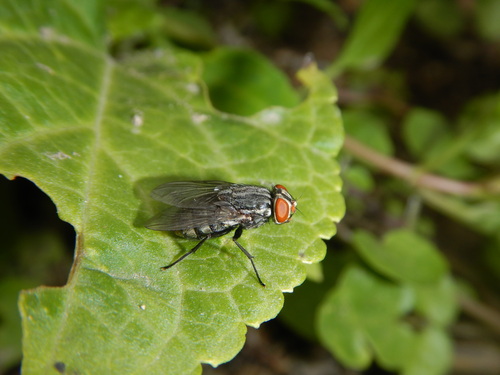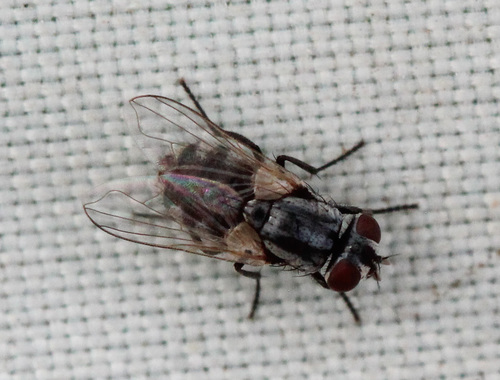
About Musca vetustissima Walker, 1849
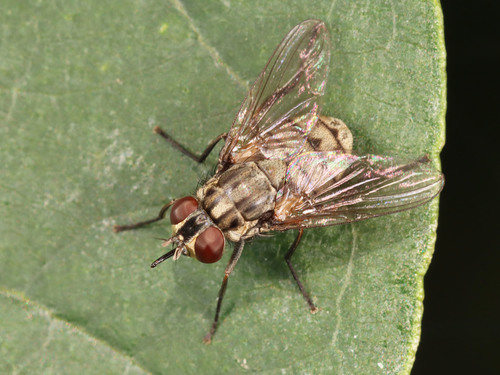
Musca vetustissima Walker, 1849, commonly called the Australian bush fly, is a species of dung fly closely related to the bazaar fly Musca sorbens. Adult Australian bush flies are attracted to large mammals to feed on fluid, and to feces to lay eggs. One study found that this species has a low survival rate for its eggs and larvae in cattle feces, due to infrequent rainfall as well as mortality caused by parasites and predators. Research has confirmed that the Australian bush fly can spread harmful bacteria, including the pathogens Salmonella and Shigella. Individual flies carry the largest bacterial populations in farm environments, while flies in urban environments carry the smallest bacterial populations. A standard bait mixture with small amounts of trimethylamine and indole, combined with large amounts of ammonium sulfate and anchovy meal, attracts Australian bush flies. Wind-oriented traps are used to catch this species. The number of ovarioles in female Australian bush flies is likely correlated with the female's body size. If a female does not get enough dietary protein, her egg development will stop. This species often crawls on the faces of humans and livestock, and also crawls on human and livestock feces, showing a preference for human feces. Australian bush flies breed in large numbers in dung pads, and their larvae have been found in the feces of large mammals. The species breeds year-round in subtropical Australia, and annual migrations help it repopulate other parts of Australia each spring. In one study, a mixture of levamisole and oxfendazole killed Australian bush fly larvae in sheep feces.