About Musa ornata Roxb.
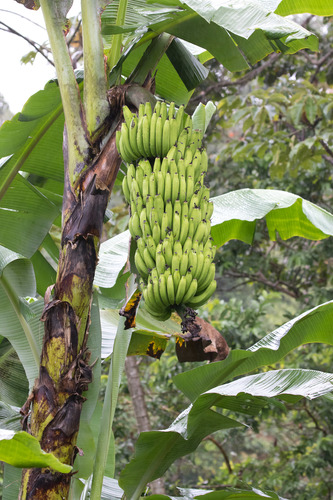
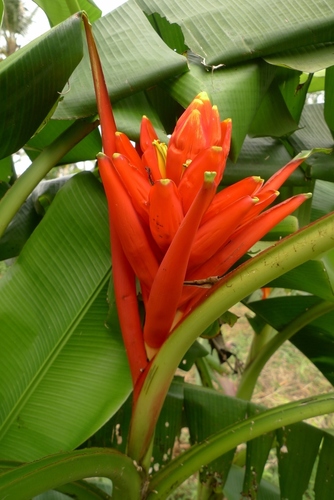
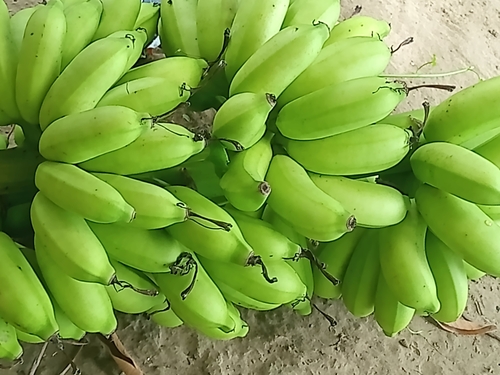
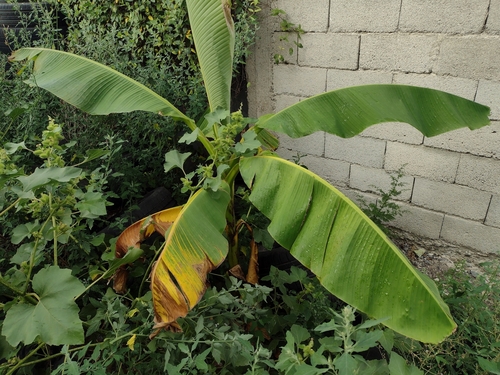
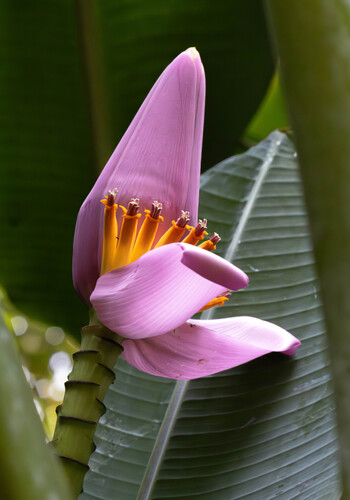
Musa ornata Roxb. is classified in section Rhodochlamys of the genus Musa. Rhodochlamys is one of four recognized sections of Musa, alongside the sections Australimusa, Callimusa, and Eumusa (which is sometimes also called Musa). As a member of Rhodochlamys, M. ornata has a basic chromosome number of 2n = 22, while species in Australimusa and Callimusa have a basic chromosome number of 2n = 20. Plants in the Rhodochlamys section are known for their brightly colored bracts. True M. ornata is a small species found in India, and it reached Central and South America early in the 19th century, where it became naturalized. While M. ornata itself is not especially variable, it hybridizes freely with other species, leading to the existence of many hybrids derived from this species across tropical regions of the Americas. Musa ornata plants grow to a height of 5 to 10 ft, or 1.5 to 3.0 m. They have green foliage with pink tones throughout. Mature leaves can reach 6 ft (1.8 m) long and 14 inches (360 mm) wide, and these leaves can be used for tropical cut flower arrangements. This species produces pink flowers and small, dark pink or crimson seeded, inedible bananas. Its inflorescence is yellow-orange, with both male and female flowers typically arranged 3-5 per bract in a single row, with clusters varying up to about 7 flowers. Male flowers have purple anthers, while female flowers have a green style. Musa ornata is native to southeast Asia, and is commonly found in Bangladesh, Burma, and India. This species is widely distributed throughout tropical regions, but is often misnamed. It is relatively tolerant; it was already recorded growing in Mauritius, off the coast of Madagascar, before 1805, and must have begun spreading several years before it was formally botanically described in 1824 on Indian banana plantations. It has also become naturalized in numerous parts of Mexico, where commercial seedlings are frequently sold under the incorrect name Musa violacea. Musa ornata is one of several banana species cultivated as an ornamental plant, valued for its attractive foliage and often grown in mixed tropical plantings. In temperate zones, it must be protected from winter frosts, or grown in heated glass structures with a minimum temperature of 7 °C (45 °F). This species has received the Royal Horticultural Society's Award of Garden Merit. It flowers readily and produces a small number of viable seeds. For other uses, the male bud of Musa ornata may be cooked or used in salads, while leaves are often used in making dressings. In northeast India, the plant's root is sometimes added to ayurvedic preparations, a form of alternative medicine. Ash from the pseudostem, corm, fruiting stalk, and fruit peel is used as an anti-scorbutic to prevent scurvy, to support digestion, or as a tonic.