About Musa coccinea Andrews
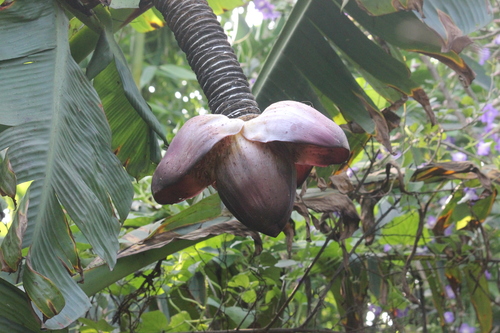
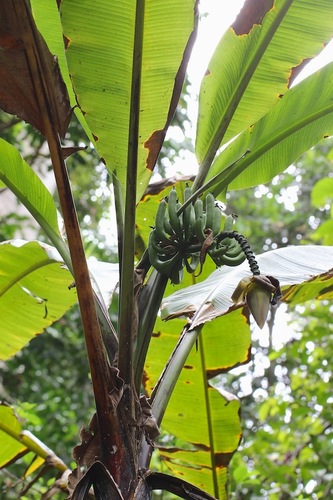
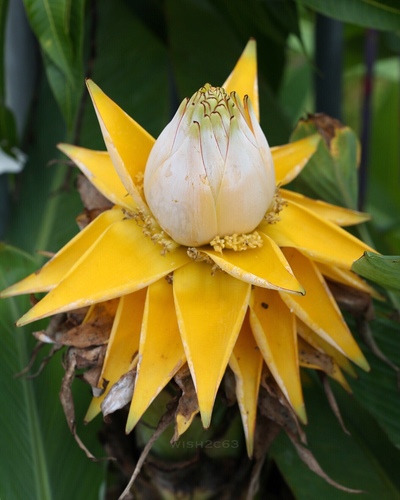
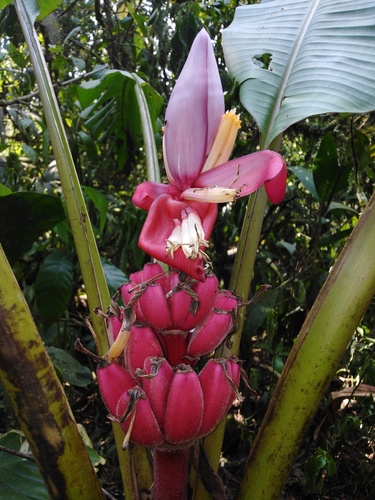
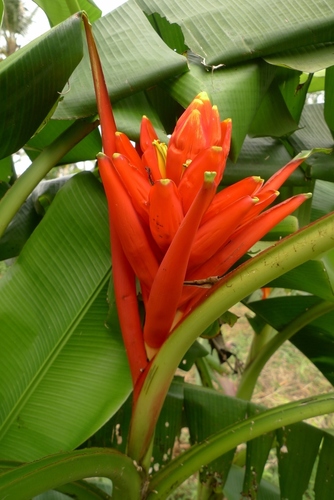
Musa coccinea Andrews, commonly known as scarlet banana or red-flowering banana, is a species of flowering plant in the Musaceae (banana and plantain) family. It is native to tropical China, specifically Guangdong, Guangxi, and southeastern Yunnan, as well as Vietnam. This is an evergreen perennial plant pollinated by bats, and is classified in section Callimusa, which now includes the former section Australimusa. Its diploid chromosome number is 2n = 20. The flower cluster of Musa coccinea is more rounded than that of the related species M. beccarii. Its flower clusters are formed of erect spirals of red bracts, which enclose tubular yellow flowers. The fruits are inedible, orange in color, only around 2 cm (0.8 in) long, and contain seeds. This species is cultivated for its ornamental value; for example, it is grown alongside heliconias on commercial farms in Hawaii. Musa coccinea cannot tolerate temperatures below 10 °C (50 °F), so it requires winter protection when grown in temperate zones. In the United Kingdom, it has received the Royal Horticultural Society's Award of Garden Merit. M. coccinea is a documented host for the red palm mite (Raoiella indica) in the New World.