About Musa balbisiana Colla
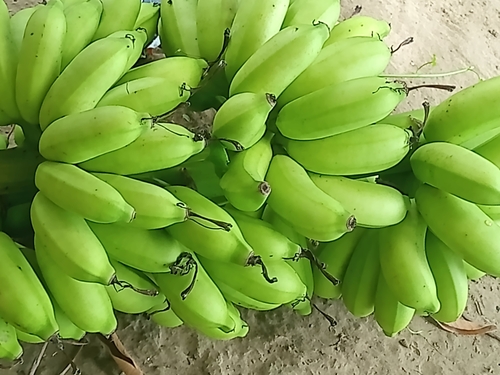
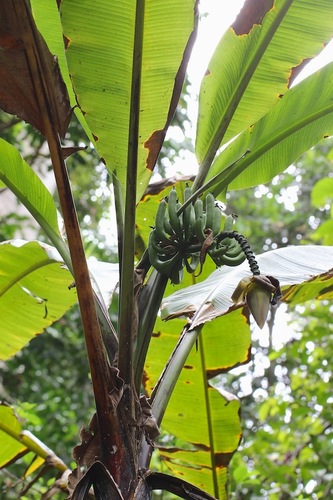
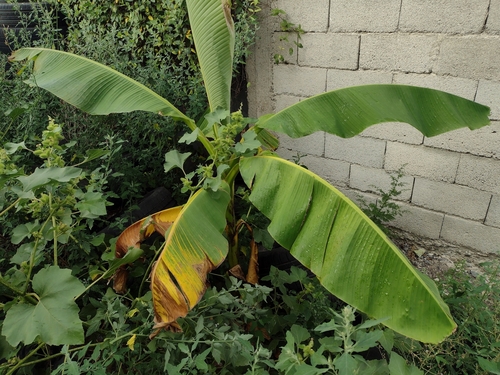
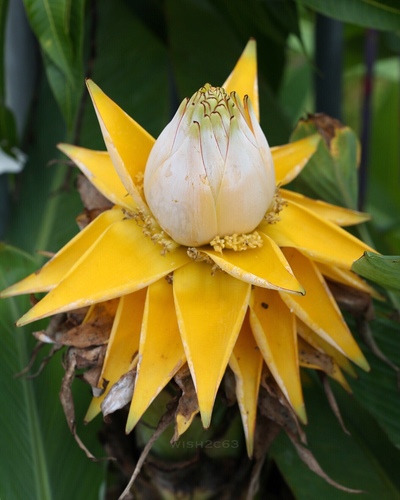
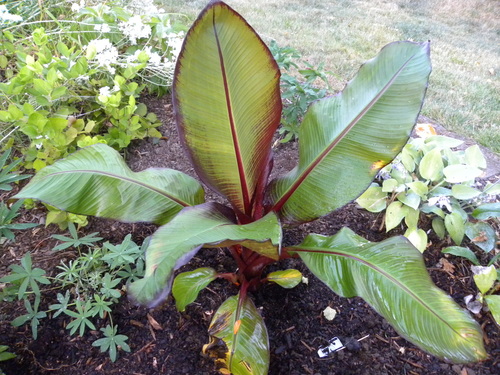
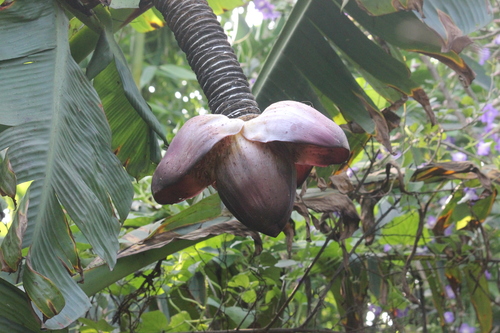
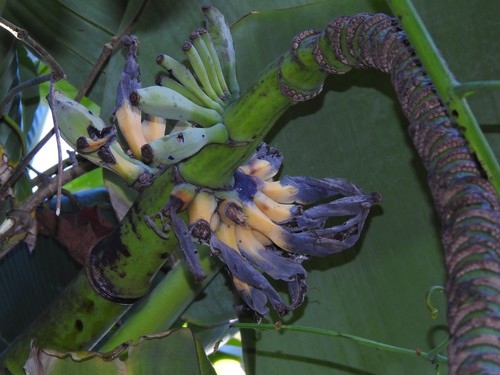
Musa balbisiana Colla grows in clumps with lush leaves, and has a more upright growth habit than most cultivated banana varieties. Its flowers are arranged in red to maroon inflorescences. The fruits it produces are blue-green in color, and are generally considered inedible due to the large seeds they contain. This species is native to eastern South Asia, the eastern parts of the Indian subcontinent, northern Southeast Asia, and southern China. It has been introduced to areas far outside its original native range, where it now grows wild. It is thought that wild Musa balbisiana was cooked and eaten by people; this assumption comes from the logic that farmers would not have developed cultivated bananas otherwise if the wild form was not already used for food. In the Philippines, seeded fruits of Musa balbisiana are called butuhan, which means "with seeds" in Tagalog. In Thailand, they are called kluai tani (กล้วยตานี), and in this region the leaves of Musa balbisiana are used for packaging and making crafts. Through polyploidy, natural parthenocarpic clones of this species develop; these clones produce edible bananas, and wild saba bananas are one example of this type of clone.