About Mus spretus Lataste, 1883
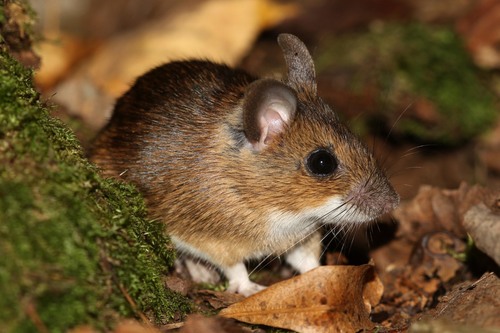
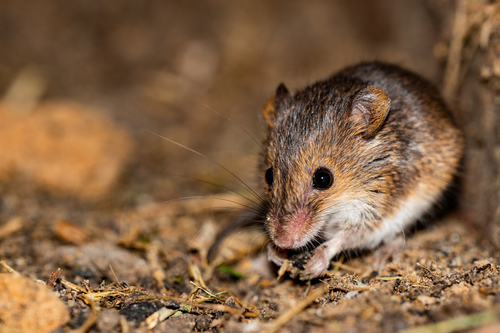
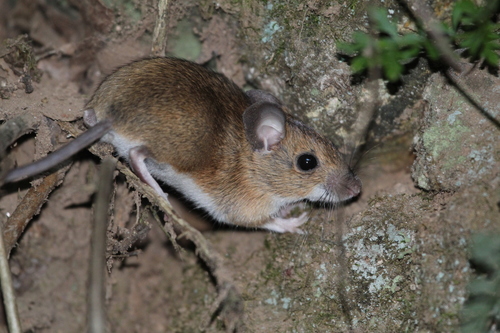
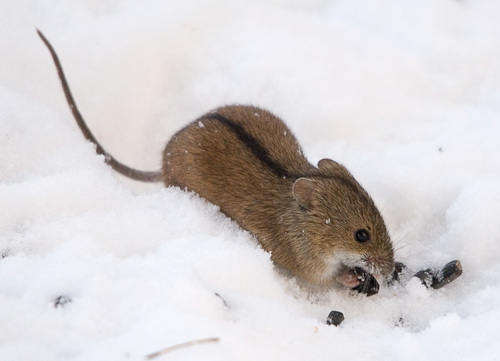
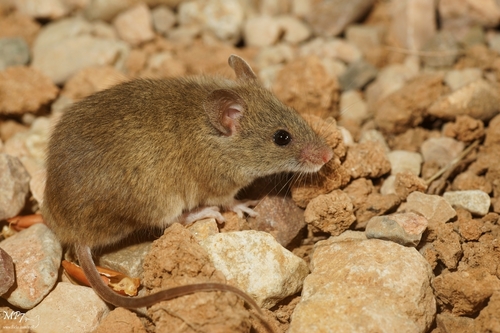
The Algerian mouse (Mus spretus Lataste, 1883) closely resembles the house mouse in appearance, and is most easily distinguished from that species by its shorter tail. It has brownish fur over most of its body, with distinct white or buff underparts. Its head-body length ranges from 7.9 to 9.3 cm (3.1 to 3.7 in), its tail is 5.9 to 7.3 cm (2.3 to 2.9 in) long, and it weighs 15 to 19 g (0.53 to 0.67 oz).
Algerian mice live in south-western Europe and the western Mediterranean coast of Africa. They are found across all of mainland Portugal, and in all but the most northerly parts of Spain. Their range extends east of the Pyrenees into southern France, where they occur in south-eastern regions around Toulouse and up the Rhone valley to Valence. They are also found throughout the Balearic Islands. In Africa, they live in the Maghreb regions of Morocco, Algeria, Tunisia, and western Libya, north of the Sahara desert, with a small population on the coast of eastern Libya.
This species prefers open terrain and avoids dense forests. It is most commonly found in temperate grassland, arable land, and rural gardens. It typically occurs in areas of grassland or open scrub, where shrubs and tall grasses help shelter it from predators, while still providing plenty of open ground. Though it is a fully wild species that avoids humans, it may occasionally be found in abandoned buildings.
The Algerian mouse is primarily nocturnal. It is an opportunistic omnivore, feeding mainly on grass seeds, fruit, and insects. It has been recorded to require only two-thirds the volume of drinking water that the house mouse needs. As a relatively unspecialized small mammal, it is preyed on by many predators, including owls, mammalian carnivores, and snakes.
Adult male and female Algerian mice are frequently captured in the same location, which implies a close relationship to their shared environment. The sedentary behavior of older males at the start of the breeding season suggests a territorial organization, though they do not fiercely attempt to exclude other individuals from their territory. Adult males have territories of around 340 m2 (3,700 sq ft) that overlap with the ranges of neighboring females, but do not overlap with the territories of other males. While they defend at least the core areas of their ranges from other mice, they are less aggressive than house mice, and establish dominance through ritual behavior rather than open violence. Lactating females are more aggressive than other females. Each male territory overlaps with the territory of at least two females.
Daily movement distances vary based on habitat, sex, age, and season, with an average range from 27.8 to 112 m (91 to 367 ft). The Algerian mouse is sympatric with the house mouse, but the two species do not usually share habitats. Competition between the two species depends on habitat quality, and the Algerian mouse dominates in the driest habitats. Algerian mice have been reported to clear their own faeces from areas they regularly inhabit or use, either by picking up droppings in their mouths or pushing them along the ground with their snouts. This hygienic behavior is noticeably different from that of the closely related house mouse.
Algerian mice breed for nine months of the year, and are sexually inactive from November to January. While they can breed in any other month, they have two particularly active breeding seasons. Adults surviving from the previous year produce a new generation of mice in April and May, then both these adults and their new offspring breed during a second peak from August to September. Gestation lasts 19 to 20 days, and results in the birth of two to ten blind and hairless pups, with an average of about five. The young begin to develop fur at two to four days old, their ears open at three to five days, and their eyes open at 12 to 14 days. The young start eating solid food as soon as their eyes open, but are not fully weaned for about three or four weeks, and leave the nest shortly after weaning. They reach full adult size at eight to nine weeks, by which time they are already sexually mature. They have been recorded to live up to 15 months.
Male Algerian mice show strong affiliative behavior toward their usual mate, regardless of reproductive state. There is a socio-spatial link between a single male and a single female, which may indicate a socially monogamous mating system. Male and female mice also form stable pair bonds that persist throughout the breeding season. These pairs display coordinated behaviors such as nest building and territory defense, which indicates a high level of social and behavioral compatibility. Encounters with male mice do not appear to affect the reproductive state of female mice, whether they are virgin or already paired.
The species exhibits a high degree of sexual dimorphism, with males being larger and more aggressive than females. Sexual maturity is reached earlier in females than in males: females can conceive and bear young from the sixth or seventh week of life, while males cannot fertilize a female before the eighth week. The start of sexual maturity depends on individual factors including environmental and population conditions.
Social interactions between male mice can alter their attraction to the odors of their competitors. Specifically, male mice that have had social interactions with an unfamiliar male show reduced attraction to the competitor's odor compared to mice that have had no social interaction. This change in attraction comes from changes in the receiver's perception of the odor. This perception of competitor odors may have important implications for mate choice and other social behaviors in the species; for example, a male mouse may have less attraction to a female mouse if she carries a competitor's odor.
The Algerian mouse is the only known small mammal species that does not have an inverted breeding pattern in southern European populations compared to northern populations. Researchers have studied the mechanism of inverted breeding patterns by testing for differences in spermatogenetic activity between Algerian mice and closely related species. For example, wood mice (Apodemus sylvaticus) breed during spring and autumn in Northern Europe, but breed year-round except for summer in Southern Europe. Algerian mice do not show this inversion. The length of the spermatogenic cycle in Algerian mice is currently unknown. Males captured during the non-breeding season show normal spermatogenesis and spermiogenesis even though they have a reduction in testicular mass and seminiferous tubule diameter. Their epididymides also contain mature spermatozoa, which indicates they are fully fertile. However, they are likely sexually inactive due to low levels of serum testosterone and the lack of sexual receptivity of females. Sexually inactive male Algerian mice maintain almost normal spermatogenic activity and an intact blood-testis barrier despite a significant reduction of androgenic function.
In laboratory conditions, male mice provide care for their offspring, including gathering and protecting their young and sharing nests. In field conditions, male mice not only provide care for offspring but also participate in territorial defense and food provisioning.