About Murex trapa Röding, 1798
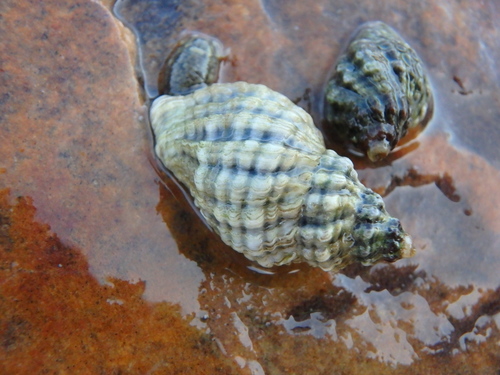
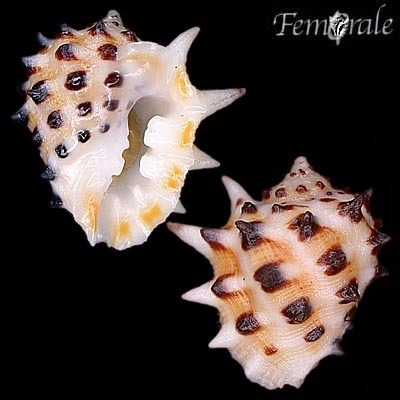
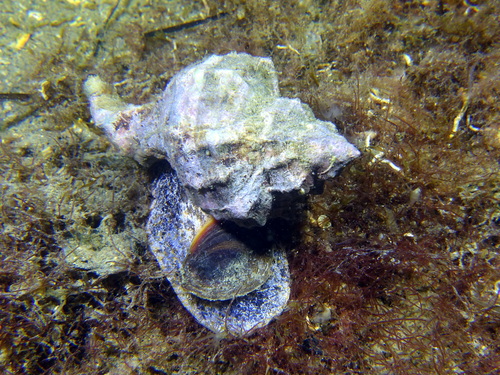
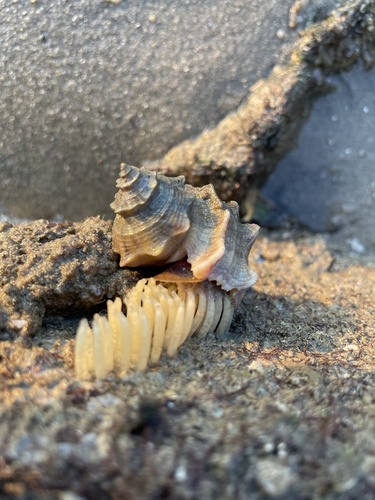
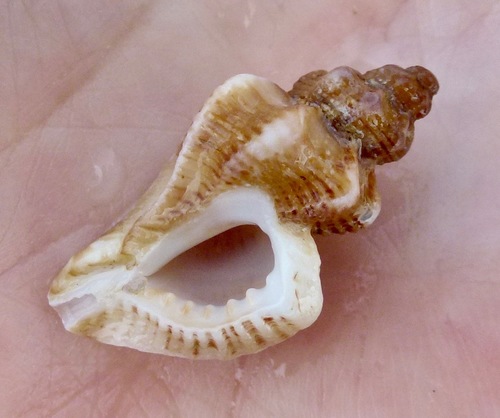
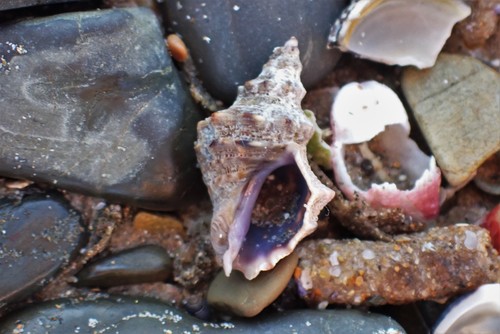
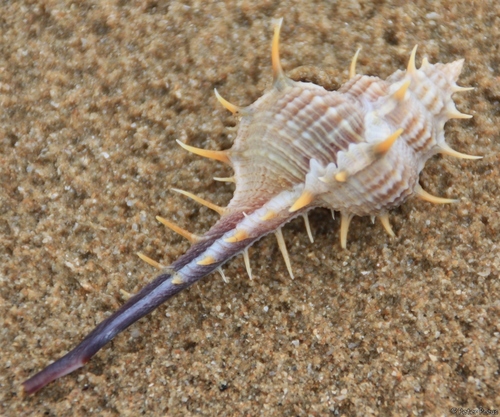
Murex trapa, first formally described by Röding in 1798, has shells that reach a length of 50 to 124 millimeters (2.0 to 4.9 inches) and a diameter of 8 to 21 millimeters (0.31 to 0.83 inches). These are moderately large shells with a fusiform or club shape. They have a tall acute spire and prominent spiral ridges. The shell surface is typically light brown or blue-gray, with yellowish-brown coloring on the spines. The body whorl features three spiny varices. The aperture is lens-shaped, with a white interior margin and deep red-brown coloring on the inside of the aperture. The outer lip of the aperture is crenulated. The siphonal canal is straight and moderately long, measuring about 13 to 47 millimeters. Three to four short spines are only found on the basal half of the siphonal canal. This species has a wide distribution that ranges from Madagascar and the Mascarene Islands, southeastern India, Sri Lanka, and the Andaman Sea to southern Indonesia, the Philippines, Taiwan, and southern Japan. It lives in demersal sandy habitats.