About Mulinia lateralis (Say, 1822)
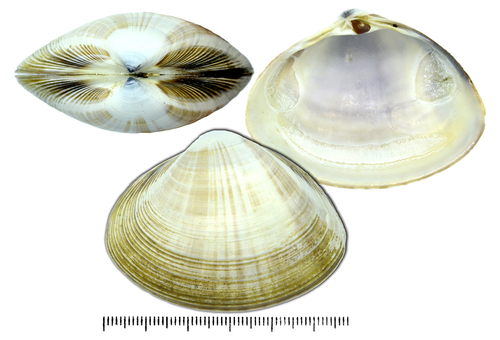
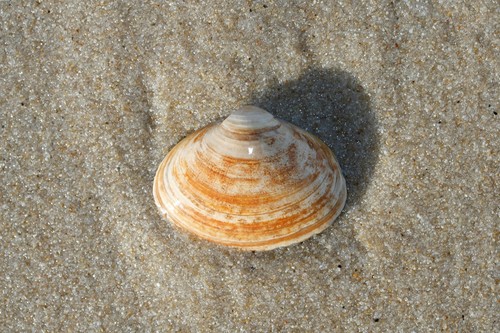
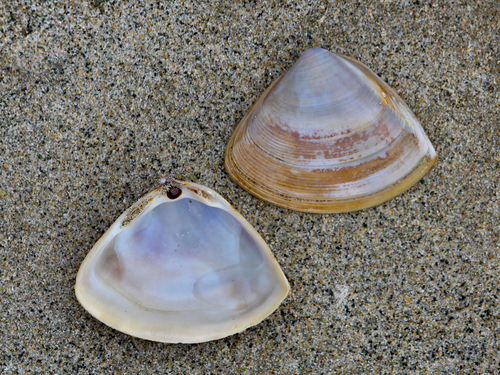
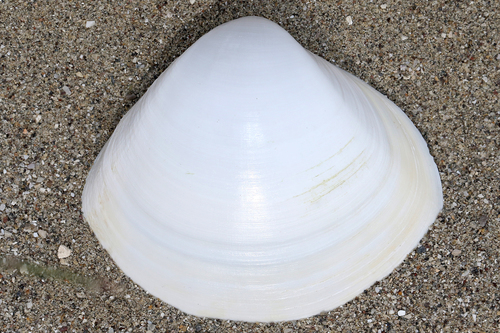
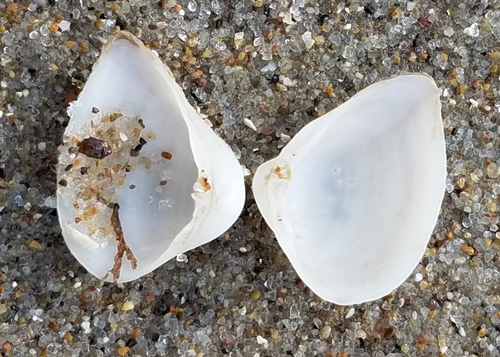
Mulinia lateralis (Say, 1822) has a somewhat inflated, triangular shell. Its valves are thin but not brittle, and adult shells reach 15 mm in size. The anterior end of the shell is rounded, while the posterior end has a distinctive radial ridge that gives it an angular appearance. The outer shell surface is white or yellowish, somewhat glossy, and covered with fine concentric sculpturing. The beaks are prominent, and are slightly angled toward the anterior end. The hinge has a small chondrophore, and the ligament that joins the two valves is internal. The inner surface of the valves is glossy white. This species occurs on the eastern coasts of North America, ranging from the northeastern United States (New Jersey) south to Mexico. It lives shallowly buried in sand or mud on the lower shore and in the sublittoral zone. It tolerates low salinities, so it is found in estuaries and lagoons. It is sometimes abundant, with as many as 21,000 individuals recorded per square metre. Many different animals prey on Mulinia lateralis, including birds such as the sanderling and laughing gull, as well as crabs. The gray sea star Luidia clathrata selectively feeds on this species, and the knobbed whelk Busycon carica is also a major predator. In addition to tolerating a wide range of salinities, Mulinia lateralis can withstand other stressful ecological conditions such as temperature extremes and anoxia. Mulinia lateralis has been found in the European Wadden Sea, and has the potential to become an invasive alien species due to its high fecundity, short 60-day generation cycle, and broad ecological amplitudes.