About Mugil cephalus Linnaeus, 1758
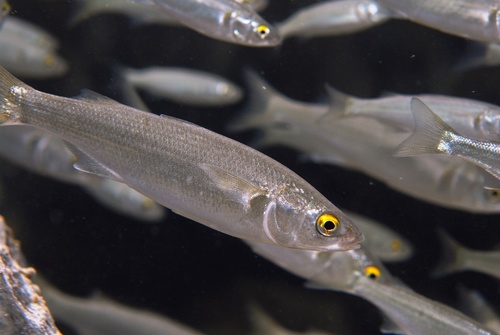
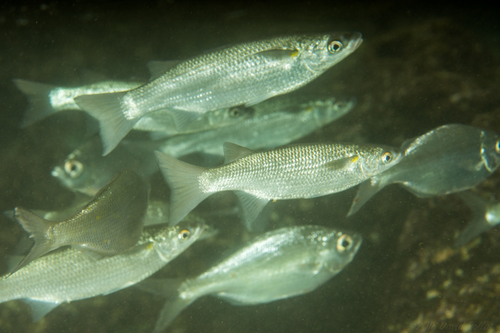
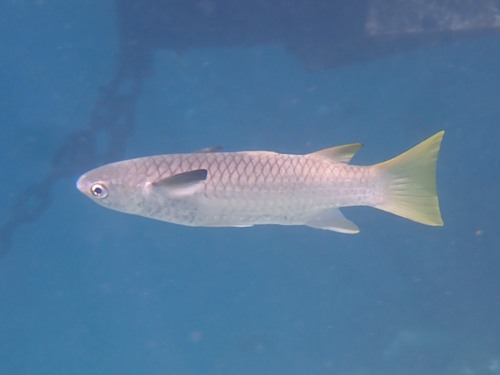
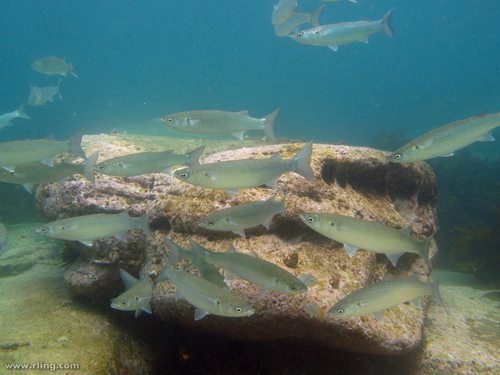
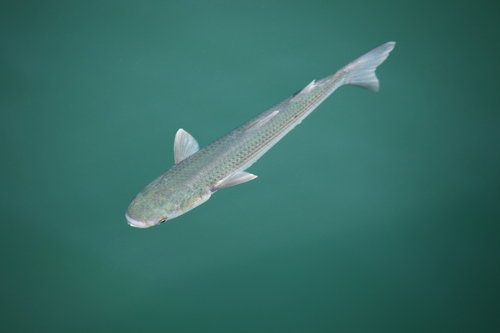
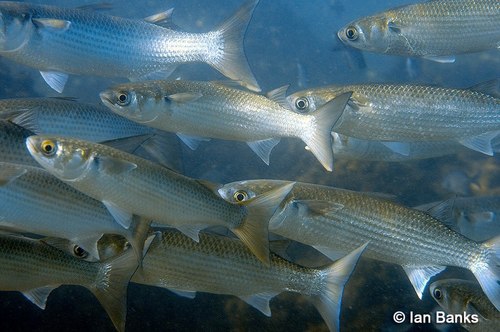
This species, Mugil cephalus Linnaeus, 1758, commonly called flathead or striped mullet, has an olive-green back, silvery sides that shade to white toward the belly. Individuals may have six to seven distinctive lateral horizontal stripes, with thin lips, and no lateral line. A common total length for this fish is around 50 centimetres (20 in), its maximum recorded length is 100 centimetres (39 in), and it can reach a maximum weight of eight kilograms (18 lb).
The flathead mullet is cosmopolitan, found in coastal waters of tropical, subtropical, and temperate zones across all seas; in the Atlantic Ocean, it occurs as far north as the Bay of Biscay and Nova Scotia. It occupies fresh, brackish, and marine habitats at depths between 0–120 metres (0–394 ft) and in water temperatures ranging from 8–24 °C (46–75 °F). In Australia, the species is widespread from Far North Queensland, around southern Australia to the Kimberley region of Western Australia, and also occurs in the Bass Strait area of Tasmania. It lives in tropical and temperate coastal marine and estuarine waters, but is also often found in the lower reaches of rivers. It tolerates a wide range of salinity, so it may also be found in lagoons, lakes, and far into estuaries, though it migrates back to the sea to spawn.
In freshwaters of the western United States, striped mullet historically ranged far up the Colorado River to the vicinity of Blythe, and up the Gila River to perhaps Tacna. Due to dams and restricted flows to the Gulf of California, the species' range in Arizona is now restricted to the Colorado River below Laguna Dam and the lower end of the Gila River, when water is present there. It is often abundant in the mainstream and lateral canals of the Gila River region. In the Colorado River, mullet are pelagic in larger pools, sometimes moving into currents below dams, and generally occur in small groups. Mullet populations are currently declining in Arizona, because of periods when the Colorado River does not reach the Gulf of California.