About Muehlenbeckia australis (G.Forst.) Meisn.
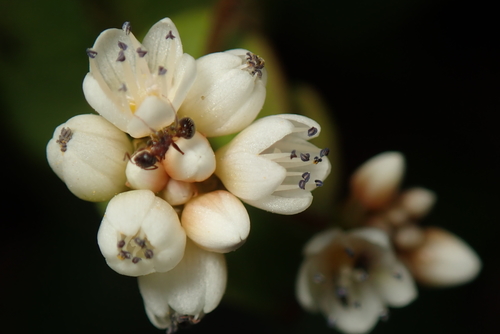
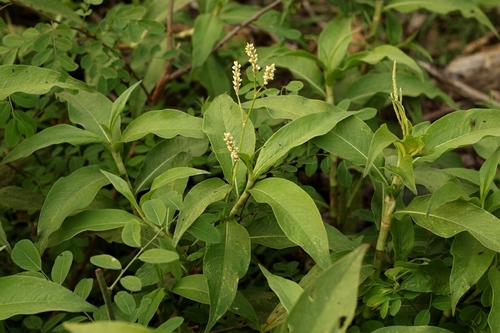
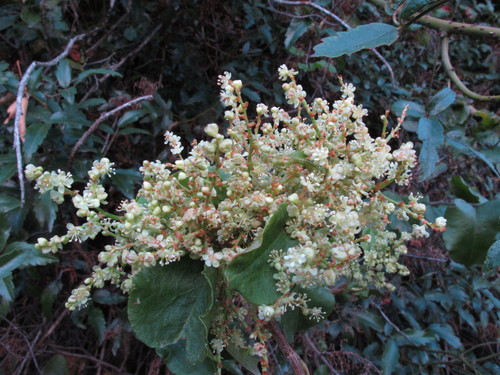
Muehlenbeckia australis (G.Forst.) Meisn. can grow up to 10 metres (33 ft) tall and has grey bark. Its leaves are attached to stiff petioles that are 25 millimetres (0.98 in) long, while leaf blades measure 2–8 centimetres (0.79–3.15 in) by 1–3 centimetres (0.39–1.18 in). This species has distinct juvenile and adult leaf forms, and it loses its leaves in winter. The flowers are greenish, and its fruits are juicy. The fruits hold black shiny seeds covered by a white, succulent cup formed from sepals, which are eaten by various birds and lizards. Flowering occurs from late spring to autumn, and its flower panicles typically develop in spring and summer. Fruits are present from November to April, and sometimes persist until June. Ecologically, M. australis prefers locations with abundant sunlight and climbing support, such as forest edges, cliff faces, scrub, and regenerating vegetation. Its climbing growth habit and rapid growth allow it to fully cover roadside trees. It has benefited from the cleared habitats created after human settlement, and it is sometimes the only native plant species found in these cleared areas.