About Moxostoma valenciennesi Jordan, 1885
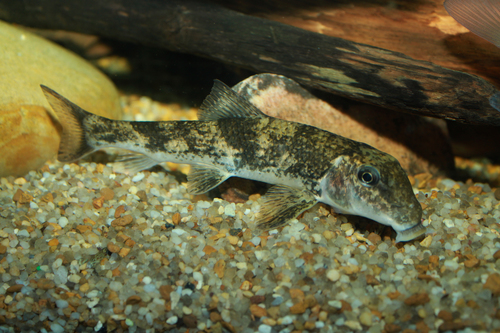
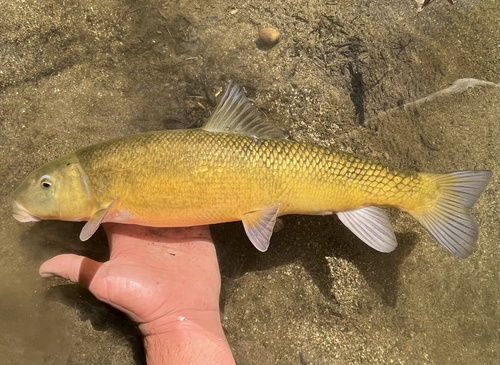
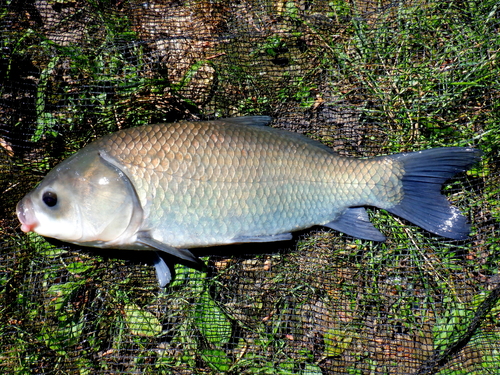
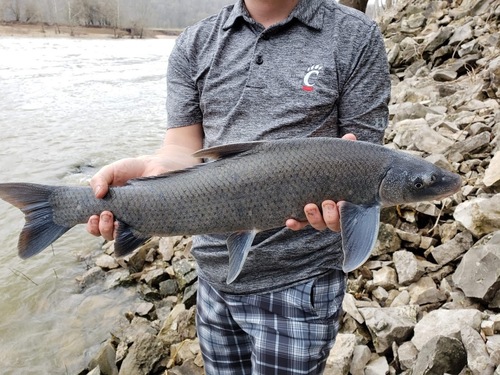
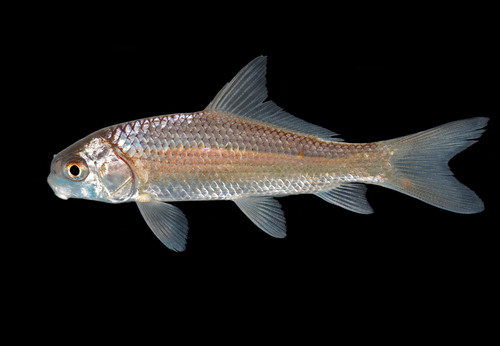
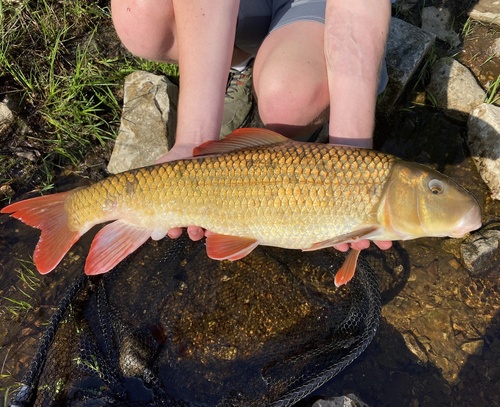
Description: The greater redhorse, scientifically named Moxostoma valenciennesi Jordan, 1885, is the largest species in its genus. On average, it grows to around 46 cm (18 in) long and weighs 2 kg (4.4 lb), and can reach a maximum size of 80 cm (31.5 in) and 5.9 kg (13 lb). This fish has small eye sockets paired with a large, rounded skull. Reddish gold pectoral fins and pelvic fins sit on either side of its body. The posterior section of its dorsal fin changes shape slightly: it is mildly concave in young individuals, and becomes mildly convex in adults. Its tail fin is only slightly notched, a trait that typically evolved for slow-swimming bottom feeders. The greater redhorse is easiest to recognize by its bright rusty-red tail fin, and rows of black spots running along its sides and back.
Distribution and habitat: The greater redhorse is endemic to northcentral and northeastern United States, plus the Canadian provinces of Ontario and Quebec. It usually lives in clear, relatively fast-moving rivers, and can also be found in both shallow and deep waters of some lakes. It cannot survive in even slightly polluted water, and has the ability to detect contaminated water sources.
Reproduction and life cycle: Spawning for the greater redhorse starts in May or June. Before building their gravel and sand nests, the fish find a site in moderately fast moving water. After males establish territories, females visit two males at a time to begin spawning. The two males surround the female, and perform a shaking motion that releases sperm from the males and eggs from the female. After the eggs are buried, the parents leave, and no further parental care is provided. When fertilized eggs are kept at an average temperature of 19 °C, they hatch six to eight days after fertilization. Reported growth rates of this species are inconsistent across the different regions it inhabits. The greater redhorse takes several years to reach sexual maturity, often lives more than 20 years, and is one of the longest-lived redhorse species.