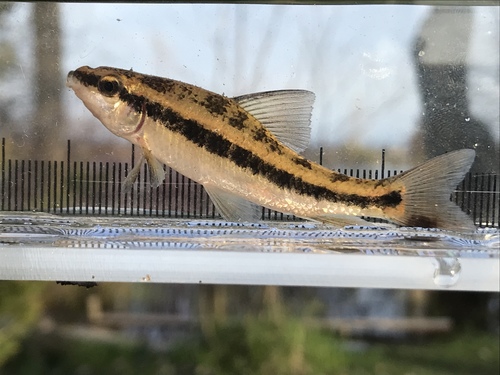
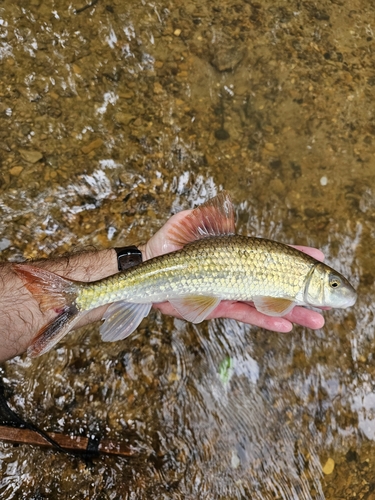
About Moxostoma macrolepidotum (Lesueur, 1817)
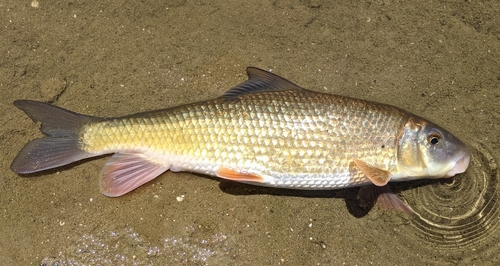
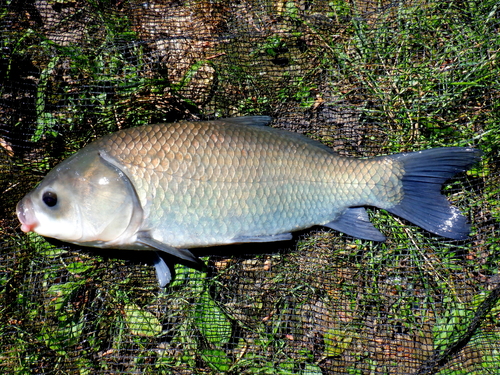
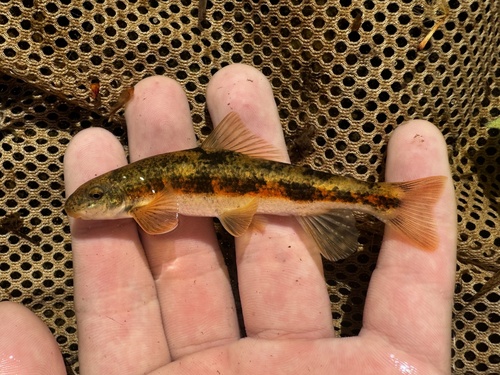
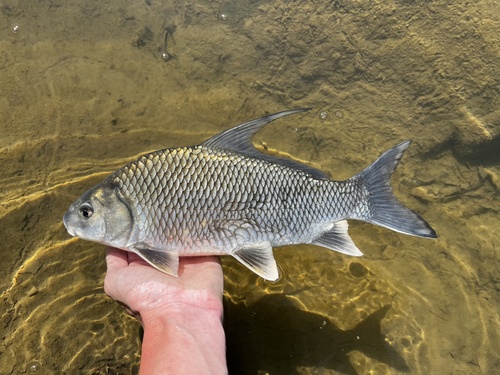
The shorthead redhorse, scientifically named Moxostoma macrolepidotum, is a widely distributed fish species native to North America. Its original native range covers central and eastern North America, including the Great Lakes, Hudson Bay, Mississippi River, and Saint Lawrence River basins. Historically, it extended from Quebec to Alberta, south to northern Alabama and Oklahoma, and also occupied Atlantic Slope drainages from the Hudson River in New York to the Santee River in South Carolina. Unlike many native fish whose ranges shrank after dam construction starting in the 1930s, the shorthead redhorse's range has expanded. It is a habitat generalist near the core of its range, so it tolerates habitat disturbance better than related species such as the river redhorse M. carinatum. Today, it can also be found in new areas including the Hudson estuary, the Embarras River system in Illinois, and the Red River below Lake Texoma dam in Grayson County, Texas. It is an entirely freshwater species that inhabits small to large rivers and lakes, staying in the benthic zone. It tolerates both clear and cloudy water, and prefers loose substrates such as gravel and sand. It spawns in shallow, fast-flowing water, moving into shallow streams to lay eggs over gravel or rocky shoals, and will also spawn in swift-flowing springs. As benthic feeders that prefer feeding in riffles and riffle margins, shorthead redhorse primarily feed on benthic invertebrates, and may also consume benthic plant material, microcrustacea, and sediment-associated organic matter. An Illinois study found shorthead redhorse feed on around 60 different categories of food, mostly invertebrate taxa. Between 24% and 68% of stomach contents could not be identified, and 21% to 50% of this unidentified material (13% of the total diet) was organic matter. This species eats more insects than any other fish in the sucker family. It is not an active competitor for food, and has no documented food competitors due to its broad prey range. Different sized shorthead redhorse have different predators. Juveniles are preyed on by northern pike, walleyes, and smallmouth bass, while adults or larger individuals are eaten by northern pike and muskellunge. This species is important to humans as a game fish, and it also supports recreational angling by serving as prey for larger popular game fish. It has many recorded English common names, including common mullet, redfin, redfin sucker, red sucker, redhorse mullet, shorthead mullet, mullet, bigscale sucker, common redhorse, northern redhorse, and Des Moines Plunger. Human activities significantly impact shorthead redhorse habitat. Dam construction blocks free-flowing rivers that the species inhabits, disrupting its spawning migration routes. Water pollutants easily kill this fish: because it ingests large amounts of sediment as part of its diet, it accumulates high concentrations of toxic chemicals that settle on riverbeds from pollution. For example, the upstream migratory range of shorthead redhorse in a Maryland river decreased after an increase in chlorinated sewage outfalls.