About Moxostoma carinatum (Cope, 1870)
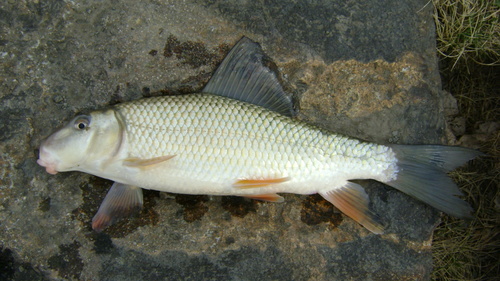
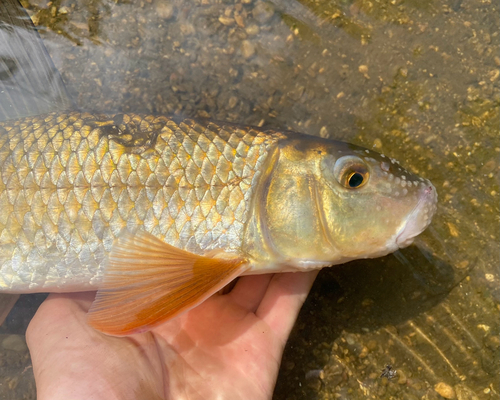
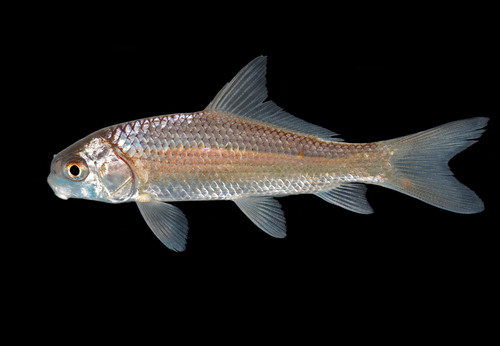
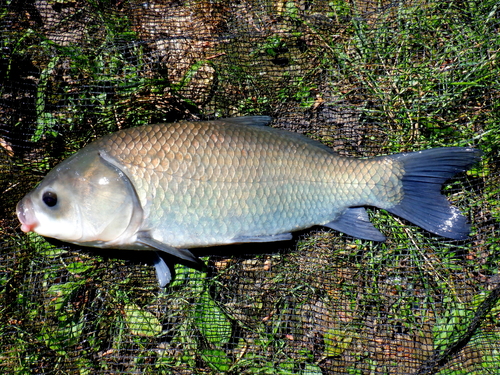
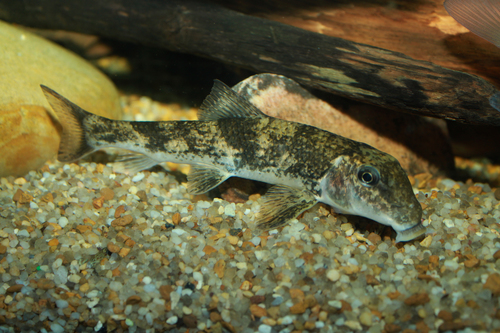
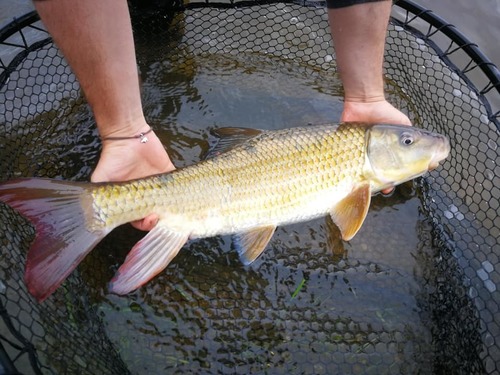
The river redhorse, scientifically known as Moxostoma carinatum, is a species of freshwater fish endemic to the eastern half of the United States and southeastern Canada. Mature individuals range from 10 to 30 inches in length, and can reach a weight of more than 10 pounds. It typically inhabits clear, large creeks and rivers, and is occasionally found in lakes. It is sometimes speared or caught with hook and line, with crayfish or worms used as bait. As a bottom-feeder, it feeds on mussels, snails, crustaceans, and immature aquatic insects. Its common names include big-sawed sucker, river mullet, greater redhorse, redfin redhorse, and redhorse sucker. The river redhorse occurs throughout the central and eastern Mississippi River System and the Gulf Slope stretching from Florida to Louisiana. In Canada, it has disjunct populations in southern Ontario, Quebec, and Alberta. This species has declined considerably across most of its range over the last 200 years. Populations still persist in the Grand, Trent, Thames, Mississippi, Gatineau, and Richelieu rivers, and recent data shows it has a wider distribution in the Ottawa River than previously recorded. However, the river redhorse is no longer found in the Châteauguay and Yamaska watersheds, and has experienced dramatic declines in the St. Lawrence River.