About Motacilla capensis Linnaeus, 1766
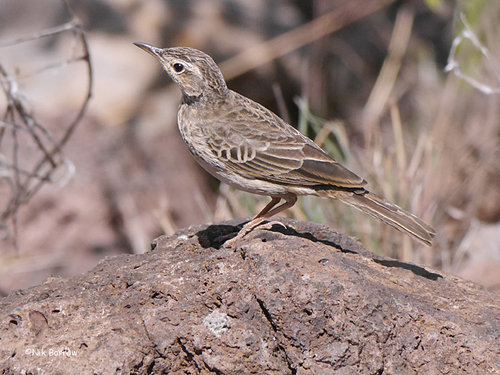
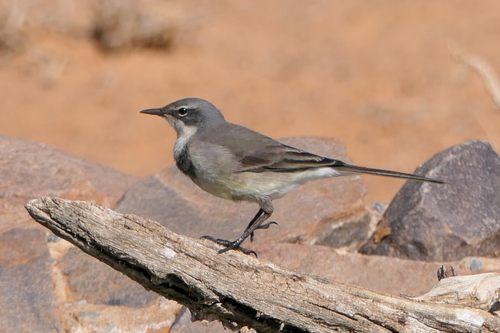
The Cape wagtail (Motacilla capensis Linnaeus, 1766) has dull plumage and a relatively short tail. Its breast and face are olive grey, marked with a tan supercilium and dark lores. Underparts are creamy white, and may show a faint pinkish wash on the lower breast and belly. The breast band is dusky, while the sides of the breast and flanks are olive-grey. Its brownish black wings have pale feather edges, and the tail is blackish, with the two outer tail feathers being white. Juveniles resemble adults, but are browner on the upperparts and yellower on the underparts. There is no difference in colour or plumage between males and females. This species also has a characteristic black triangle on its chest. Cape wagtails are distributed across eastern and southern Africa, ranging from Uganda, eastern Democratic Republic of the Congo, and Kenya, through Zambia and Angola to southern Africa, and extending south to the Western Cape and the Cape of Good Hope. They can occupy almost any habitat with open ground adjacent to water, and are also found along rocky coastlines, farms, villages, cultivated land, parks, gardens, and urban centres. In east Africa, they are generally found at altitudes above 2,000 m (6,600 ft).