About Morus alba L.
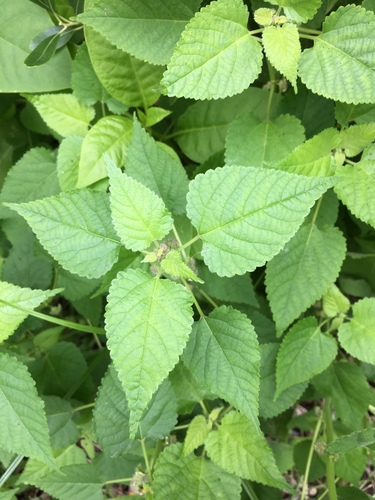
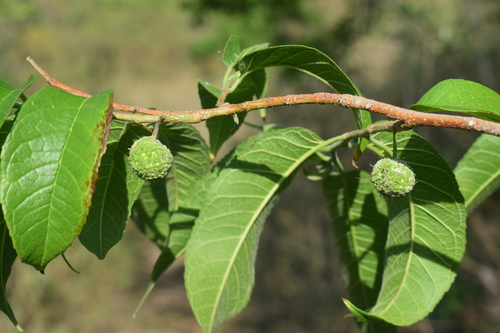
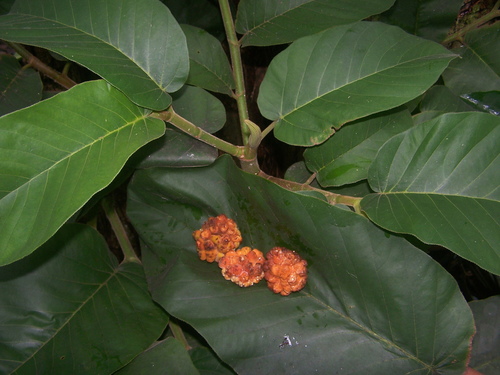
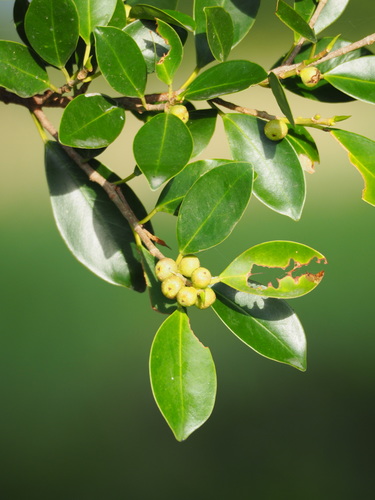
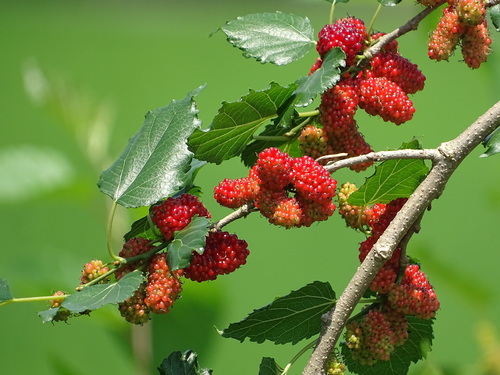
Morus alba L., commonly called white mulberry, is a tree that can reach 15 metres (50 ft) in height. It is generally short-lived, with a lifespan similar to that of humans, though some known specimens are over 250 years old. Trees growing in temperate regions are typically deciduous, while those grown in tropical regions may remain evergreen year-round. Leaves on young, vigorous shoots can grow up to 30 cm (12 in) long, and are deeply and intricately lobed with rounded lobes. Leaves on mature trees are generally 5–13 cm (2–5 in) long, unlobed, cordate at the base, rounded to acuminate at the tip, and serrated along the margins. White mulberry produces single-sex catkin flowers: male catkins are 2–3.5 cm (3⁄4–1+1⁄2 in) long, and female catkins are 1–2 cm (1⁄2–3⁄4 in) long. Male and female flowers are usually borne on separate trees, though they can sometimes occur on the same individual. The fruit grows 1–1.5 cm (1⁄2–1⁄2 in) long; wild fruits are deep purple, while fruits from many cultivated plants range from white to pink. The fruit is sweet but mild in flavor, unlike the more intense flavor of red mulberry and black mulberry. Seeds are widely dispersed through the droppings of birds that eat the fruit. White mulberry is scientifically notable for the rapid plant movement involved in pollen release from its catkins. Its stamens act as catapults, releasing stored elastic energy in just 25 microseconds. The resulting movement reaches approximately 380 miles per hour (610 km/h), around half the speed of sound, making it the fastest known movement recorded in the plant kingdom. This species is native to China and India, and is widely cultivated and naturalized in many other regions, including the United States, Mexico, Australia, Kyrgyzstan, Argentina, Turkey, Iran, Iraq, and many more. It is commonly naturalized in disturbed areas such as roadsides, the edges of tree lots, and urban areas across much of North America, where it hybridizes easily with the locally native red mulberry (Morus rubra). Extensive hybridization in some regions has raised serious concern about the long-term genetic viability of native red mulberry. Today, white mulberry is extensively planted and widely naturalized across the warm temperate world, and also grows in subarctic regions. It can survive at elevations as high as 4,000 metres (13,000 ft). It grows best in mildly acidic, well-drained sandy loam and clayey loam soils, though it can tolerate poor quality soils. Toxicity tests on laboratory rats have not found mulberry extract to cause significant toxicity. In a 2021 coroner's report, Lori McClintock, wife of US politician Tom McClintock, was found to have died from dehydration caused by gastroenteritis linked to adverse effects of white mulberry leaf ingestion; white mulberry leaf is used as a dietary supplement or herbal remedy for weight loss and diabetes. However, many experts have questioned this conclusion, citing numerous existing safety studies. Cultivation of white mulberry occurs in both tropical and temperate regions, with an ideal temperature range of 24–28 °C for growth. It grows well between 28 °N and 55 °N latitude, across varying temperate and tropical climatic conditions north of the equator. It grows well in areas with annual rainfall between 600 and 2,500 millimetres (24 and 98 in), and requires a minimum of nine to 13 hours of sunshine per day. It can be grown at elevations up to 4,000 m (13,000 ft) above sea level. It blooms best in warm, rich, fertile, well-drained loamy to clayey soils that are porous with strong moisture-holding ability, with an optimal soil pH range of 6.2–6.8. As a hardy crop, white mulberry can use soil moisture more efficiently than many other plants. Analysis of Indian growing soils indicates that proper levels of sodium (Na), potassium (K), and phosphorus (P) must be maintained; deviations from these levels leave mulberry plants vulnerable to attack by insects or fungi. White mulberry is well-suited for cultivation due to its vigorous growth habit and natural disease resistance: many of its parts, including bark and leaves, contain antimicrobial and antifungal compounds. While it can be grown from seed, propagation is most commonly done through stem cuttings or grafting. Depending on the intended use of the trees — for fodder production, timber, leaves for silkworms, or fruit — several cultivation systems are possible, including growing as hedges, full-sized trees, or pollarded trees.