About Morella pensylvanica (Mirb.) Kartesz
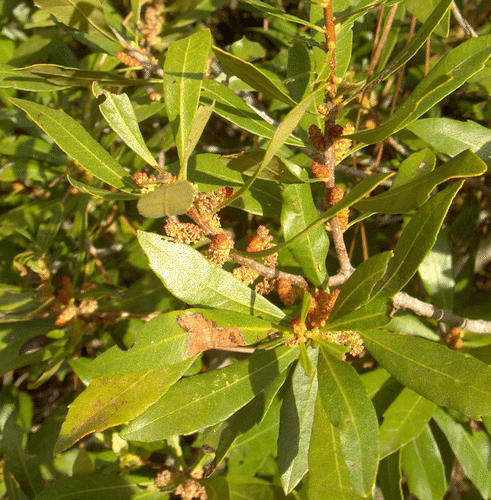
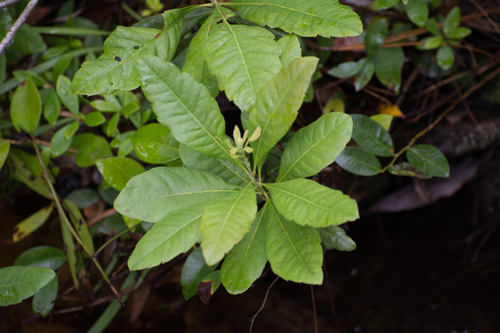
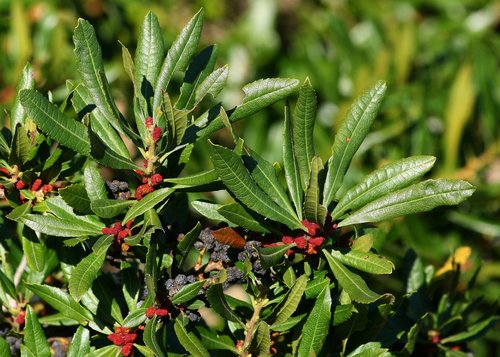
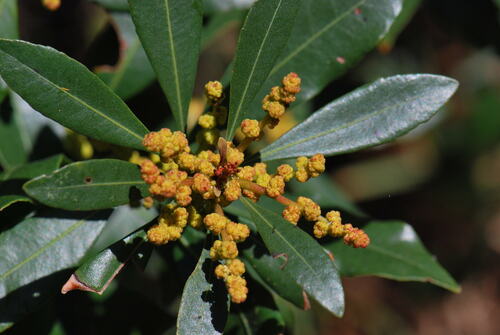
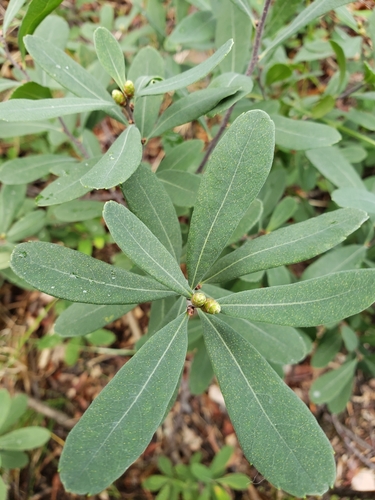
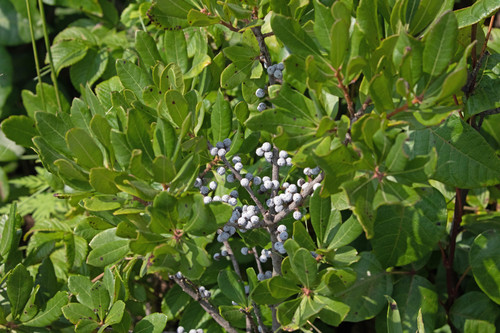
Morella pensylvanica (Mirb.) Kartesz, also commonly known as northern bayberry, is also classified under the synonym Myrica pensylvanica. This deciduous shrub species is native to eastern North America, where its range extends from Newfoundland west to Ontario and Ohio (where it is locally endangered), and south to North Carolina. It grows to a height of up to 4.5 meters. Its leaves measure 2.5–7 cm in length and 1.5–2.7 cm in width, are broadest near the leaf apex, have serrated edges, and are sticky with a spicy scent when crushed. Its flowers grow in catkins that are 3–18 mm long, and range in color from green to red. It produces wrinkled berry fruits that are 3–5.5 mm in diameter, covered in a pale blue-purple waxy coating; these berries are an important food source for yellow-rumped warblers. This species forms root nodules that host nitrogen-fixing microorganisms, which lets it grow in relatively poor quality soils. The berries of this plant can be used to make bayberry wax candles. Historically, American colonists boiled the berries to extract the sweet-smelling wax, which they used to produce clean-burning candles.