About Morella cerifera (L.) Small
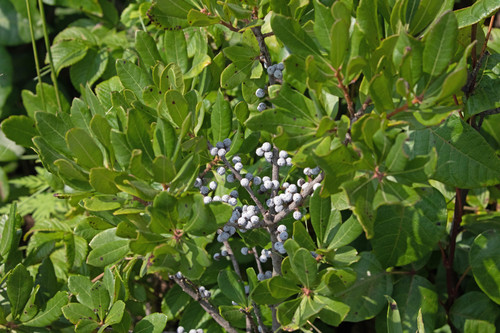
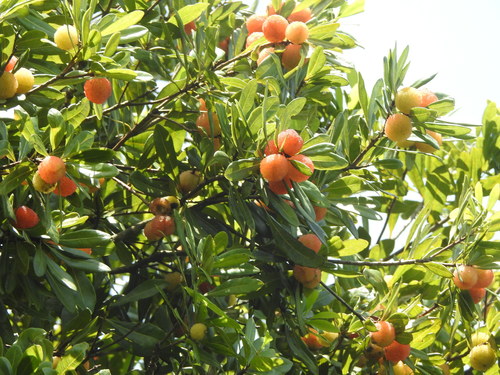
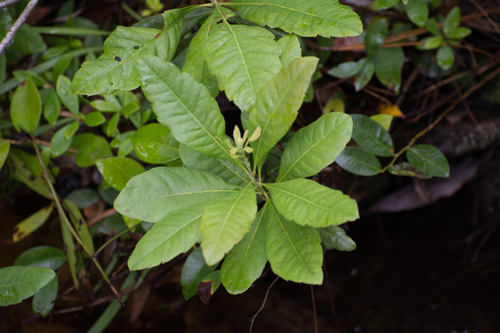
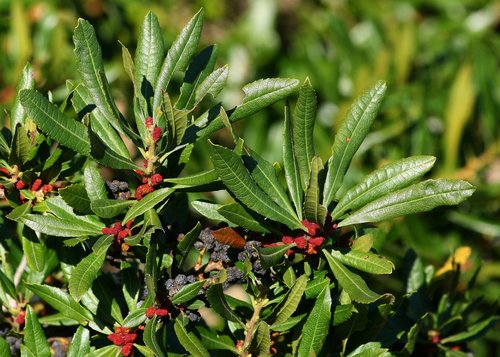
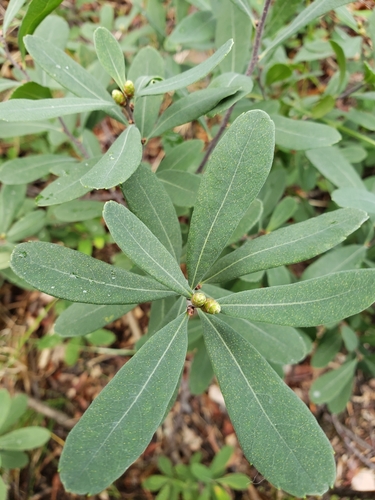
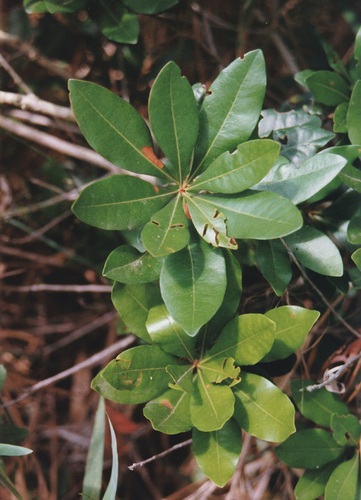
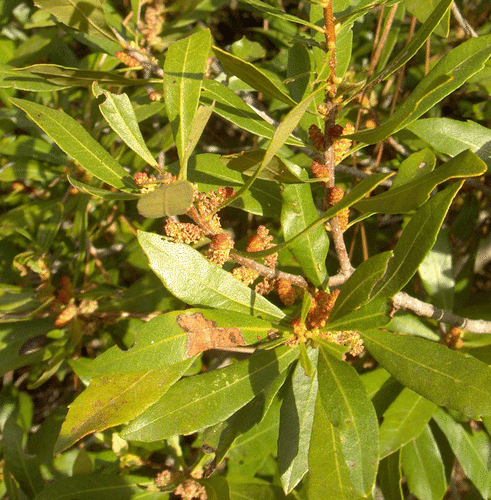
Morella cerifera (L.) Small, often referred to by the synonym Myrica cerifera, is an evergreen species that grows as a small tree or large shrub, reaching a maximum height of 14 metres (46 ft). It is adaptable to many habitats, growing naturally in wetlands, near rivers and streams, sand dunes, fields, hillsides, pine barrens, and in both coniferous and mixed-broadleaf forests. This species can withstand coastal storms, long droughts, and high tropical temperatures. In its natural state, its range extends from Central America northward into the southeastern United States. It can be successfully cultivated as far north as the New York City area and southern Ohio Valley, and also grows naturally in Bermuda and the Caribbean. In ecological succession, M. cerifera is often one of the first plant species to colonize a new area. Its leaves are glandular, long, leathery in texture, with serrated edges, and contain aromatic compounds. This plant is dioecious, meaning male and female flowers grow as catkins on separate individual plants. Male flowers have three or four stamens, and are surrounded by short bracts. Flowers bloom from late winter to spring, and female flowers develop into globular fruit surrounded by a natural wax-like coating, which ripen in late summer or fall. The seeds of this species contain no endosperm. M. cerifera can also reproduce clonally through runners. This species occurs in two main forms with no clear dividing line between them, and many intermediate forms exist. Specimens growing in drier, sandier areas are shrub-like, produce rhizomes, and have smaller leaves. Specimens growing in damper areas with richer soil are more tree-like and have bigger leaves. The fruit of M. cerifera is a food source for many bird species, including wild turkey and northern bobwhite quail. In winter, its seeds are an important food source for myrtle warblers and tree swallows. M. cerifera also provides habitat for northern bobwhite quail. To enable germination, birds' digestive systems remove the waxy coating from the fruit before seeds are excreted. The roots of this plant host root nodules that harbor symbiotic actinorhizal bacteria from the genus Frankia, which allow M. cerifera to fix atmospheric nitrogen faster than legumes. Unless a wildfire is very small or short-lived, it typically kills all above-ground growth of M. cerifera; in small or transient fires, only the most recent primary growth is burned. Because the leaves, stem, and branches contain flammable aromatic compounds, M. cerifera acts as a fire hazard. While its above-ground growth is flammable, the root system of M. cerifera is fire-resistant, and as of 1991, no recorded fire had been known to kill this species' roots. However, the plant cannot survive repeated destruction of its above-ground growth indefinitely, and three consecutive years of burning can kill all affected plants. After less damaging fires, new shoots regrow from underground, and this regrowth is most rapid during the first season after a fire. M. cerifera has shown aggressive growth behavior in both native and non-native habitats. On Virginia barrier islands within its native range, this shrub has been documented rapidly expanding into grasslands, which impacts ecosystem function and landscape-level resistance to disturbance. While climate change plays a large role in this expansion, the driving mechanism is the shrub's ability to alter its own microclimate. In Hawaiʻi, on the opposite side of the United States, M. cerifera's ability to associate with nitrogen-fixing bacteria makes it a significant threat to native Hawaiian forests. The leaves of M. cerifera can be washed, dried, and used to add flavor to stews or cooking sauces. Its berries can also be used as seasoning.