About Morella californica (Cham. & Schltdl.) Wilbur
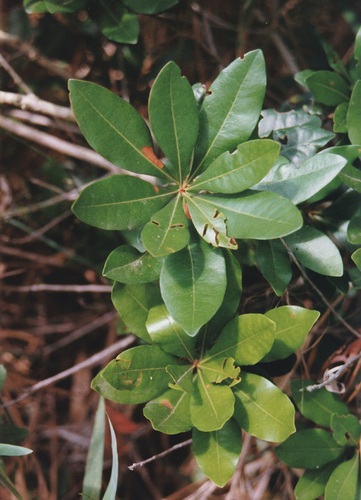
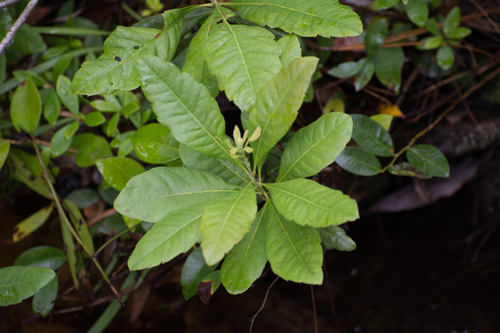
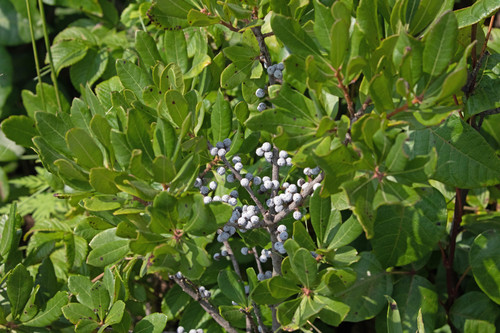
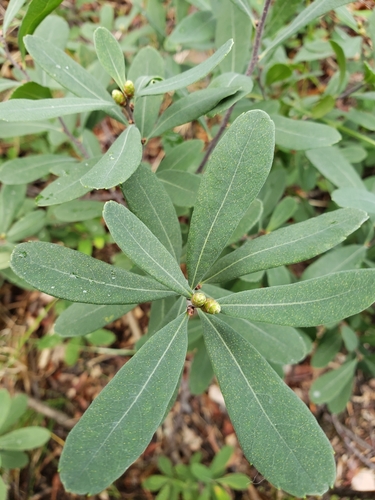
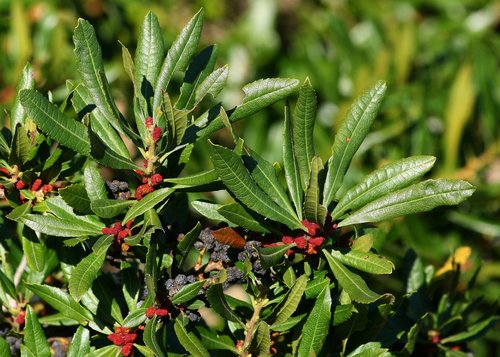
Morella californica grows 2 to 10 metres (6+1⁄2–33 ft) tall. It bears serrated, sticky green leaves that are 4–13 centimetres (1+1⁄2–5 in) long and 0.7–3 cm (1⁄4–1+1⁄4 in) broad, and these leaves give off a spicy scent on warm days. Its inflorescence forms a spike 0.6–3 cm long, and ranges in color from green to red. The fruit is a wrinkled purple berry 4–6.5 millimetres (1⁄8–1⁄4 in) in diameter, covered in a waxy coating, which gives the plant its common name wax myrtle. This species develops root nodules that host nitrogen-fixing microorganisms, letting it grow in relatively poor soils. Morella californica is native to the Pacific coast of North America, growing from Vancouver Island south through California to the Long Beach area. Different types of birds eat the berries in small amounts. This species grows well on cool, moist coastlines, and can be planted in lines to serve as a seaside windbreak. Historically, the bark and leaves were occasionally used to treat gastrointestinal ailments. The most active chemical in the plant appears to be the glycoside myricinic acid, which is related to saponin. The plant's tissues also contain a high amount of tannins. Wax can be extracted from the fruit of Morella californica to make candles and soap, but this species produces far less wax than other bayberries, so it is rarely used for this purpose.