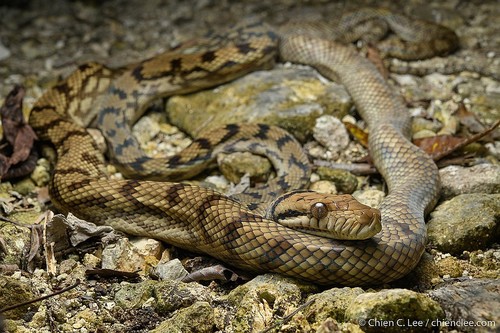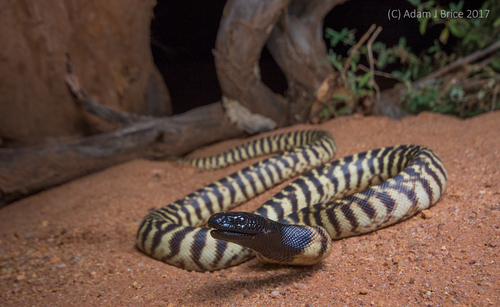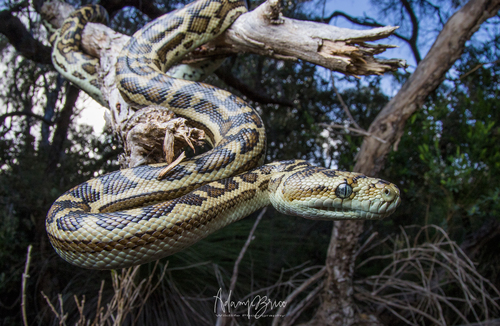
About Morelia imbricata (Smith, 1981)
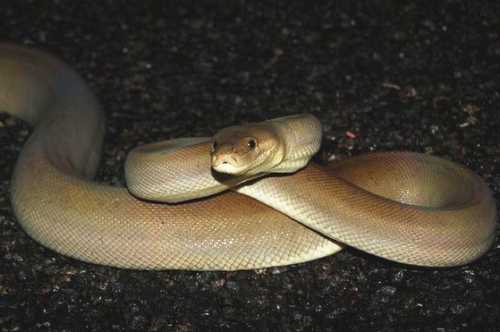
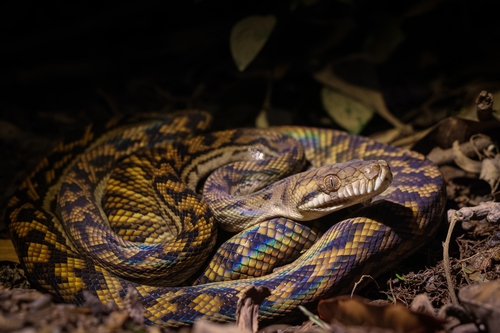
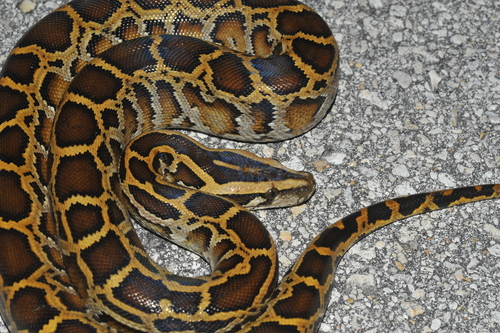
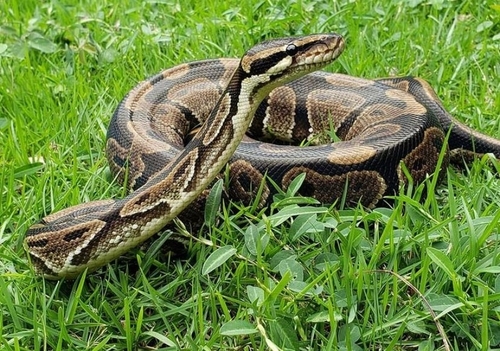
Morelia imbricata (Smith, 1981) can reach a maximum total length including the tail of 2.3 meters (7.5 feet), with a corresponding snout-to-vent length (SVL) of 2.0 meters (6.6 feet). Larger individuals with a total length of 4 meters (13 feet) have been reported. This python species has a clearly defined neck and small scales covering its head. Fully grown males can weigh up to 1.1 kg (2.4 lb), while fully grown females may be up to four times heavier than males. Several other python species similar in appearance overlap with Morelia imbricata’s range. Compared to M. imbricata, the woma python Aspidites ramsayi does not have the same obvious well-defined neck, and the western Stimson's python Antaresia stimsoni stimsoni has a higher count of ventral scales. The preferred natural habitats of Morelia imbricata are coastal areas, woodland, heathland, and semiarid regions. It is frequently found in eucalypt and banksia woodlands, as well as among grasses or low-growing shrubs. Individual Morelia imbricata have large home ranges that can reach up to 20 hectares (49 acres). During cooler months, they shelter in hollow logs before wandering across their range. Males typically have larger home ranges than females. The snakes show a pattern of returning to the same sites even after long periods of absence, a trait that may increase their risk of extinction. Morelia imbricata is distributed across all regions of Southwest Australia, which has a characteristic Mediterranean climate, and extends into the central arid and semiarid regions of the continent. Its northernmost distribution reaches Northampton, north of Geraldton, and its eastern extent reaches the Eyre Peninsula. This species is also found on islands of the Houtman Abrolhos, Garden Island, and the Archipelago of the Recherche. There are verified records of the species occurring outside its eastern mainland range, from St Francis Island in South Australia’s Nuyts Archipelago.