About Mopalia muscosa (Gould, 1846)
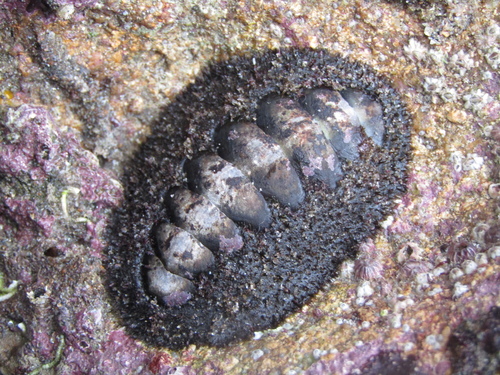
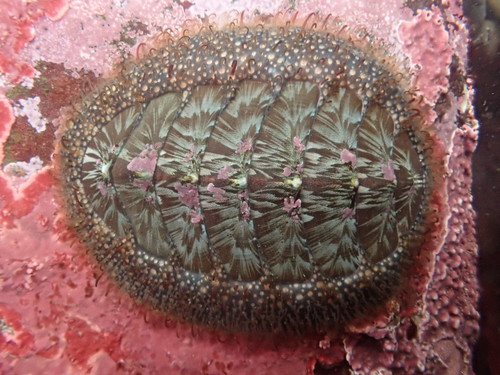
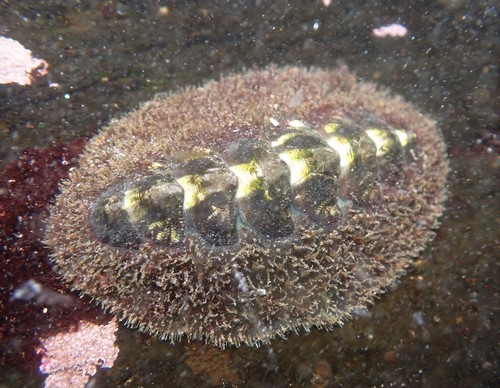
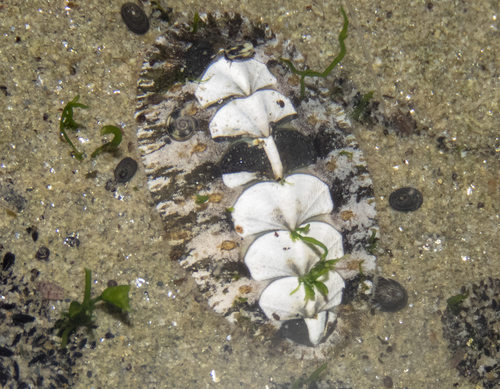
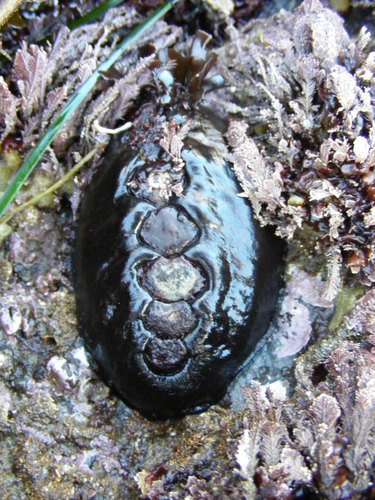
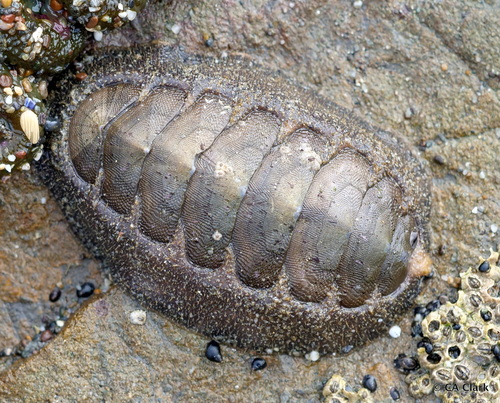
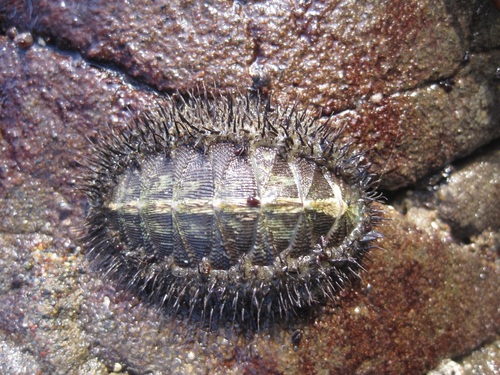
Mopalia muscosa, commonly called the mossy chiton, is a species of chiton, which is a type of eight-plated polyplacophoran marine mollusk. This species occurs in the northeastern Pacific Ocean, ranging from British Columbia, Canada, to Baja California, Mexico. It inhabits the middle and lower intertidal zone on exposed rocky shores. Adult mossy chitons grow between 40 and 55 mm (1.6 to 2.2 inches) in length. Individuals are often covered by algae, barnacles, and limpets. The chiton’s girdle is covered in coarse hair-like bristles called setae. The visible exterior of its eight shell plates is typically a dull brown or grey-green, while the underside of the shell plates has a vibrant turquoise blue color. Some mossy chitons are biofluorescent, mostly around the girdle, and display a bright glowing green color under ultraviolet or blue light. Mossy chitons usually move to graze at night or when covered by high tide, feeding on the red and green algae that make up their diet. Young chitons have a planktonic stage; after metamorphosis, they settle onto the seabed to develop into adults.