About Monopis obviella (Denis & Schiff., 1775)
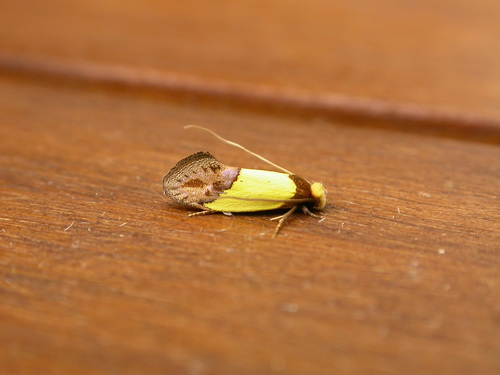
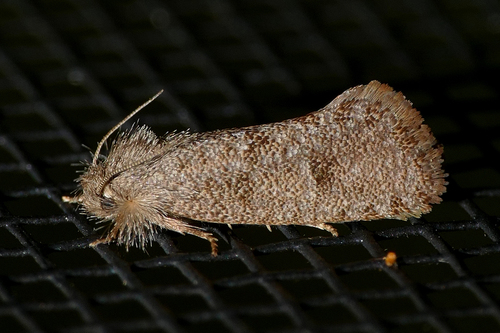
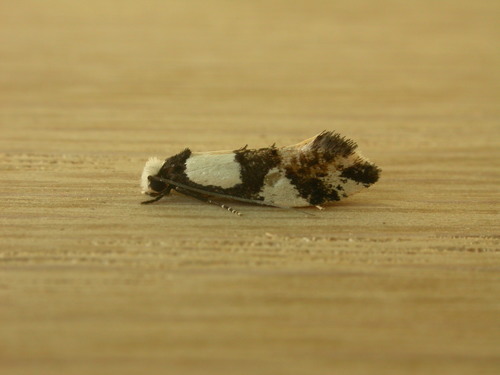
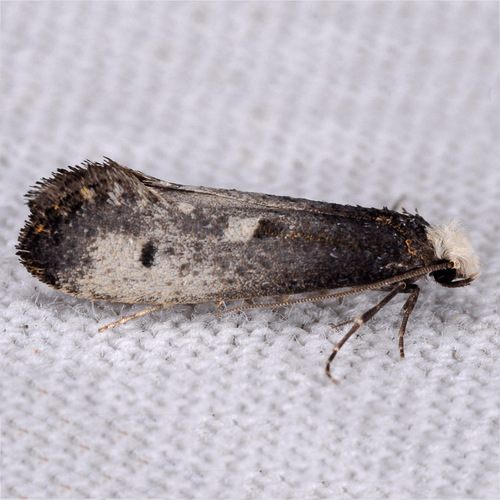
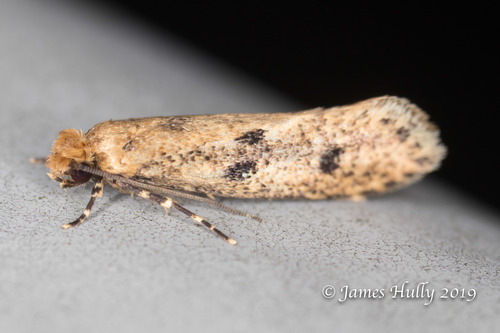
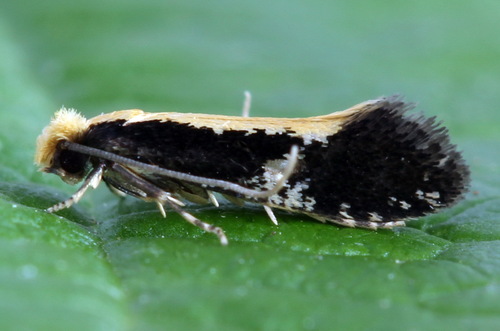
Ecology and description: Monopis obviella is not uncommon across most of the western Palearctic. Though it has not yet been recorded in Slovenia, it occurs in all of Slovenia’s neighboring countries, so it has most likely simply been overlooked there. It is apparently a rather continental species: it is absent from major Mediterranean islands and Iceland, and on Great Britain it occurs mainly in the south, near the English Channel. Confusion between this species and Monopis crocicapitella means the exact range of both moths remains poorly understood. This is a small moth, and adult individuals have a wingspan of 13–20 mm. Adults can be found on the wing from May to October, with flight timing varying by location. They are primarily nocturnal, but may fly during the day and are occasionally attracted to light. Their forewings are blackish with a thick creamy-white trailing edge, scattered creamy-white markings along the leading edge, and the translucent central spot that is characteristic of the genus Monopis. The hindwings are a lighter greyish brown with tiny black speckles, and are bordered by a long-haired fringe, which is typical for fungus moths and their close relatives. The moth’s body is dark brown, and the head has a tuft of creamy-brown hair. This species is easily confused with Monopis crocicapitella because their markings are almost indistinguishable. Across most of its range, this species typically produces two generations per year. The caterpillar larvae feed on detritus. They have been recorded feeding in or living among bird of prey pellets, horn shavings, wool (especially wool left outside to decay), and rotting wood.