About Monetaria moneta (Linnaeus, 1758)
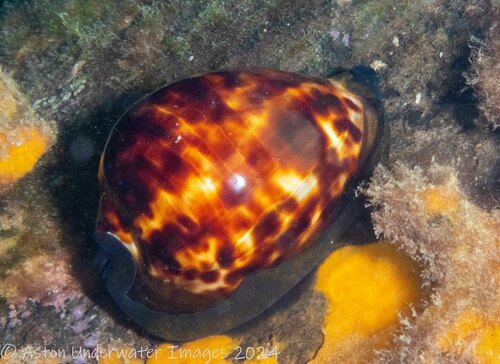
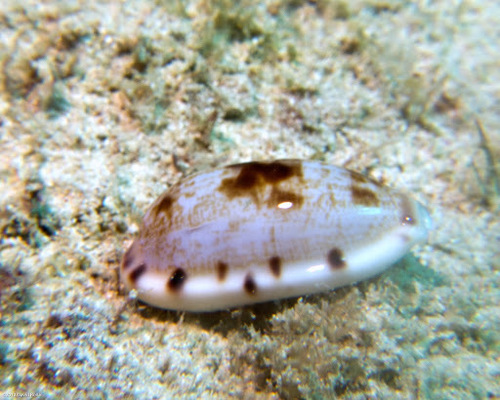
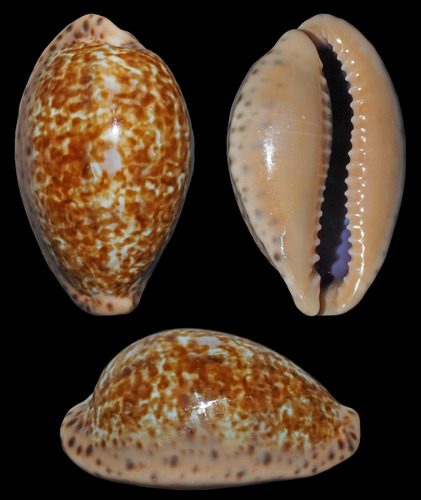
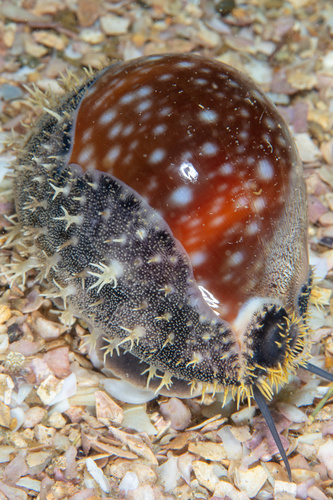
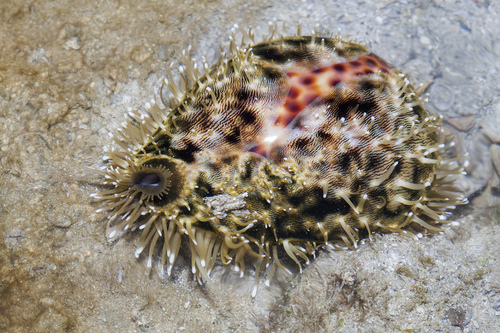
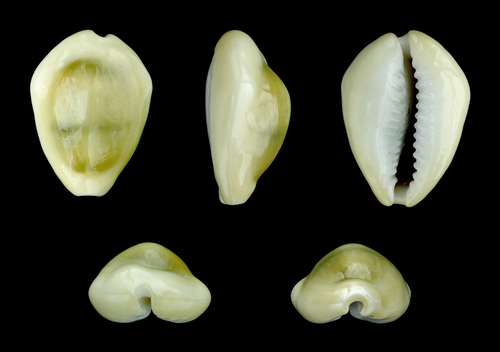
Monetaria moneta, first described by Linnaeus in 1758, is a relatively small species of cowry. Adult shells grow up to 3 cm (1.2 in) long, and are typically irregular, flattened, roughly subhexagonal, with heavily calloused edges. The shell base color is pale, ranging from white to dull beige, but the dorsal surface often appears transparent. Most shells are greenish-grey with yellowish margins, sometimes marked with darker transverse stripes and a faint yellow ring. The wide aperture is white, with prominent denticles along its edges. In live individuals, the mantle is mottled black and off-white. Shell shape and color vary widely across the species; many of these distinct variants were historically classified as separate full species, leaving Monetaria moneta with a large number of taxonomic synonyms. This is a very common species with a broad distribution across tropical Indo-Pacific waters. It occurs across many regions, including East and South Africa, Madagascar, the Red Sea, the Persian Gulf, the Maldives, eastern Polynesia, the Galápagos Islands, Clipperton Island, Cocos Islands off Central America, southern Japan, Midway Atoll, Hawaii, northern New South Wales, and Lord Howe Island. Monetaria moneta inhabits intertidal rocky zones and shallow tide pools, where it lives among seaweed, coral debris, and empty bivalve shells. It can be found on and under rocks in shallow water, and on exposed reefs during low tide. It feeds on algae and other marine vegetation that grows on loose rocks and fragments of dead coral. Human use of this species includes using its shells to make jewelry and other decorative items, such as baskets and wall hangings.