About Monarda pectinata Nutt.
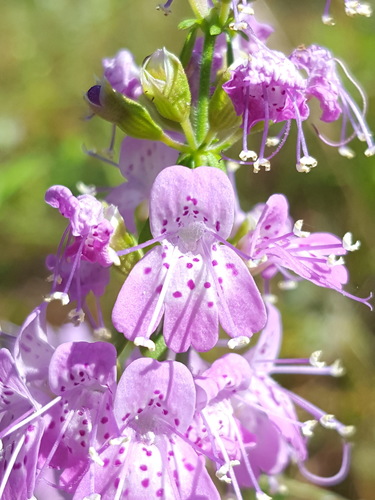
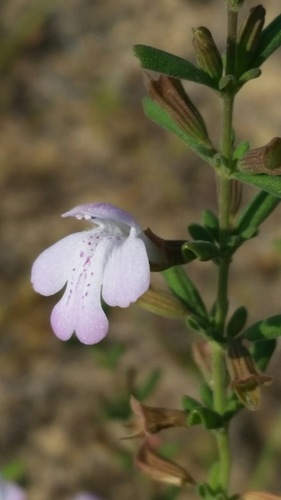
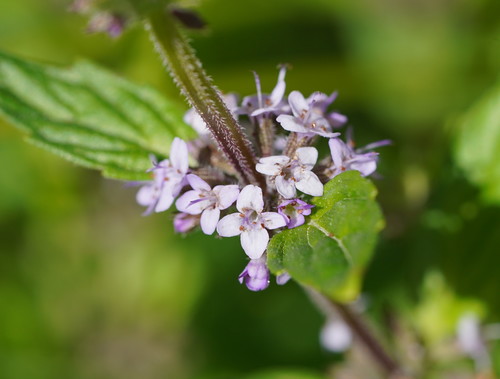
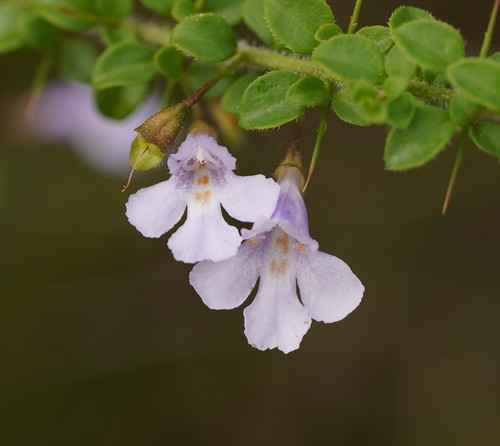
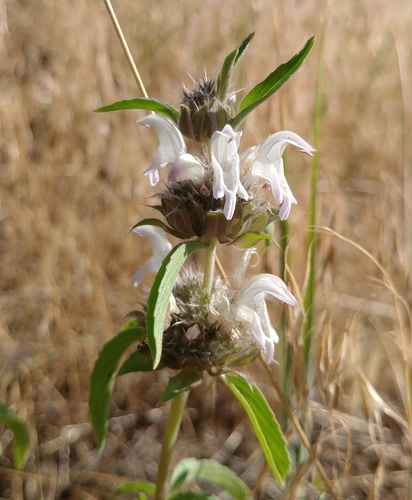
Monarda pectinata Nutt. is an annual herb in the mint family, sharing the family’s common traits of square stems and opposite leaves. It usually grows between 15 and 40 centimeters tall. Its flowers form dense, rounded clusters at stem nodes, with leaf-like bracts that have bristle-tipped edges beneath the clusters. The flower corolla can be white, pale pink, or violet, and the lower corolla lip often has visible spotting patterns. This species is native to the southwestern and central United States, where it occurs naturally in Arizona, California, Colorado, Kansas, Nebraska, New Mexico, Oklahoma, South Dakota, Texas, and Utah. It grows in a range of open habitats, including plains, desert grasslands, pinyon-juniper woodland, ponderosa woodlands, areas with rocky soil, and roadsides. Its elevation range is approximately 500 to over 2500 meters (1,600 to 8,300 feet). Like other bee balms, Monarda pectinata produces nectar in its flowers that attracts insect pollinators. Across most of its native range, its main blooming period runs from May through September.