About Monalocoris filicis (Linnaeus, 1758)
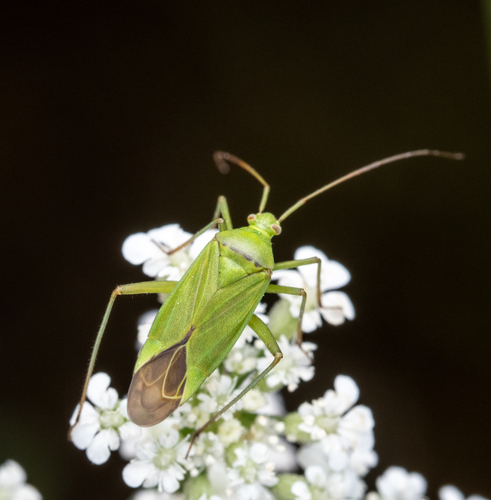
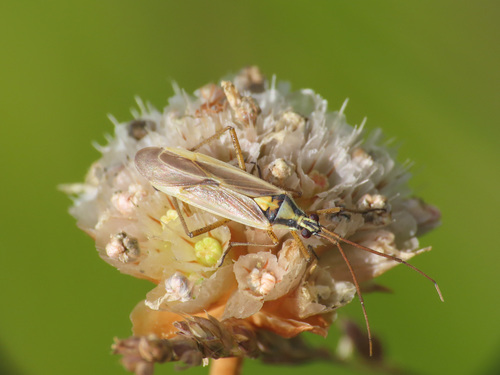
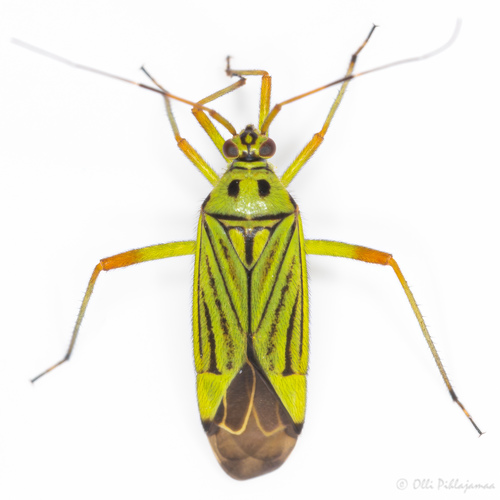
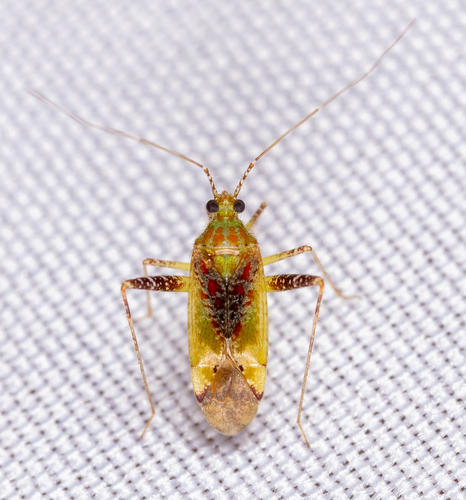
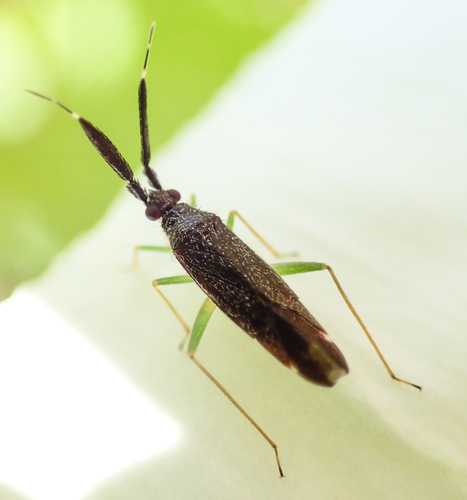
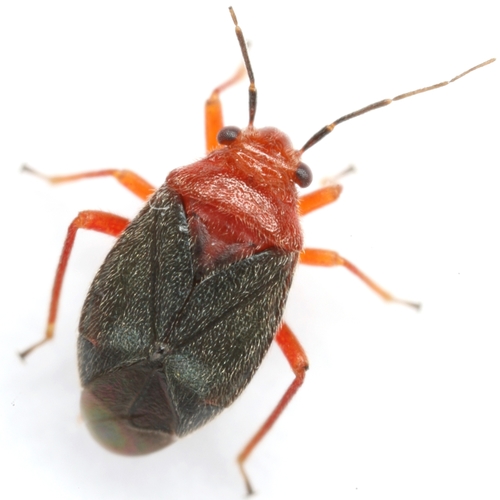
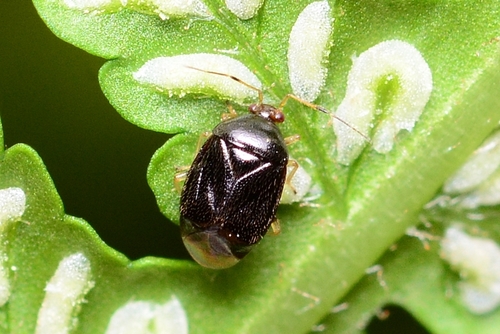
Monalocoris filicis, commonly called the bracken bug, is a true bug belonging to the family Miridae. This species is distributed across Europe, ranging from Ireland in the west, covering the northern edge of the Mediterranean, and extending east across the Palearctic to Central Asia, Korea, and Japan. In Central Europe, it is widespread and generally common. In the Alps, it occurs up to the forest edge. Its habitats include deciduous and coniferous forests, as well as moist open areas such as bogs or stream shores. Adults are 2.0 to 3.1 mm long, golden brown overall, and have a pale-orange head, which makes them easy to identify. They are similar in appearance to Bryocoris pteridis, but can be distinguished by the first antenna segment, which is shorter than the width of the head. All adults of this species are fully winged, or macropterous. Monalocoris filicis feeds on Dryopteris filix-mas and Pteridium aquilinum, and is occasionally found on these hosts alongside Monalocoris parvulus. It feeds by sucking, especially targeting immature spore-producing fern fronds in late summer. Males are strong fliers, and swarm during the mating season, when they can also be found on other plant species. Females lay green eggs on host plants from May to early June; these eggs match the color of the host's spores and are indistinguishable from them. Nymphs are primarily found in June and July, and adult bugs are active from the end of June through the mating season. In September or early October, adult imagines leave their host plants to overwinter. They hibernate as adults in dried remains of their host plants on the ground, in leaf litter, or in the branches of conifers, usually Picea abies.