About Mompha subbistrigella Haworth, 1828
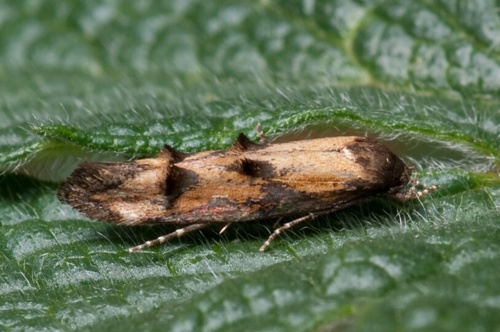
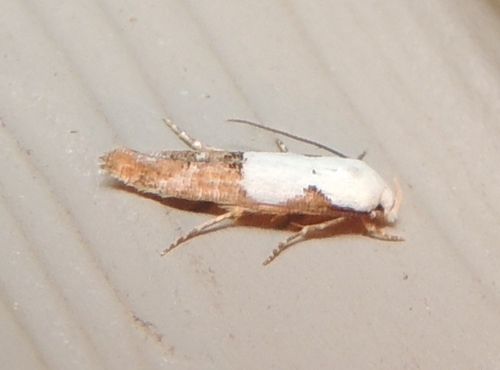
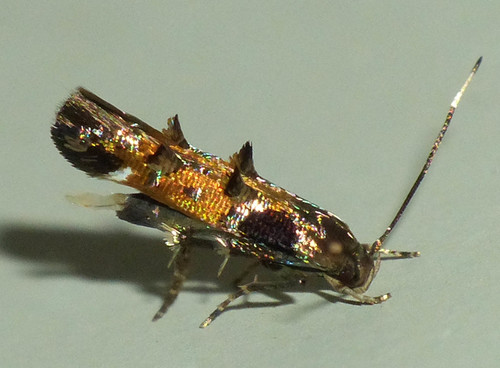
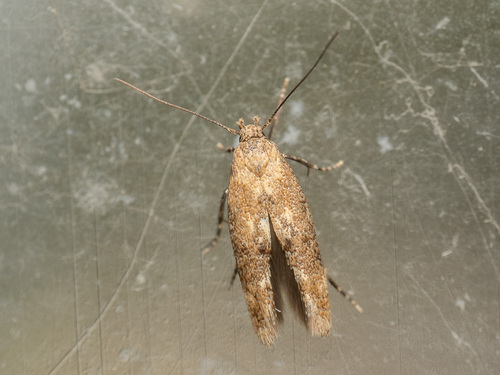
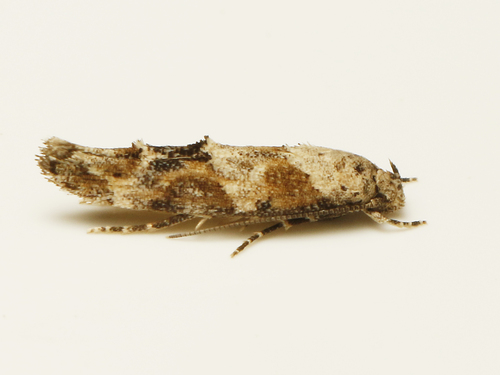
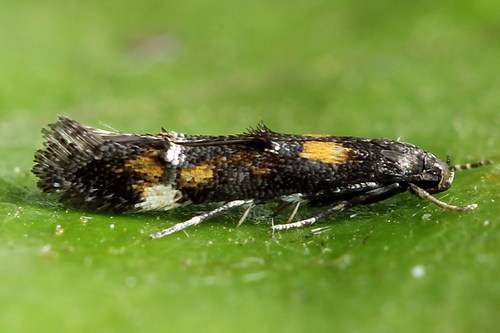
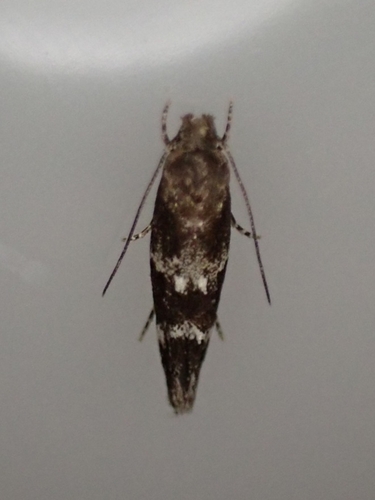
Mompha subbistrigella, first described by Haworth in 1828, has a wingspan of 7 to 11.5 millimeters. The head is grey, while the face is whitish. Forewings are dark fuscous, mixed with light ferruginous-ochreous in the posterior disc, and may sometimes appear bright orange. It has an ochreous-whitish blotch on the base of the dorsum, almost reaching the base of the wing. Before the middle of the forewing there is a whitish fascia that is narrow on the costa and broadly dilates downwards, with two blackish scale-tufts on the fold, one before and one beyond this fascia. Towards the apex there is an inwardly oblique white fascia, which is sometimes narrowly interrupted. Hindwings are grey. Mature larvae are deep red, with paler or yellow-whitish incisions and a pale yellow-brown head. They develop inside the seedpods of their host plants. This species resembles other members of the genus Mompha, especially Mompha sturnipennella, and reliable identification depends on examining structural differences in the genitalia of both males and females. Adults are on wing from late summer through to late spring. Larvae feed and develop within the seedpods of Epilobium montanum (broad-leaved willowherb), and occasionally feed within the seedpods of other Epilobium (willowherb) species.