About Mompha raschkiella Zeller, 1839
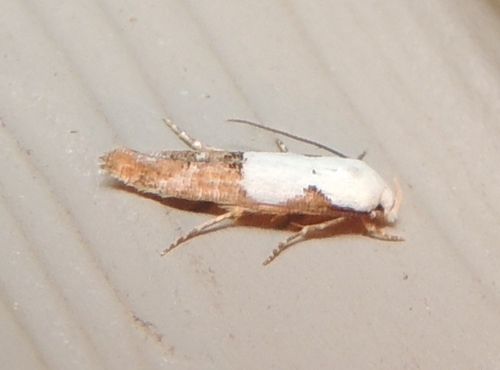
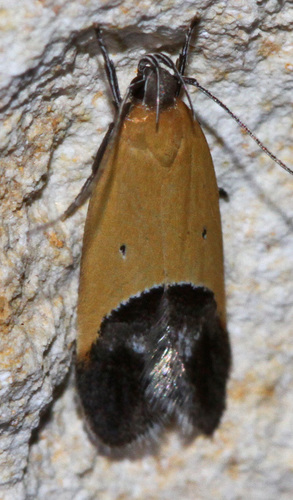
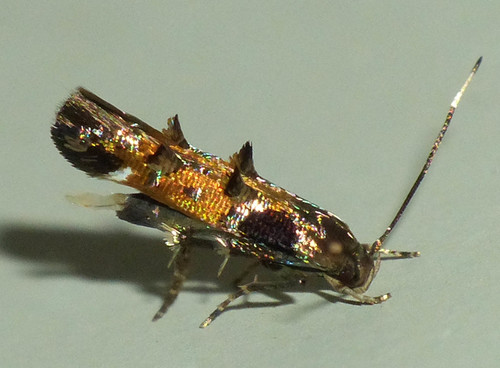
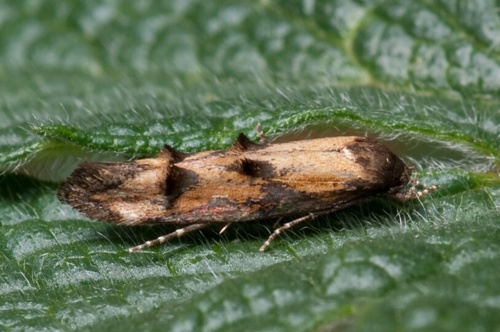
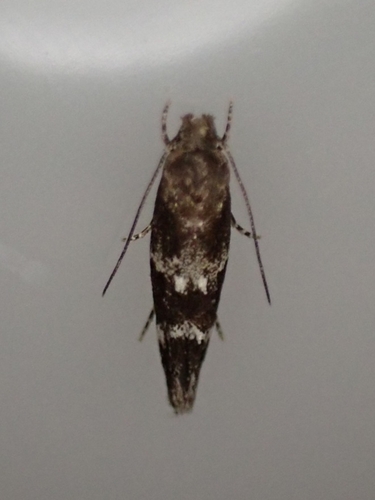
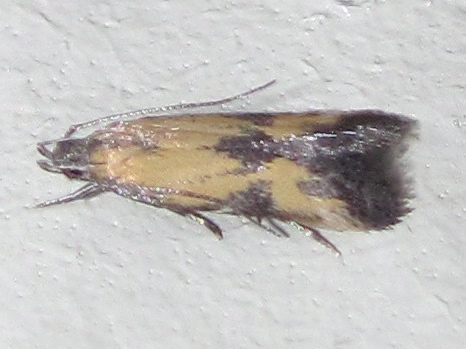
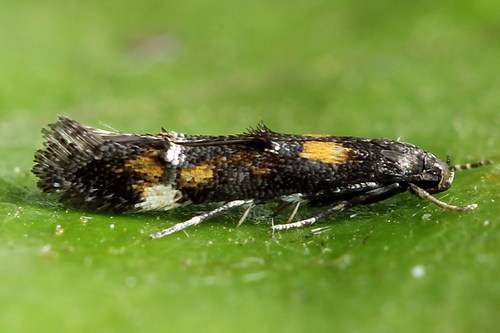
Mompha raschkiella Zeller, 1839 has a wingspan of 7–11 millimetres (0.3–0.4 in). Its head is leaden metallic, with a silvery face. The forewings are dark fuscous, with an orange-yellow dorsal spot towards the base. This spot is followed by an oblique leaden-metallic fascia, beyond which a black scale-tuft sits on the fold. There is a leaden-metallic spot on the middle of the costa, and a double orange spot in the posterior disc. This double spot is divided by a leaden-metallic spot beneath, and connected above with a white costal spot. The hindwings are dark fuscous. The larva is deep yellow, with more orange sides, a green dorsal line, and a dark brown head. This species can be confused with Mompha locupletella, but it lacks the contrasting dark and light patches at the base of the forewing that Mompha locupletella has. Adults are on wing in May and again in August, and there are two generations per year. This is a small, distinctively marked moth. In terms of habitat and distribution, the species is endemic to Europe, where it can be found on waste ground, in woodland clearings, heathland, and roadside verges. It is rare in Belgium. It is common and widely distributed on the Isle of Wight and in southern Hampshire, and has been found in the woods of Northwich. It is common in Suffolk, especially in coastal areas and the Brecks. It has been recorded as scarce in St. Helens, Merseyside by the St. Helens Wildlife Recording Group. As of October 2009, the moth has been recorded in 9.6% of Huntingdonshire.