About Momordica balsamina L.
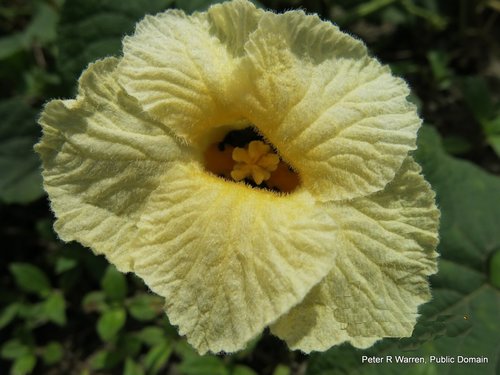
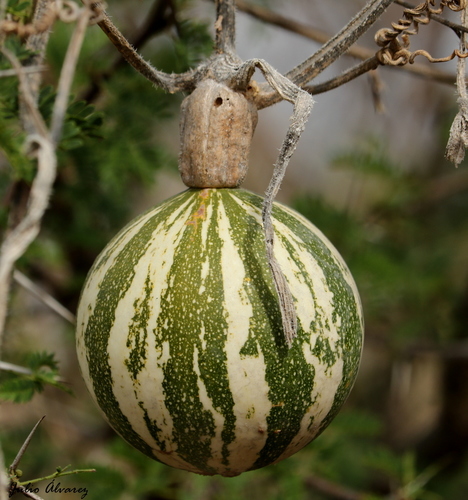
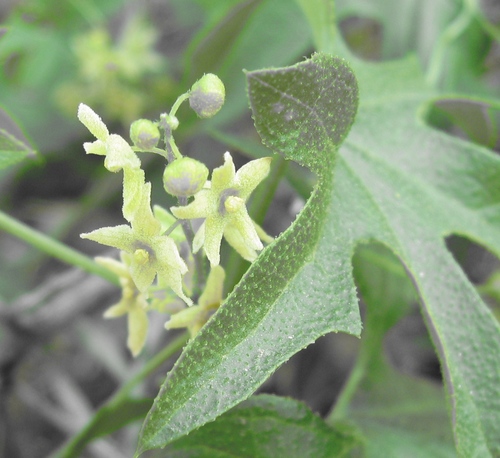
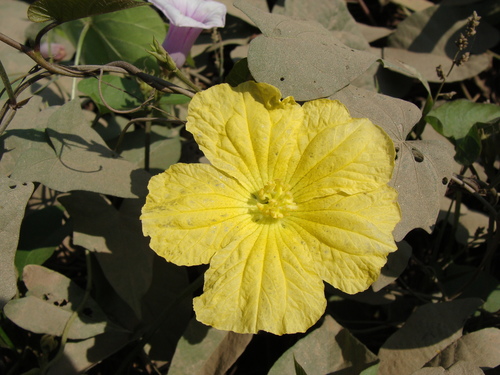
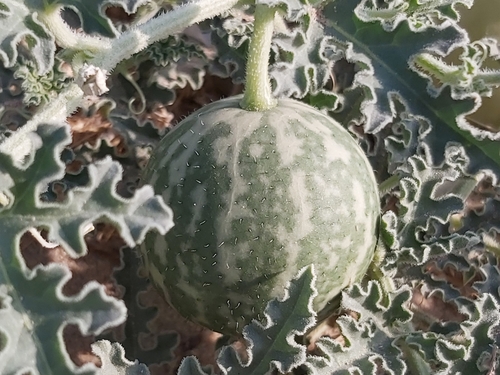
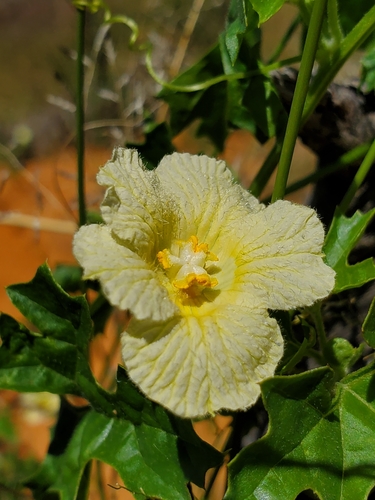
Momordica balsamina L. is a climbing herbaceous plant that grows as an annual or perennial, reaching up to 5 meters in length. Its stem is thin, angular, and covered in fine, sparse hairs. Leaves are arranged alternately, and each leaf is split into a petiole and a leaf blade. The hairy petiole is short. The soft, thin leaf blade can be up to 12 centimeters across, with a heart-shaped base and an overall outline that is broadly ovate to rounded. The sparsely hairy leaf blade is palmately divided into five to seven main lobes; each of these main lobes is further divided into smaller lobes or bears distant sharp teeth. Leaf margins are smooth, and lobe tips or teeth are often pointed. The plant produces thin, simple, long tendrils. It bears pale yellow flowers with prominent deep veins, and round, somewhat warty, bright orange fruits that are commonly called "apples". When ripe, these fruits split open to reveal numerous seeds, each covered in a bright scarlet, extremely sticky coating. Some botanical sources state that the outer fruit rind and seeds of Momordica balsamina are poisonous. Despite this, the Tsonga people of southern Africa eat the plant's leaves and fruit. In West Africa, the plant is a popular anti-malaria remedy. Balsam apple was introduced to Europe by 1568, where it was used medicinally to treat wounds. In historical pharmacy, the term "Oleum Momordicae" referred to tree oil poured onto the fruits of Momordica balsamina. The fruit and leaves of the plant can be used as a substitute for soap. The plant's sap can be used medicinally, or as a cleaner for metal, and it is also processed into arrow poison.