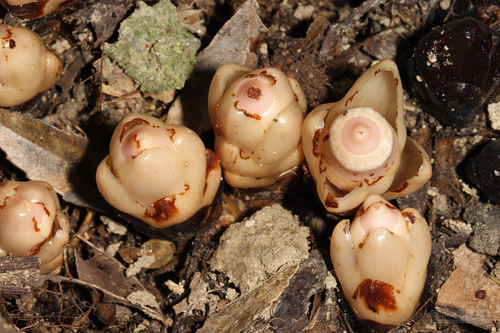
About Mitrastemon yamamotoi (Makino) Makino
Mitrastemon is a genus of parasitic plants that contains two widely disjunct species, and is the only genus placed in the family Mitrastemonaceae. All Mitrastemon species are non-photosynthetic root endoparasites that grow on plants in the Fagaceae family, including the species Castanopsis sieboldii. This species, Mitrastemon yamamotoi, is distributed in tropical and subtropical forests of Southeast Asia and Japan. The other species in the genus, Mitrastemon matudae, is distributed from southern Mexico to Colombia. The entire body of Mitrastemon remains embedded within the tissues of its host plant, except during its reproductive stage, when above-ground parts emerge from the host's tissues. The visible above-ground portion of the plant is only observed in winter, and the entire visible life cycle runs from November to April, as documented by Mir et al. in 2016. A unique ecological trait of this plant is that its flowers change sex from male to female, unlike most other plants. A variety of different insect species are involved in the pollination of Mitrastemon yamamotoi. Mitrastemon yamamotoi is mainly pollinated by social wasps, but based on insect visitation frequency and pollen loads, other previously unrecorded pollination interactions are also ecologically important. Pollination studies indicate that nocturnal insect visitors such as crickets and cockroaches contribute to geitonogamous pollination, while diurnal visitors like social wasps facilitate outcrossing.

