About Misgurnus anguillicaudatus (Cantor, 1842)
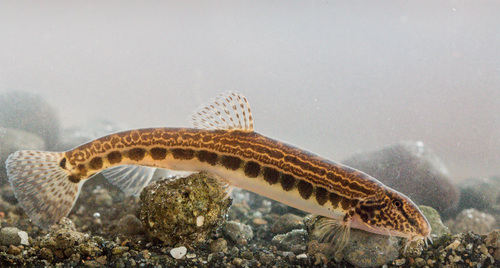
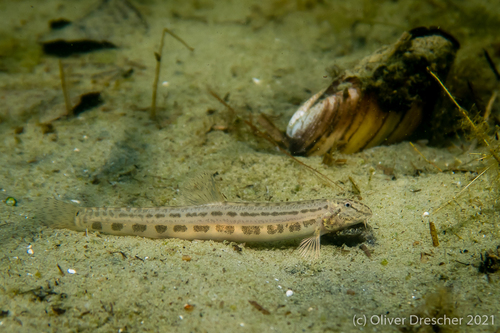
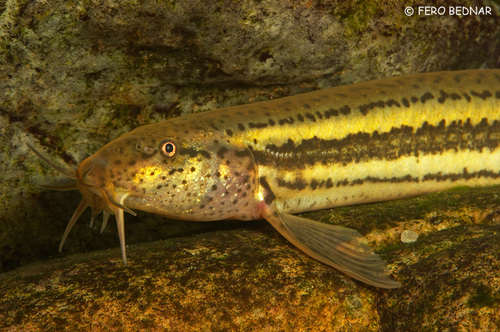
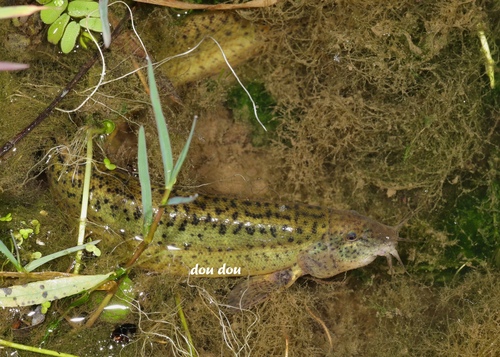
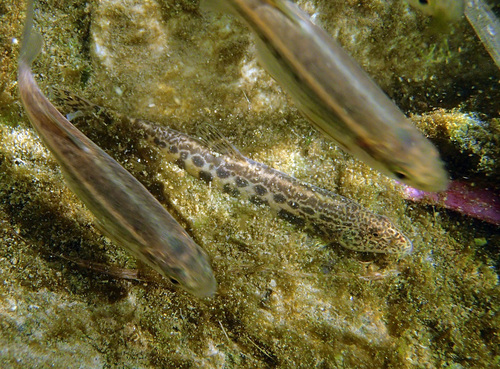
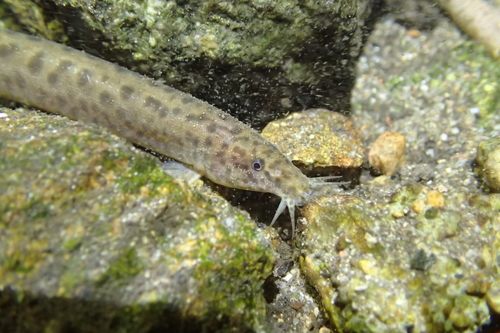
Wild pond loaches (Misgurnus anguillicaudatus) can grow up to 12 inches (30 cm) long, but individuals in captivity usually only reach 6 inches (15 cm) in length. They are found in a variety of colors including pink, orange, albino, and gray, and their coloration can range from yellow to olive green. The most common form is light brown or gray with lighter undersides. Like many other loaches, pond loaches have a slender, eel-like body. Three sets of barbels surround the loach's mouth. These barbels are used to sift through silt or pebbles to find food, and also to dig under gravel and sand to conceal the fish when it feels nervous or as a form of self-defense. This digging behavior is different from other loaches, which use the spines located beneath their eyes for these purposes. Pond loaches are bottom-dwelling omnivores. They feed mainly on algae and scavenge organic materials, and may also eat tubifex worms and other small aquatic invertebrates. Pond loaches are very hardy fish that can tolerate poor-quality water, and can survive short periods of drought by producing a layer of moisture-trapping mucus to keep themselves damp. Despite this resilience to poor water conditions, pond loaches should still be kept in clean, high-quality water to support their health when kept in home aquariums or ponds. These loaches prefer a substrate of soft sand, smooth stone, or fine gravel, or a bare-bottomed tank. They avoid rocks or rough gravel, which are known to damage their sensitive barbels and skin. According to the US Geological Survey, M. anguillicaudatus is native to eastern Asia, ranging from Siberia to Northern Vietnam, and including Japan. The pond loach can reproduce both sexually and asexually. While sexually reproducing diploids (2n = 50) are the most common form in Japan, asexual clones also exist in a small number of wild populations. Clonally reproducing diploid loaches produce unreduced diploid eggs that develop into identical genetic clones (with no genetic contribution from sperm) through the process of gynogenesis. During gynogenesis, an egg is activated by a sperm that degenerates without fusing with the egg nucleus, so the resulting embryo only contains maternal chromosomes. This asexual process involves chromosome duplication via mitosis without cytokinesis before meiosis, a step called premeiotic endomitosis. This is followed by a quasi-normal meiosis that produces diploid eggs. The pond loach is a common culinary fish in East Asia, and is raised on a large scale through fish farming. According to the FAO, M. anguillicaudatus ranked 30th on the list of the most important aquaculture species by total production weight in 2018, but it is the most farmed fish in the world when counted by individual number. In Korea, pond loach is used to make chueo-tang (loach soup). In Japan, it is the main ingredient in dojō nabe, a hotpot that is a specialty of Asakusa. In China, pond loach is consumed, especially in Sichuan province, where it is known as niqiu.