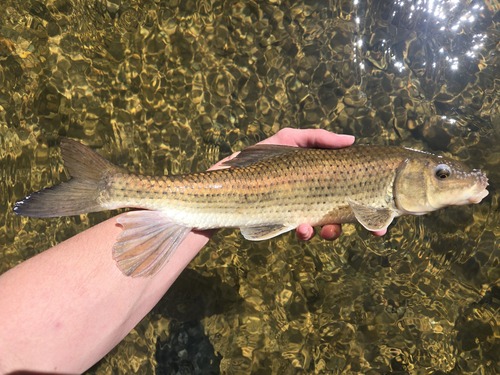
About Minytrema melanops (Rafinesque, 1820)
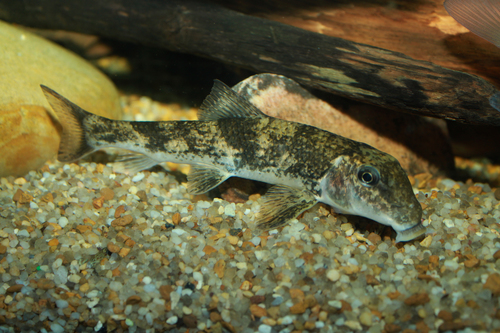
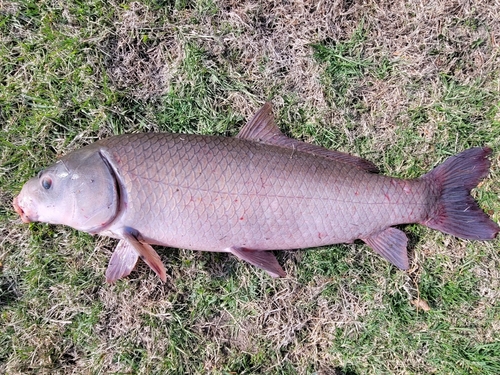
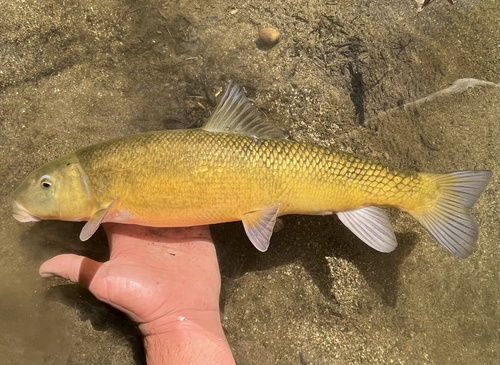
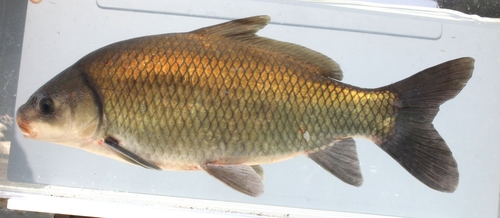
Minytrema melanops, commonly known as the spotted sucker, has a dark spot at the base of each scale, which creates the appearance of many rows of small black spots across its body. This fish can reach a length of about 19 inches. The spotted sucker has a very wide geographic range. It is widespread across the central and southeastern United States and extends into southern Canada. It occurs within and east of the Great Lakes and Mississippi River basin, with the southeastern limit of its distribution at the Apalachicola River. It is found in the lower Great Lakes and Mississippi River Basins from Pennsylvania to Minnesota, and in Atlantic and Gulf Slope drainages from North Carolina to western Texas. Populations of the spotted sucker remain stable across most of the United States, and the species is still relatively common there. The spotted sucker prefers clean, clear bodies of water with a firm substrate. It is reported to be abundant in oxbow lakes and other areas without strong current. It does not tolerate pollution or siltation well, and as a result, it has been extirpated from some areas of its historic range, including Illinois. Population numbers are also declining in areas such as Ohio and Kansas. Further north in Canada, which is the northernmost area of the species' range, the spotted sucker is a species of concern due to declining numbers and deteriorating water quality, though it may have always been rare in this part of its range. The feeding habits of M. melanops change distinctly throughout its life cycle. As larvae, the fish feed on individual zooplankton. Larvae up to 25 millimeters in length have been observed feeding in shallow back waters during the day. Once spotted suckers reach approximately 25 millimeters in length, they begin to ingest organic matter and become bottom feeders. At about 50 millimeters in length, Minytrema begins to feed on the substrate and benthos, and sand becomes part of its stomach contents. Larval and juvenile Minytrema feed in schools, but adults separate to feed in deeper waters. Little is known about the feeding habits of adults, though it is believed that spotted suckers feed primarily during dusk and dawn. Spotted suckers feed primarily on organic fragments, copepods, cladocerans, and chironomids. Other benthic invertebrates appear in gut contents but do not make up a large part of the diet. The stomach contents of spotted suckers vary with the time of year. Large numbers of zooplankton are ingested in spring, summer, and autumn. Chironomids are also consumed in summer and autumn, reflecting seasonal changes in prey abundance. Numerically, organic fragments and sand are the most abundant contents found in stomachs, followed by diatoms, copepods, and cladocerans that make up most of the remaining contents. Differences in the abundance and types of particles in gut contents across different populations indicate that Minytrema does not feed selectively on any particular prey group, and instead consumes the groups that are most abundant seasonally or regionally. Predators of the spotted sucker typically vary depending on the local environment. The species depends heavily on clean waters free of excess silt to survive, and prefers sluggish water, though it has been found in some turbid environments. Human activities have caused the streams inhabited by Minytrema to become silted, making survival difficult for the species. However, dams that create impoundments can produce slower moving water that boosts spotted sucker populations.