About Minuca pugnax (Smith, 1870)
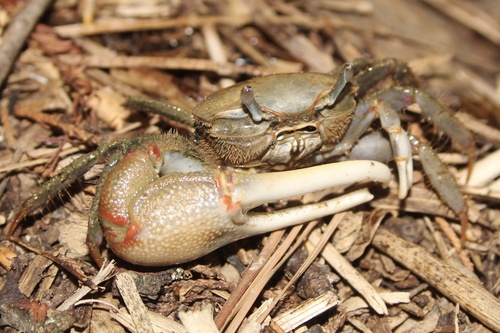
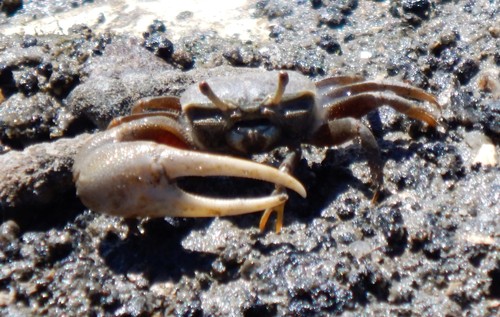
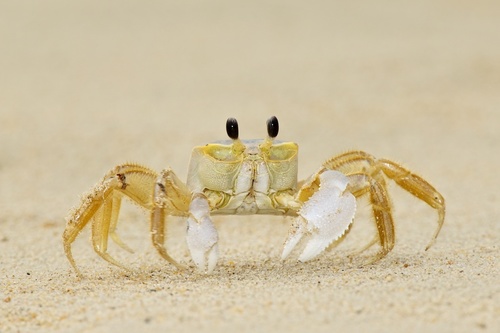
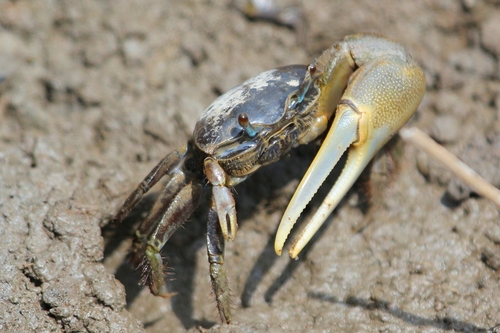
Minuca pugnax, commonly known as the Atlantic marsh fiddler crab, exhibits clear sexual dimorphism. Both males and females have an olive-brown base color, but males have a carapace width of 15–23 mm (0.59–0.91 in) and a distinct royal blue patch on the carapace. Females do not have this blue patch, and their carapace width measures only 13–18 mm (0.51–0.71 in). Both sexes have dark bands on their pereiopods (walking legs) and narrow eyestalks. The most prominent sexual difference is in the shape of the chelipeds (claw-bearing legs): females have two similarly sized chelipeds, while males have one greatly enlarged yellow-colored claw. Minuca pugnax is the most common fiddler crab species along the east coast of the United States. Its natural native range extends from Cape Cod to northern Florida. In 2014, its northern range limit was documented to have expanded to Hampton, New Hampshire, a shift possibly linked to climate change. Before the 2000s, research indicated this crab was restricted to regularly tidally flooded low-marsh habitats, including creeks, bay fronts, and mosquito ditches, and crab populations dropped sharply in high-marsh areas. Older reports also noted that Minuca pugnax burrows during high tide and does not emerge again until the tide recedes, so its habitat was limited to areas where suitable burrows could be built and occupied. However, starting in the 2010s, reports began documenting higher than expected populations of Minuca pugnax in high-marsh areas along Long Island Sound and in Rhode Island. Minuca pugnax shares a mutualistic relationship with Spartina alterniflora, a perennial deciduous grass that grows in intertidal wetlands. The grass provides the structural support that crabs need to build their burrows, and the crabs' burrowing activity increases the grass' production. In contrast, in bare sections of marsh created by human disturbance, burrowing can harm young S. alterniflora seedlings by disturbing soil. This burrowing also increases sediment levels in the water column and reduces the amount of organic matter in the soil, which can worsen the negative effects of sea level rise on wetland ecosystems. During the breeding season, males use circular movements of their large cheliped to attract mates. Mating can occur as frequently as every two weeks, typically 4–5 days after spring tides, and takes place between June and September. Mating occurs inside a burrow. After mating, the female broods her eggs for 12–15 days, then releases hatchling larvae during high spring tides. Larvae go through five planktonic zoea stages and one megalopa stage before settling on the sea floor and molting into their adult form. This full developmental process takes approximately 28 days. The crab reaches sexual maturity after one year, and adult individuals typically live 12–18 months.