About Minervarya keralensis (Dubois, 1981)
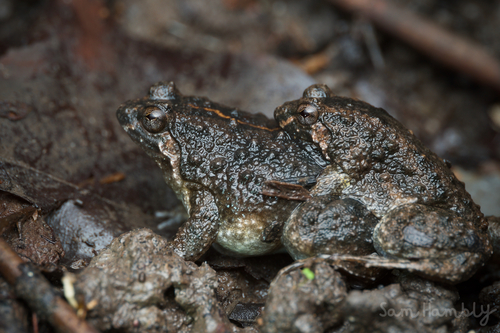
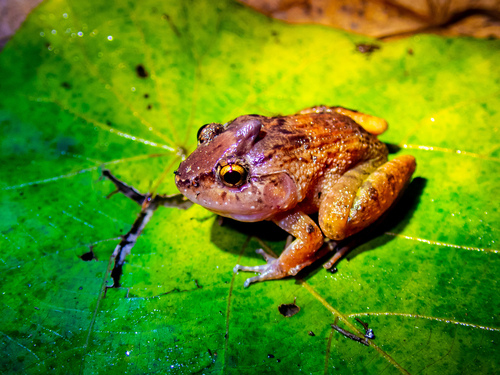
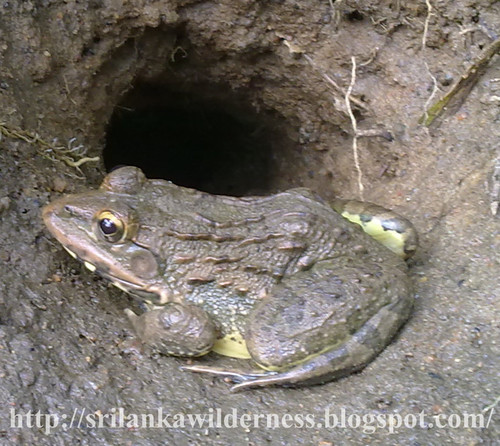
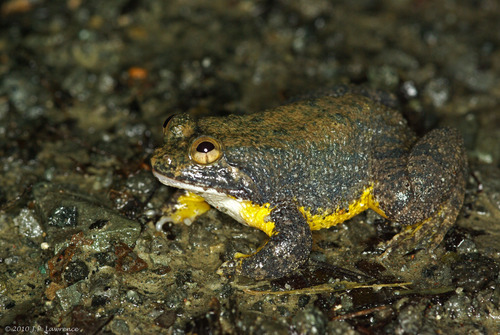
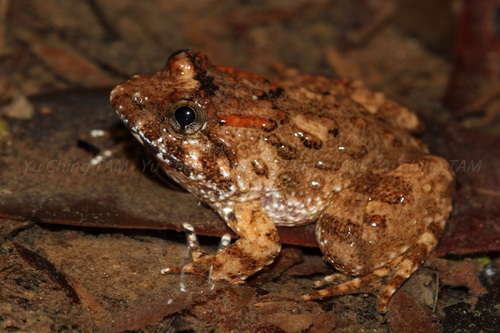
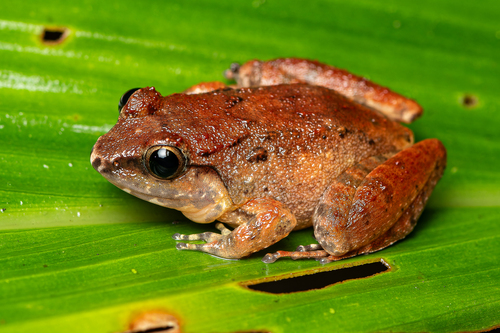
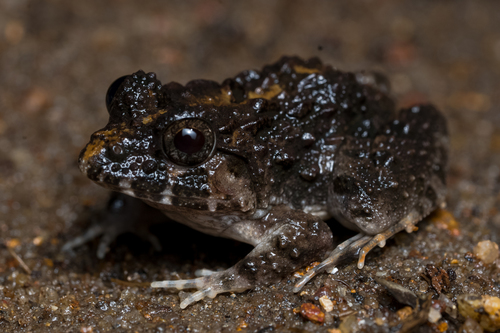
This species, Minervarya keralensis, has vomerine teeth arranged in two strong oblique rows that begin at the inner anterior corners of the choanae. It has a moderately sized head with a pointed snout. The inter-orbital space measures two-thirds the width of the upper eyelid. The tympanum is distinct and around three-quarters the diameter of the eye. Its fingers are moderate in size, obtuse, and the first finger extends past the second. Toes are moderately well developed and nearly completely webbed. Sub-articular tubercles are prominent; the inner metatarsal tubercle is oval, compressed, and less than half the length of the first toe. There is also a small, rounded outer metatarsal tubercle. When the hind leg is pulled forward, the tibio-tarsal articulation reaches the tip of the snout. The upper parts of the body have numerous very prominent warts and short glandular folds. The dorsal coloration is grey or brown, with darker spots; the hinder side of the thighs is black with white marbling; a broad light vertebral band is sometimes present. Males have two internal vocal sacs. The snout-to-vent length is approximately 2.75 inches (7.0 cm).
Minervarya keralensis is confirmed to occur in the Western Ghats of southern India, and its type locality is "Malabar". It has also been reported from Gujarat in northwestern India, and possibly from central Nepal and northeastern India, but it is unclear whether any of these non-Western Ghats records actually represent this species. Within the Western Ghats, M. keralensis is a widespread species that inhabits wet evergreen forests, moist deciduous forests, and marshlands. It has also been recorded in modified human-altered habitats, including agricultural land and villages. It breeds in temporary ponds.