About Microtus pinetorum (Le Conte, 1830)
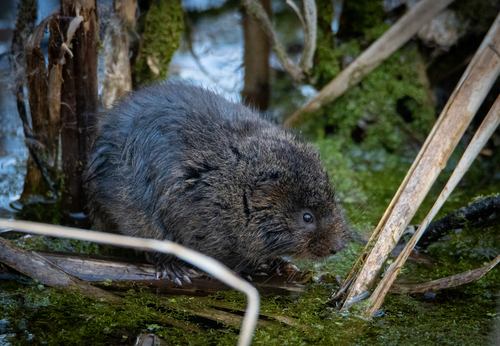
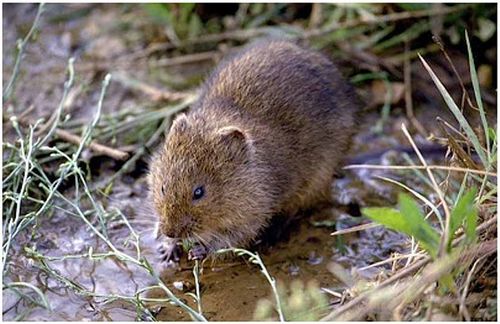
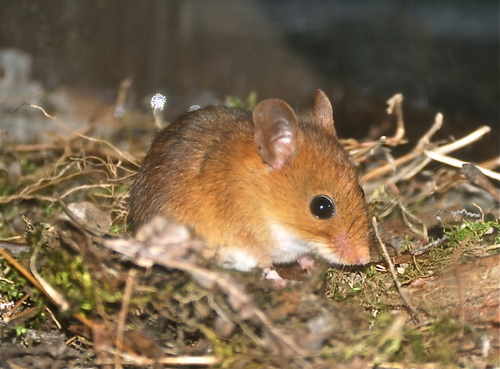
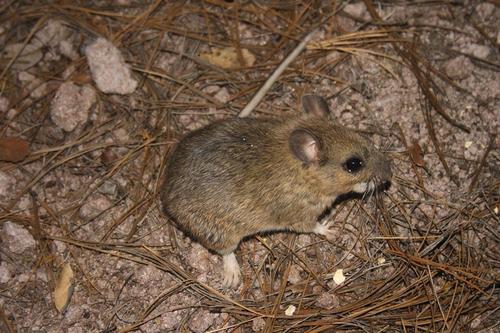
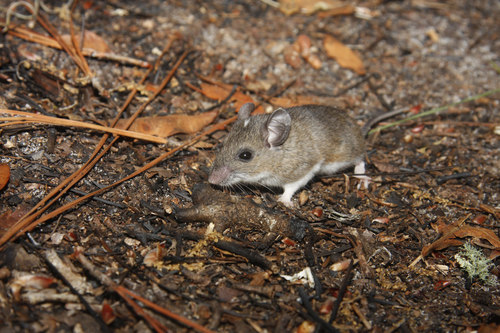
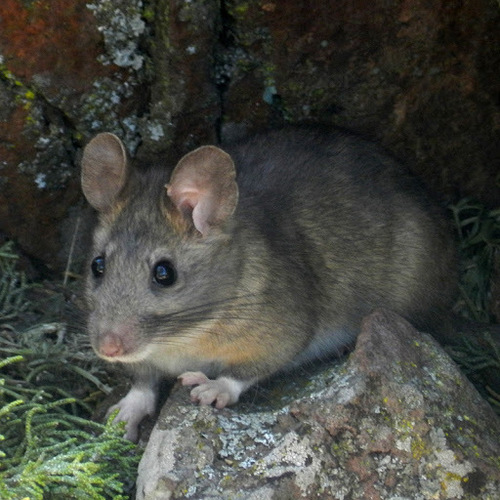
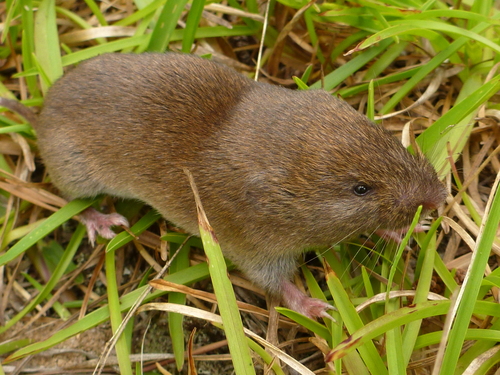
Characteristics The woodland vole, Microtus pinetorum, has a head and body length of 3.25–4.75 inches (83–121 mm), with a short 0.5–1.5 inch (13–38 mm) tail. Its weight falls between 0.5–1.3 ounces (14–37 g). It has a light or dark brown dorsal region, with a whitish or silvery underside. Its eyes, external ears, and tail are reduced in size as an adaptation to its partially subterranean lifestyle.
Ecology This species lives throughout the eastern United States, ranging as far west as Nebraska, Kansas, Oklahoma, and Texas. It inhabits deciduous forests, dry fields, apple orchards, and can also be found from dry fields to the edges of coastal bays. Woodland voles prefer wooded areas with high vertical vegetative stratification, along with evergreen shrubs, ground cover, and old fallen logs. They are most abundant in deciduous forests with moist, friable soil that is suitable for burrowing, and apple orchards are a particularly favored habitat. Tree root systems are an important food source for this vole, so tree spacing affects the density of woodland vole populations. They prefer soils ranging from loam/peat moss mixtures to gravel or stone soils, avoiding very dry soils. Alfisol and Ultisol soil types are especially favored because they support the vole's burrowing system. Woodland voles feed on plant roots, stems, above-ground vegetation, fruits, seeds, bark, subterranean fungus, and insects. Because they consume roots and tubers with high water content, they do not need to drink much water. They cache food, primarily over the winter. Most of their time is spent underground in burrow systems, and they seldom venture to the surface. This habit protects them from hawks and owls; other predators include snakes, weasels, and mountain lions. They are also susceptible to ectoparasites including lice, fleas, mites, and chiggers.
Social behavior and reproduction Woodland voles live in family groups in burrow systems within home ranges around 14.75–17.75 inches (40–45 cm). Burrows are exclusive to each family group, but groups usually do not need to defend their burrows because other voles rarely invade. Neighboring family groups limit the size, location, and dispersal of each other's groups. A family group is made up of a breeding female, a breeding male, their 1–4 offspring, and sometimes a few non-breeding helper members that immigrated from other groups. Group emigration is uncommon, and only occurs when open positions are available in other groups. Staying in a natal group as a non-breeding individual is beneficial, because burrow systems are a major investment and a limited resource. In the northern parts of the woodland vole's range, the breeding season runs from March to sometime between November and January. In the southern parts, breeding occurs year-round. To enter estrus, a female must detect male chemosignals and have physical contact with a male. Because females are dispersed with little overlap between different colonies, polygamy is rare in this species. The breeding female in a group suppresses reproduction by female helpers. Females are fiercely loyal to their partners and highly aggressive toward unfamiliar males. A young female woodland vole usually first conceives at around 105 days of age, but can conceive as early as 77 days. After copulation, a female develops a vaginal plug that lasts for three days. Gestation lasts 20–24 days, and females produce 1–4 litters per year, each with 1–5 young. When a vole's breeding partner dies, it is replaced by an unrelated individual. This causes conflict between the surviving parent and its same-sex offspring for mating opportunities. A new male in a group gives non-breeding females a chance to breed, though the resident breeding female still remains an obstacle to this.