About Microseris cuspidata (Pursh) Sch.Bip.
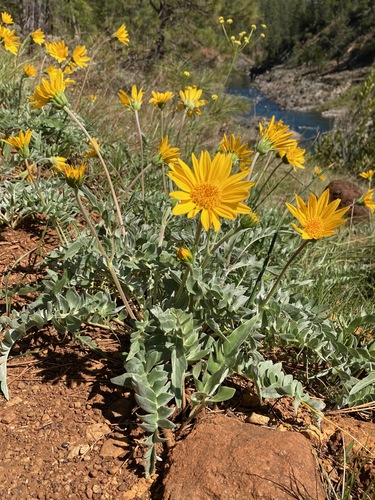
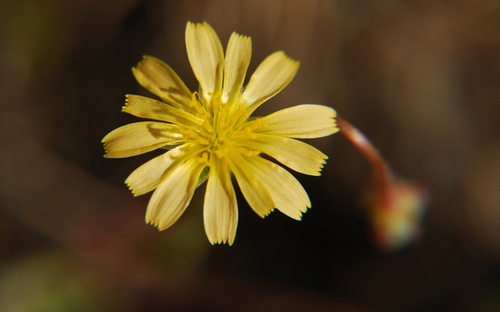
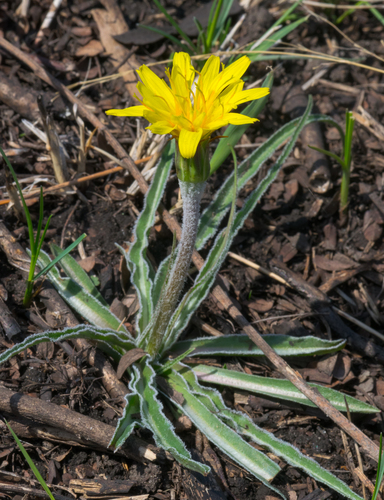
Microseris cuspidata (Pursh) Sch.Bip., commonly known by the synonym Nothocalais cuspidata and the common name prairie false dandelion, is a herbaceous perennial plant in the Asteraceae family. It is native to the Great Plains of North America. This species goes by several other common names: sharppoint praire dandelion, microseris, wavy-leaf prairie-dandelion, sharppoint microseris, and microséris cuspidé. Prairies that this species depends on once covered 15 million acres, but today cover less than 70,000 acres. Nothocalais cuspidata grows in dry, well-drained soils in open areas, grasslands, and gravelly hillsides. Its range extends from Canada to Texas, and from New Mexico to Illinois. It currently exists only in isolated populations within fragmented habitats, which typically occur on bluffs or steep slopes that border a river. This species is identifiable by its basal-only leaves. The leaves are long and narrow, sometimes with erose to undulate margins, giving them a grass-like appearance. It produces a single yellow flower that resembles a dandelion, and can easily be mistaken for the common dandelion. As a perennial, it blooms from early May through early June, which is the optimal period to identify the species. Its fruiting season runs from late May through late June. Nothocalais cuspidata and other Great Plains native species face habitat loss from increasing Great Plains fragmentation and woody encroachment. Habitat fragmentation reduces genetic diversity by limiting the number of plants an individual specimen can pollinate, which in turn reduces the species' ability to adapt to environmental pressures.