About Micropterus punctulatus (Rafinesque, 1819)
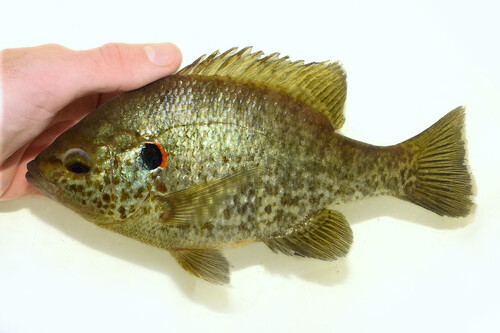
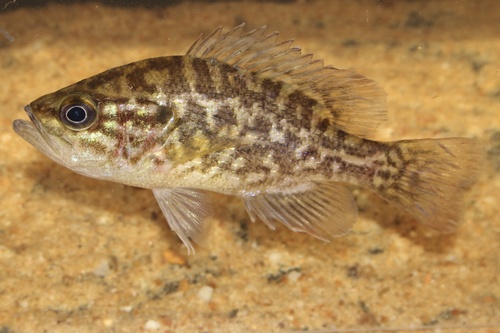
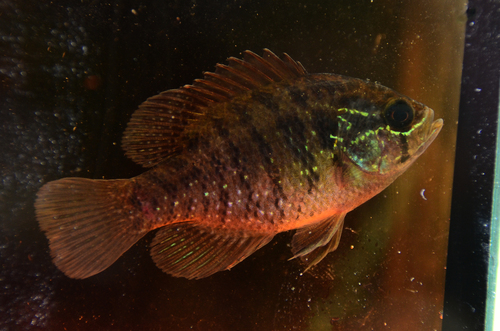
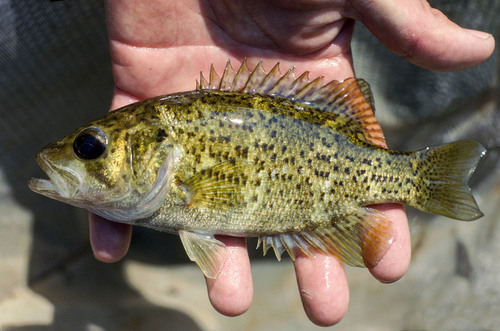
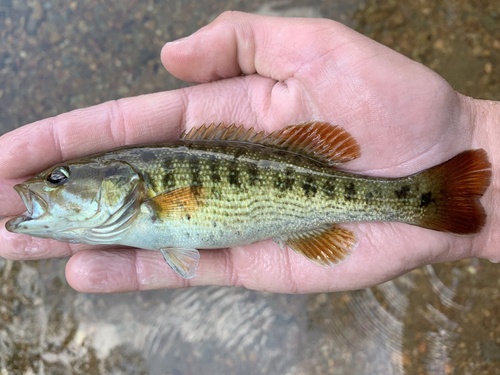
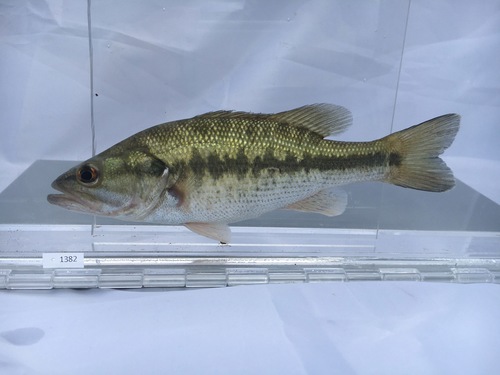
This species, commonly called spotted bass, is frequently misidentified by anglers as largemouth bass due to similar coloration, though there are subtle distinguishing features. Unlike largemouth bass, spotted bass have scales on the base of the second dorsal fin, their first and second dorsal fins are clearly connected, and their upper jaw bone does not reach or extend past the rear edge of the eyes. Spotted bass are also often confused with smallmouth bass, but lack the vertical body bars found on smallmouth bass. Unlike both largemouth and smallmouth bass, spotted bass have small black spots below the lateral line. Juvenile spotted bass often resemble young smallmouth bass, with a broad orange band at the base of the tail, followed by a broad black band and a white edge. Spotted bass are known to hybridize with smallmouth bass, which can make identification even more difficult. Compared to smallmouth bass, spotted bass can be found in deeper water, reaching depths of up to 100 ft (30 m). Spotted bass are typically segregated by habitat from their close relatives largemouth and smallmouth bass. They tend to occupy areas with stronger water current than habitats preferred by largemouth bass, and usually live in areas that are too warm, turbid, and sluggish for smallmouth bass. They are most often found around aquatic vegetation, submerged logs, and rock or riprap walls, in small to large flowing streams, rivers, and reservoirs. Their native distribution covers the Ohio River basin, as well as the central and lower Mississippi River basin. The species can also be found in Gulf Coast states from Texas east to Florida. It is native to parts of East Texas, specifically the Sabine, Neches and Cypress Rivers. Spotted bass have an approximate lifespan of six years. Spawning takes place from April to May, in habitat similar to that used by smallmouth bass. Males build nests in gravel or other substrates, then attract females to deposit their eggs. Males guard the eggs until the young disperse. Multiple spotted and smallmouth bass hybrids have recently been collected in local reservoirs, which indicates the two species occasionally compete for spawning habitat.