About Micropterus cataractae Williams & Burgess, 1999
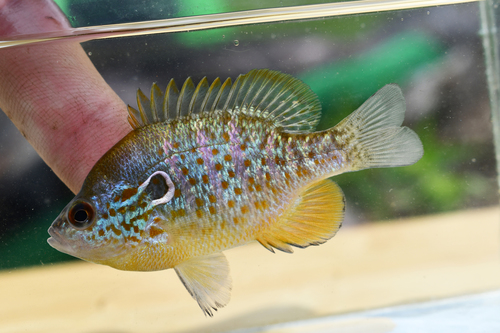
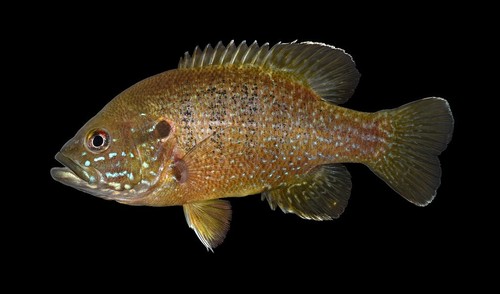
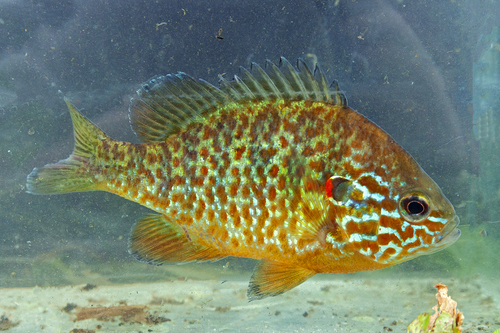
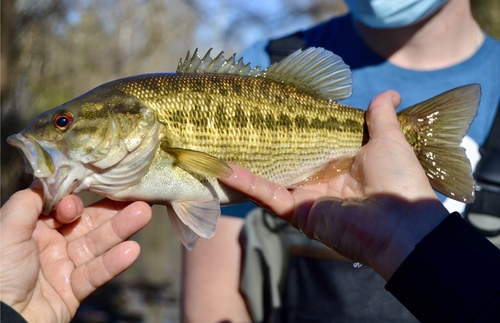
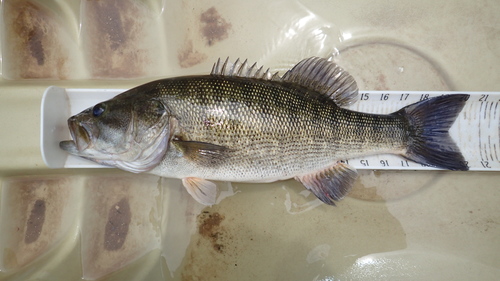
This species, the shoal bass (Micropterus cataractae Williams & Burgess, 1999), was formerly classified either as a redeye bass or a subspecies of the redeye bass, before being formally described as a new species in 1999. At first glance, the red color of its eyes links this species to the redeye bass and Suwannee bass, but it is actually more closely related morphologically to the spotted bass. Shoal bass typically range in color from olive green to nearly black along their back. A dusky dark blotch, sized between 50 and 67 percent of the area of the fish's eye, is present on the back edge of the gill cover. Three diagonal black lines radiate along the side of the head, giving a pattern that resembles war paint. Ten to fifteen vertical blotches run along the sides, and tiger-stripes often appear between these blotches. The belly is creamy or white, and wavy lines may appear slightly above this white belly on the sides of the fish. The dorsal, caudal, and anal fins are dark olive green to grayish black. Pelvic fins may have a cream-colored leading edge marked with dark spots. Key morphological traits of the shoal bass include scales on the base portion of the soft-rayed dorsal fins, a clear connection between the first and second dorsal fins, and an upper jaw bone that does not extend past the eyes. There are no known subspecies of the shoal bass. The shoal bass is growing increasingly uncommon in the Apalachicola and Chipola rivers, due to the loss of shoal habitat and increased competition with non-native spotted bass. It also occurs in the Chattahoochee River drainage, and is most abundant in the relatively undammed Flint River of Georgia, as well as in lakes including Blackshear and West Point. Shoal bass are closely associated with rock shoals, and are uncommon in other habitats due to their unique spawning requirements. Across its entire range, the shoal bass has a conservation status of vulnerable. Good fishing for shoal bass remains available in Georgia's Flint River, but anglers are encouraged to practice catch and release for this species. In contrast, anglers are urged to keep all spotted bass caught on the Flint River, because spotted bass compete with shoal bass and can hybridize with them.